SaaS Products: Why a Creative Name Can Become a Legal Trap
Many founders choose names for cloud services that sound high-tech, yet remain completely defenseless against copying due to a lack of distinctiveness. In this article, I will break down how to build an effective IP strategy for the successful registration of a trademark for an IT company, avoiding legal traps as early as the naming stage.
Filler Words: Which Names Are Destined for Rejection
In this section, we will analyze why certain terms are doomed to be rejected for registration. You will learn about the critical obstacles when using words like “Cloud” or “Soft” and review a list of expressions that cannot be monopolized.
Why ‘Cloud’ or ‘Soft’ Are Obstacles
In my practice, the most common mistake SaaS startups make is trying to make their name as “understandable” to the user as possible. However, from the perspective of intellectual property law, the more a name explains the essence of the service, the lower the chances of protecting it. This concept is known as distinctiveness. If your name merely describes a category of goods or services, the government authority will refuse to grant exclusive rights because such terms must remain free for all market participants.
Using prefixes or suffixes such as “Cloud,” “Soft,” “Data,” or “Tech” often creates the illusion of a brand, but in reality, it is merely a reference to the technology. For instance, the name “CloudStorage” for a data storage service will be deemed descriptive. Even combining these words with common verbs rarely saves the situation. Moreover, excessive accumulation of technical terms turns the registration process into a real quest, where each element must be excluded from protection as a disclaimer (non-protectable element).
Let’s examine the difference between weak and strong names in the context of distinctiveness:
| Name Type | Example (SaaS Category) | Chances of Registration |
|---|---|---|
| Descriptive | Cloud Finance Tool | Almost zero (indicates method of delivery and industry) |
| Suggestive | ZenLedger | High (hints at order in reporting, but does not describe the service directly) |
| Fanciful | Slack | Highest (the word has no direct connection to the corporate messenger) |
It is important to understand that a professional software protection strategy involves a preliminary search specifically to identify these “descriptive” risks. If you plan to scale, remember the Madrid System: what may have passed in Ukraine due to an expert’s leniency could be instantly blocked in the EU or the US due to strict uniqueness requirements. Therefore, when choosing a name for your product, strive for abstraction rather than a literal description of functionality.
Now that we have sorted out the treachery of technical prefixes, let’s move on to the list of words for which the examination usually requires a disclaimer because they lack distinctiveness.
Related topic: Trademark Registration for an IT Company.
List of words prohibited for registration
In intellectual property practice, there is a “red zone” of terms that reduce the chances of success. If your SaaS product name consists solely of technical characteristics, an examiner will record a lack of distinctiveness — meaning it is impossible to distinguish your brand from competitors.
To avoid unnecessary correspondence with the patent office, it is worth minimizing the use of common terms, which usually receive the status of a “disclaimer” (a refusal of legal protection for a specific element):
- Technical prefixes/suffixes: soft, tech, cloud, net, web.
- Function and standard names: link, connect, pay, API, CRM, SaaS, AI.
- Descriptive characteristics: secure, fast, pro, global, base.
International practice, particularly under the Madrid System, is based on a rigorous analysis of descriptiveness. Our experience shows: attempting to register a name like “Secure Cloud Storage” in US or EU markets most often ends in refusal. For effective protection, it is better to choose abstract or fanciful names, as proving acquired distinctiveness through long-term market use is a significantly more difficult path than choosing a unique name from the start.
This rule also applies to the registration of graphic elements (app icons, UX interfaces). The less your design exploits common terms, the more effectively the Madrid System tool works for the rapid removal of your product’s clones in global app stores.
How to prevent cloning of your service
Beyond the name, the visual component of your SaaS also requires protection, as icons and unique interfaces are the most frequently copied objects in the App Store and Google Play. Let’s examine the algorithm for the legal protection of UX elements and graphics.
Protection of UX elements and graphics
As part of a comprehensive strategy aimed at preventing the cloning of your service, registering only the name is just half the battle. For mobile applications and SaaS platforms, it is critical to secure your visual identity: the app icon, unique pictograms, and interface elements that form a recognizable UX.
When we talk about registering intellectual property for an IT project, we often recommend filing separate applications for images (logos) or combined marks. This creates a powerful legal tool for removing clone applications. Registering a trademark for a mobile app (App Store and Google Play) allows store owners to respond to complaints about rights infringement much faster than to copyright infringement claims, as the existence of a certificate is indisputable proof of your priority.
- Graphic element audit: Identify the app icon and key UI elements (e.g., unique buttons or illustrations) that have a high degree of distinctiveness.
- Selecting Nice Classification classes: In addition to the standard Class 9 (software), it is important to consider the classes of services provided by the platform (e.g., Class 36 for fintech or Class 42 for cloud computing).
- Filing an application for an image: Register the icon as a figurative trademark. This will allow you to block any application with a similar visual presentation, even under a different name.
- Documenting authorship: Parallel to registration, you should document the transfer of property rights from designers to the company to have “dual protection” (TM + Copyright).
This approach allows you not only to protect the brand but also to ensure the integrity of your assets for investors or when entering new markets. Properly registered intellectual property becomes the foundation for developing an aggressive strategy to combat copies.
Anti-Copying Strategy
An effective anti-copying strategy is built not only on technical access restrictions but also on the strength of your intellectual property. When your application is copied, having a certificate becomes a key argument in DMCA mechanisms and internal complaint procedures for Apple or Google. A registered trademark (TM) allows platform moderators to identify your product as the original, which significantly speeds up the blocking of phishing or counterfeit copies.
The foundation of protection is distinctiveness—the ability of a name to distinguish your IT product from competitors. Using overly generic terms significantly weakens legal protection. You can review the list of technical “filler words” that often lead to registration refusals in the relevant section of our article.
If your brand is built on such terms, registration will require an accompanying unique logo to obtain legal protection. For international scaling, it is advisable to use the Madrid System, which allows you to secure priority in key markets while minimizing conflict risks. For instance, in one of our cases, a client was able to block an identical clone of their service in the EU precisely because of a registration that clearly distinguished the unique name from common industry terms. To avoid mistakes at the start and ensure a reliable legal basis, it is worth seeking professional support in advance; this will help you pass the review at WIPO or relevant national offices without unnecessary amendments.
Scaling: An International Registration Case Study
Taking a SaaS product to the global stage requires scaling your legal protection. Let’s look at a real-life example of a Ukrainian product expanding into the EU and US markets through the benefits of the international Madrid System and strategic risk planning.
The Madrid System: A Step-by-Step Breakdown
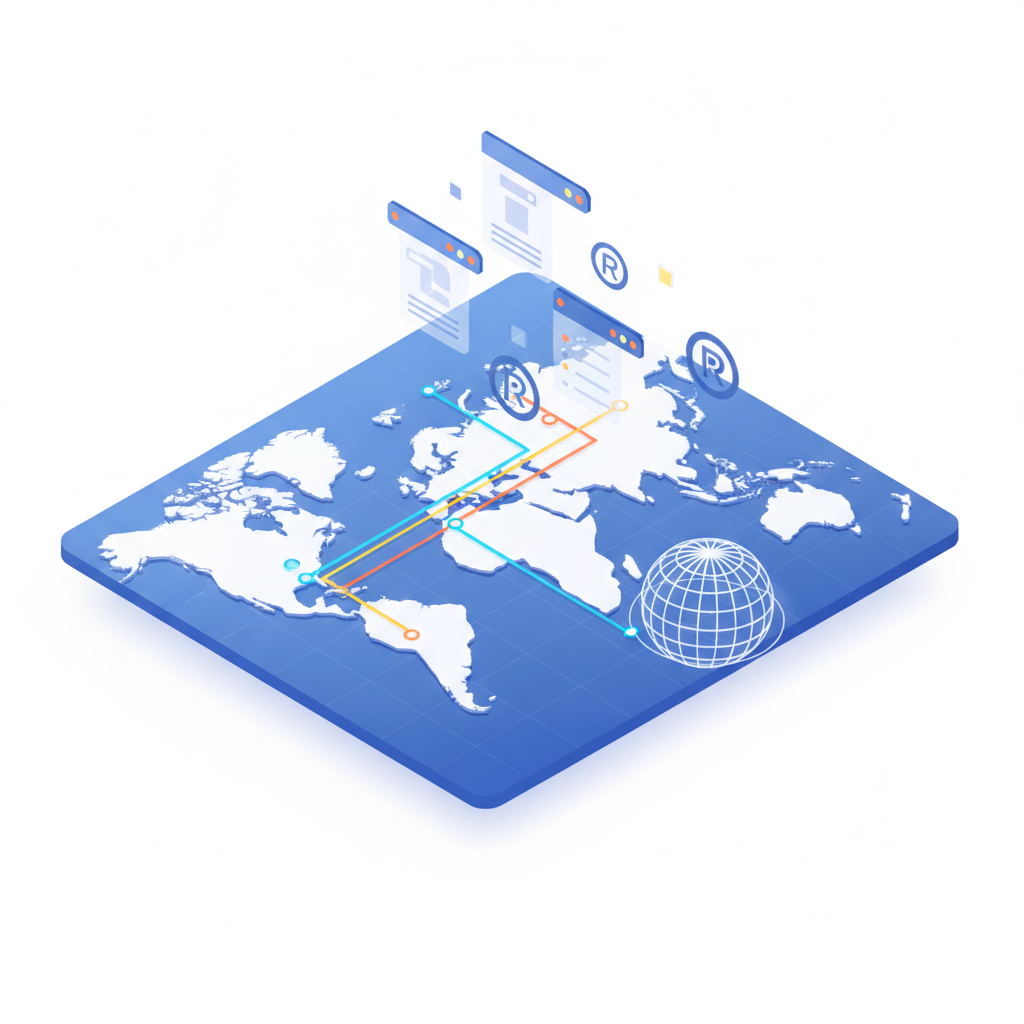
International scaling requires not only technical server readiness but also a legal foundation in every target country. The Madrid System is a tool that allows a Ukrainian SaaS business to obtain protection in dozens of jurisdictions by filing just one application through the national office.
Ukrainian SaaS Case Study: The Path to the US and EU
One of our clients, a developer of a cloud platform, planned to launch in 27 EU countries and the United States. Instead of hiring lawyers in each country separately, we used a base Ukrainian application. This allowed us to fix the priority date and save significantly on administrative costs. During the risk assessment, we identified similar marks in Finland, which allowed us to adjust the strategy in time and avoid refusals during the EU examination phase.
The registration process under the Madrid Protocol has a clear sequence of actions where any mistake at the start can cost months of waiting. It is important to understand that the review periods in each country are regulated by their internal rules, but the system sets time limits for national offices to respond.
The procedure for international rights protection is as follows:
- Filing a basic application or obtaining a certificate in Ukraine.
- Submitting an international application through the Ukrainian National Office (UANIPI) to the WIPO International Bureau.
- Formal verification by WIPO and transmission of requests to the national offices of the selected countries.
- Examination in each individual country (lasting from 12 to 18 months depending on the jurisdiction).
- Receipt of notifications granting protection or provisional refusals.
Such a strategic approach allows a business to grow without the fear of receiving a lawsuit for infringing on someone else’s rights in California or Berlin. Once the procedure is initiated, it is critical to properly prioritize between regions.
Expert Advice: Where to Register First
Choosing the first jurisdiction for a SaaS product isn’t about the number of flags on a map; it’s about protecting revenue where it is generated today or will appear tomorrow. The Madrid System allows you to ‘reserve’ a market, but without a clear marketing focus, you will simply waste your budget maintaining paperwork that holds no real business value.
Distinctiveness in the IT world is a subtle matter. When you add technical terms to your name, you automatically weaken your legal protection. Experts in many countries perceive such additions as a description of functionality rather than a brand. If your name is overloaded with technical jargon, this version can turn into endless correspondence with patent offices regarding a lack of originality.
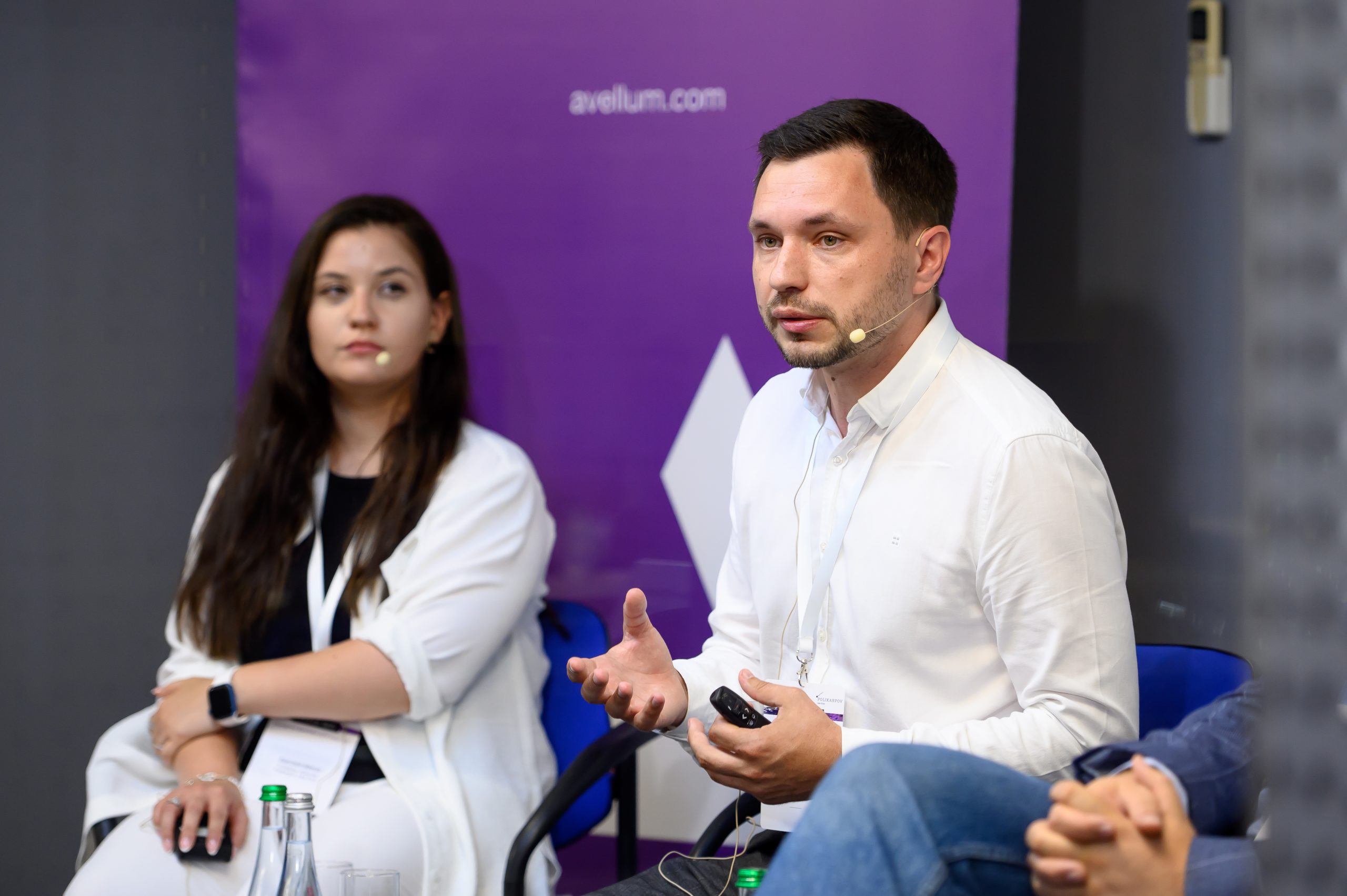
Advice from Anton Polikarpov: Register first where your solvent users and main competitors are located. For most Ukrainian startups, this means the USA (USPTO) and the European Union (EUIPO). Do not try to cover 50 countries at once. Start with key hubs, and later expand protection through the territorial extension of the Madrid Protocol, maintaining the priority of your first application.
Particular attention should be paid to ‘filler words,’ which are a real headache for trademark examiners. Here is a list of terms that are best excluded from the name or used only as non-protectable elements:
- Cloud, SaaS, Web, App — indicate the method of service delivery;
- Soft, Tool, Tech, Code — directly refer to the nature of the product;
- Secure, Fast, Pro, Data — describe quality characteristics;
- AI, Bot, Intelligence — have become too generic in 2024.
Case Study: Scaling a Ukrainian Analytical Service
One of our clients planned to enter the US, Canadian, and UK markets. Instead of filing three separate national applications, we used the Madrid System. This allowed us to lock in a priority date in all countries simultaneously. Although issues arose in Britain regarding the similarity of the name to a local fintech service, having a single international application number allowed us to manage the process centrally and resolve the dispute through a Coexistence Agreement, maintaining the brand’s global presence.
Once you have protected the name, don’t forget about the ‘face’ of your product. For mobile solutions, it is critical to register the app icon and unique interface elements as graphic trademarks. This is your main trump card in the fight against clones in the App Store and Google Play: app store moderators remove copies much faster if you present a registration certificate for the graphics rather than just referencing a ‘similar style.’
Understanding these nuances transforms a legal procedure into a strategic asset, setting the stage for the next logical step—the comprehensive protection of your intellectual property.
Make Your SaaS Protected Today
Registering a brand for a SaaS product is not just a bureaucratic step, but a significant investment in capitalizing your intellectual asset. Protecting this asset allows you not only to secure rights to the name but also to increase the company’s market value.
For a deeper understanding of protection strategy, explore our analysis of IP strategy for IT. It will help you avoid common mistakes when choosing a name. And to ensure your product is unique and ready for market entry, we recommend ordering a professional clearance search and procedural support through our trademark registration service.
If you need help with this task, please use our Trademark Registration service.
Frequently Asked Questions
Can Nice classification categories be changed after a trademark application has been filed?
In most jurisdictions, including Ukraine and the Madrid System, a significant expansion of the list of goods and services after filing an application is not possible. If you filed an application under Class 42 (e.g., for SaaS), but subsequently decided to add financial transaction processing services (Class 36), you will have to file a new application or expand the list, which often requires paying additional fees and undergoing a new examination.
Tip: Careful planning of the list of Nice classification categories at the start is a critical stage. We recommend obtaining a professional assessment of your business model before beginning the procedure. You can learn more about this on our trademark registration page.
What is a disclaimer in the context of trademark registration for an IT startup?
A disclaimer is a legal waiver of exclusive rights to certain elements of your trademark. For SaaS products, this is highly relevant when the name contains descriptive words such as Cloud, Software, System, or Tech.
- If you are registering a combined trademark (name plus a graphic element), the examination may require you to acknowledge these words as non-protectable.
- This means you will not be able to prevent competitors from using the word “Cloud” in their names, but you will hold a monopoly on your unique combination of design, font, and the name as a whole.
Properly drafting a disclaimer at the application stage helps avoid delays in the examination process due to inquiries from the patent office.
Does trademark registration protect my product’s code from being copied?
It is important to understand the distinction between rights:
- A trademark (TM) protects the name, logo, icon, and brand identity. It does not protect algorithms, source code, or the logic of how the software works.
- Copyright automatically arises for software code at the moment it is written. However, to combat clones in the App Store or Google Play, trademark registration is the strongest tool, as marketplaces react more quickly to trademark infringement claims than to complex proof of copyright infringement in code.
For the complete protection of a SaaS solution, we recommend a combined approach: a trademark for the brand and proper documentation of copyright ownership within the company.
What is the difference between registering a name and registering an app icon?
These are two complementary levels of protection:
- Word Trademark: protects the word itself (e.g., Slack). This provides the broadest protection, as you own the name regardless of how it looks visually.
- Graphic or Combined Trademark: protects your icon and design. This is critical to prevent the appearance of “visual clones” that use similar color schemes or graphic elements to mislead the user.
Registering both forms is the gold standard for mobile applications, allowing you to block competitors who attempt to “parasitize” your visual style.
What should I do if I am already operating under a name that turned out to be descriptive and “weak” for registration?
If your service name contains descriptive terms, it does not always mean “fiasco.” There is a concept of acquired distinctiveness. If you can prove that, through long-term and intensive use, consumers associate the name specifically with your product, the chances of registration increase.
However, this is a difficult path that requires gathering evidence of marketing expenses, sales volumes, and audience reach. Before investing resources into such a strategy, it is better to conduct a professional search of the sign to assess your real chances. Utilize our trademark registration service to receive a preliminary report on the possibilities for protecting your brand.