Trademark Registration for an IT Company: Software and Service Protection Strategy
Developing innovative software is just the foundation, but without a legal framework, competitors can easily appropriate your brand identity. In this article, we will examine why proper trademark registration for an IT company is a key condition for protecting assets and securing investment.
Criteria for Successful TM Registration for SaaS Products
Success in the digital environment begins with understanding how a unique name differs from a generic functional description. Below, we will analyze the specifics of selecting Nice Classification classes for software and the importance of conducting a global search before filing trademark registration documents.
Selecting Nice Classification Classes for SaaS
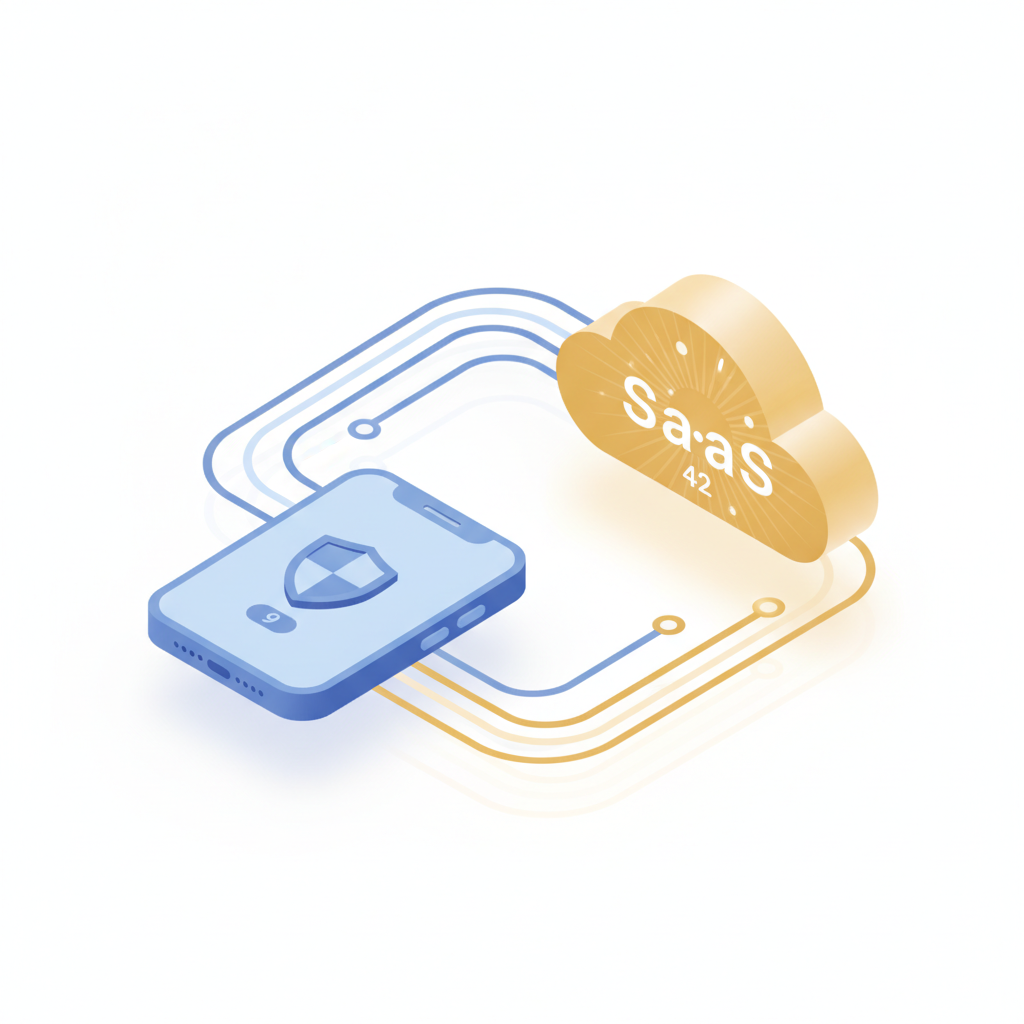
For SaaS products and mobile solutions, selecting Nice Classification (NCL) classes is not a formality, but a strategic decision that defines the scope of your product’s protection. Many developers make the mistake of focusing solely on source code, whereas legal protection should cover both the tangible implementation and the service model. Classes 09 and 42 are key: the former protects the “product” (downloadable software, mobile apps), while the latter protects the “service” (providing access to cloud solutions, SaaS). Failing to register in both categories creates a risk where competitors can legally use your name in related business processes. This is precisely why comprehensive legal registration is a prerequisite for attracting investment, as investors view intellectual property as a company’s primary asset.
Regarding the division of responsibilities: Class 09 provides protection for mobile applications and icons, while Class 42 covers cloud computing and technical support. For complete security, developers often choose:
- Class 09: Downloadable software, mobile applications, digital files.
- Class 42: Providing access to cloud services, software development, and maintenance.
- Class 35: Business administration, online commerce, marketplaces.
- Class 38: Streaming platforms, messengers, telecommunications.
It is important to remember that a trademark is not the same as copyright for code: while the latter protects the program text from being copied, trademark registration prohibits competitors from using your name for commercial purposes. Since even an accidental overlap with global brands can lead to a refusal, it is critical to search for the name in WIPO databases or the offices of the countries where you plan to scale before filing an application. To avoid the leakage of confidential information while preparing your strategy, seek professional assistance for your startup’s legal support.
Related article: Criteria for Successful TM Registration for SaaS Products.
Checking the name against global databases
Once we have defined the list of services in Class 42, the next critical stage is checking the name. In the IT industry, where market boundaries are blurred, entering the international arena without a prior legal audit is like playing Russian roulette. Global databases such as WIPO and EUIPO contain millions of records, and even a partial similarity to an existing brand in the US or EU can lead to your product being blocked on app stores or result in a multi-million dollar lawsuit.
A professional search conducted by a lawyer differs from independent “Googling” in that we analyze not only identical names but also phonetic and visual similarities. This is especially important if you plan to protect a mobile application from being copied, as marketplace algorithms often react automatically to intellectual property complaints, removing questionable applications without lengthy reviews.
- Identity search: identifying identical names in target jurisdictions.
- Similarity analysis: checking for words that look or sound similar to your brand.
- Transliteration check: how the name is perceived in the local languages of key markets.
- Legal opinion: an assessment of the chances of success and recommendations for adjusting the name (if risks are too high).
Remember that the absence of claims at the start does not guarantee safety in the future. As your service begins to scale, the cost of rebranding due to trademark infringement will grow exponentially. Therefore, such an audit is an investment in the founders’ peace of mind and investor confidence. A well-thought-out intellectual property protection strategy allows you not only to defend your position but also to dictate terms in the market, smoothly transitioning from protecting code to capitalizing on the company’s entire brand.
Related material on the topic: How to protect an IT outsourcing company brand in Ukraine and globally.
Protecting an IT outsourcing company brand
The protection of an outsourcing business brand is based on client trust, where a legally registered name becomes a guarantor of stability and high-quality services in the international market.
Expert advice: Reputation in IT services directly affects the average check size — clients are willing to pay a premium to companies with a protected brand, as they see this as a sign of business maturity and readiness for capitalization.
Next, we will look in detail at reputational risks in the service market and the specifics of international protection for exporting your IT expertise.
Reputational risks in the service market
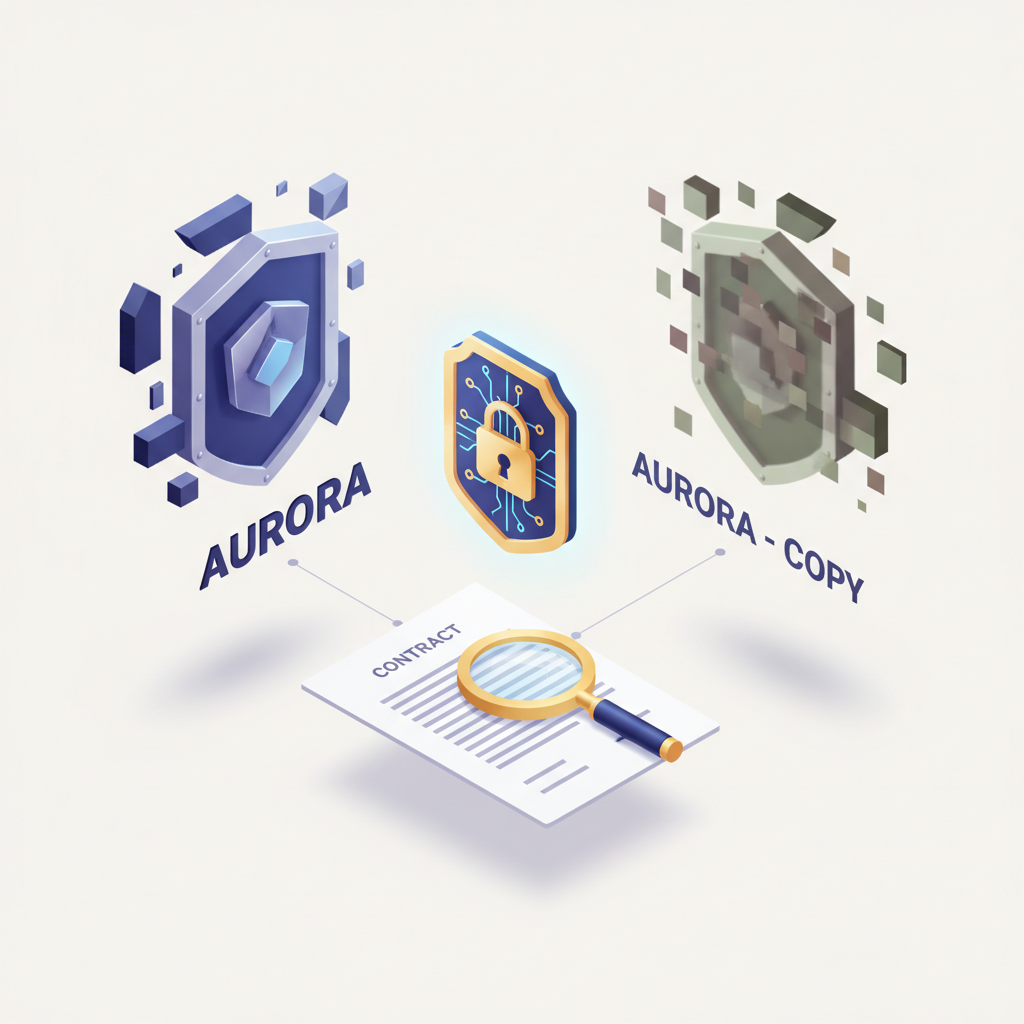
In outsourcing, the brand is the foundation of trust, which directly affects the closing of major contracts. During due diligence, clients from the US or EU analyze not only the technology stack but also the legal purity of assets. A lack of official name protection creates a risk where reputational efforts are nullified by the actions of competitors or the emergence of “lookalikes.”
Typical case: our client lost a strategic customer because another company with a similar name had a low rating on specialized resources (such as Clutch). The customer made a mistake in identification, which led to the breakdown of negotiations. This situation illustrates why timely trademark registration is a mandatory investment: without it, a startup cannot prove its uniqueness to investors.
| Criterion | Copyright (Code) | Trademark (Brand) |
|---|---|---|
| Object | Source code | Name, logo, app title |
| Scope of protection | Prohibition of code copying | Monopoly on the use of the selected designation |
| Key Nice Classification (NCL) classes | – | 09 (software), 42 (SaaS) |
To minimize risks, we recommend checking the uniqueness of the designation via the WIPO Global Brand Database. This will help avoid conflicts during international scaling, especially if you plan to enter marketplaces like Amazon, where intellectual property rights are a key requirement for trading digital products. If you need a confidential analysis of your naming, fill out the form on our website to receive a consultation.
International protection for service exports
The export of IT services requires not only quality code but also brand legitimacy in the client’s jurisdiction. If you work with clients in the USA or Europe, a Ukrainian certificate for goods and services is not enough. It is important to understand that the right to a name is territorial in nature, so a “global expansion” strategy must include a phased approach to legal protection.
For most service and product companies, we recommend the following international protection algorithm:
- Stage 1: Basic registration in Ukraine. This serves as the foundation, allowing you to file an international application under the Madrid System, which significantly saves on fees.
- Stage 2: Registration in the EU (EUTM). A single application via EUIPO covers all European Union countries at once. This is the optimal option for those whose focus is the European market.
- Stage 3: Registration in the USA (USPTO). The US market has its own specifics—here it is critical to prove actual use of the mark (Use in Commerce) or the intent to use it.
Such a comprehensive approach ensures brand protection in Ukraine and globally, minimizing the risks of trolling by local patent “hunters.” Remember that the cost of an international procedure depends on the number of countries and selected classes, but these expenses are an investment in the security of your assets. If you are planning to enter new markets, take care of these steps in advance, as in some countries the bureaucratic process can last more than a year, and priority goes to the one who files first.
Special attention should be paid to digital presence: protection of the domain and name in stores is an integral part of international success, which logically brings us to the specifics of working with mobile solutions.
Trademark registration for mobile applications
Mobile applications exist in a harsh marketplace environment where the copying of icons or names by competitors is a daily occurrence. Let’s look at how to protect UX elements and use a trademark as a tool for the rapid removal of clones from the App Store and Google Play.
Protection of UX elements and icons

Protecting a mobile application requires a comprehensive approach, as the Apple App Store and Google Play are overflowing with products trying to parasitize on someone else’s success. While copyright protects your program code (line by line), it is virtually powerless against visual cloning. If a competitor creates an app with an identical interface but writes it in a different programming language, proving infringement through copyright will be extremely difficult. That is why trademark registration for an IT company becomes the primary tool for blocking copies in stores.
It is not just the brand name that is subject to protection, but also the app icon and the specific UX elements that shape product recognition. An effective startup IP protection strategy involves registering a combined mark or a series of individual trademarks. Remember that without an official certificate, you will not be able to file an effective complaint against an infringer through the Notice and Takedown procedure, and investors will view your software as a legally vulnerable asset.
| Object of protection | Copyright | Trademark (TM) |
|---|---|---|
| Source Code | Yes (primary protection) | No |
| Name and Logo (Icon) | Weak protection | Yes (maximum protection) |
| UX/UI design (interface) | Partially | Yes (as a graphic element) |
| Game/Service mechanics | No | No (patenting only) |
For mobile solutions, it is critical to correctly choose the Nice Classification (NCL) classes. We most often register marks in Class 09 (software as a good) and Class 42 (SaaS, development, and maintenance). Before submitting an application, a search through global databases is mandatory to avoid conflicts with other rights holders. Registering rights in advance allows you to avoid painful rebranding when the app has already gained its first thousands of downloads.
The stable operation of your software in the ecosystems of tech giants directly depends on the presence of a legal shield, which opens doors to the advanced capabilities of these platforms.
Related topic material: Trademark registration for a mobile application.
Trademark as a Key to Marketplaces
In the digital ecosystem, possessing a certificate for a mark for goods and services acts as a “digital passport” for a product. Marketplaces (App Store, Google Play) provide priority support to rights holders: in the event of disputes over clones of your application, official trademark registration is a key tool for accelerating moderation and unlocking accounts.
To operate effectively in global markets, particularly on Amazon, brand protection via Brand Registry opens access to exclusive analytics and marketing tools. However, it is important to consider the following preparation stages:
- Global search: before filing an application, it is necessary to check the name in WIPO databases and local registers to avoid conflicts with existing players.
- NCL classification: for IT products, class 09 (software) and class 42 (SaaS solutions, technical support) are critical.
- Separation of rights: unlike copyright, which protects only the source code, a trademark guarantees a monopoly on the commercial name and icon, which is the foundation for a startup’s investment appeal.
Practical example: if a competitor uses a similar name that misleads users, the absence of a registered brand turns protection into lengthy legal battles. With a trademark, you simply provide a link to the certificate to the marketplace support service, which usually leads to the blocking of counterfeit products within a few days.
Ensure the confidentiality of your branding strategy at the launch stage — consult with specialists regarding the choice of the optimal path for IP protection.
Brand Registration Before MVP Launch
Launching a minimum viable product is a test not only of the business model but also of the brand’s legal stability. In this section, we will analyze why investors require trademark registration and how to build a protection strategy for a startup from scratch.
Why Investors Require Trademark Registration
In the venture capital world, intellectual property is not just a legal term, but an “asset for sale.” When an investor conducts due diligence on your startup, they look not only at unit economics or the number of active users but also at the clarity of rights. If the name of your software is not protected, for a fund it looks like a security hole: at any moment, a patent troll or a competitor could block your operations, demanding a rebrand in the middle of a funding round.
For the IT sector, it is critical to understand the difference between copyright and industrial property instruments. While code is protected automatically as a literary work, this protection does not extend to the commercial name or app icon. Without proper brand rights registration, you risk being denied investment, as no one wants to invest money in an “unclean” asset that cannot be scaled without legal risks.
| Object of protection | Copyright | Trademark (TM) |
|---|---|---|
| What it protects | Source code, text, design layouts | Product name, logo, slogan, icon |
| What it acts against | Direct copying of code (Copy-Paste) | Use of similar names and visual elements |
| For the investor | Confirms developer authorship | Guarantees market monopoly and recognition |
A professional investor views a startup’s portfolio of rights as insurance. While your code can be rewritten in another programming language, the brand is what remains in the user’s memory and carries real market value upon exit.
Particular attention should be paid to checking global databases while still at the idea stage. This allows you to avoid conflicts with industry giants that may have already booked a similar name in NCL classes 09 or 42. Only after confirming the “purity” of the name does it become true capital, ready for attracting external funds.
That is why competent preparation of the foundation for a future product begins long before the first line of code.
Startup protection strategy from scratch
Understanding the high demands investors place on assets, founders must build legal protection in parallel with technical development. The “protection from scratch” strategy ensures that intellectual property is vested in the company at the concept formation stage, preventing situations where brand rights end up owned by individual developers or marketing agencies. This is the foundation for creating a transparent ownership structure that will not raise questions during an audit.
The process of turning an idea into a legally protected asset consists of several sequential steps. First, an in-depth search is conducted in the registries of target countries — this allows for filtering out options that could lead to future lawsuits. Next, a list of classes of goods and services is determined, covering not only the current functionality of the software but also potential paths for service development, such as transitioning from a simple utility to a full-fledged SaaS platform. Officially securing rights at this stage creates a reliable foundation for scaling the business internationally.
An intellectual property protection scheme for a startup typically includes:
- Conducting a preliminary identity and similarity search in key jurisdictions.
- Securing rights for UI/UX elements and icons as part of the brand’s graphic design.
- Filing applications with the relevant government agencies to establish priority.
- Preparing license agreements between the company and developers to transfer all rights.
It is important to remember that having an official certificate significantly simplifies the fight against clones. Why IT startups need to register a trademark before launching an MVP is not just a matter of security, but one of survival in a saturated market where the speed of copying ideas sometimes exceeds the speed of their implementation.
Once the strategy is developed and applications are filed, only one step remains — ensuring continuous control over your rights.
Act now before your brand is stolen
In the dynamic IT sector, protecting intellectual property is not an incidental expense, but a strategic investment in a startup’s capitalization. The absence of formalized brand rights during due diligence often becomes a critical security “hole” that causes investors to walk away from deals. Unlike copyright for code, which protects only the source text of the program, trademark registration allows you to monopolize the name, logo, and app icons, preventing the emergence of clones on the global market.
Before scaling, it is critical to conduct an audit using international databases (such as the WIPO Global Brand Database) to ensure the “cleanliness” of the chosen name. Our intellectual property protection strategy is based on three principles:
- Priority: securing rights for the company (not for developers) before the MVP launch.
- Focus on key classes: mandatory protection under classes 09 (software, applications) and 42 (SaaS, hosting, development).
- Global coverage: extending trademark protection to jurisdictions where servers are deployed or where your target audience is concentrated.
Be proactive: leave a request for a professional consultation to analyze your situation in detail under strict confidentiality and to create a roadmap for protecting your digital assets.
If you need help with this task, please use the service Trademark Registration.
Frequently Asked Questions
Can a trademark be registered for a domain name if the project does not yet have a full-fledged brand?
A domain name and a trademark are different assets. Registering a domain in .com, .io, or .ua zones does not grant you rights to use that name as a brand. Moreover, if a third party already owns a trademark similar to your domain, you may face a lawsuit for intellectual property infringement.
Registering a trademark based on your domain name is a strategically correct move because:
- It secures priority for the name in specific Nice Classification classes.
- It allows you to more easily reclaim a domain if it is intercepted by “cybersquatters.”
- It protects your marketing channel (website) from blocking or claims by competitors.
Do I need to register separate trademarks for my company name and individual product names?
In most cases, yes, it is advisable. Legally, these are two different objects:
- A trademark for the company name protects your reputation as a service provider (e.g., for B2B contracts and working in the outsourcing market).
- A trademark for a product name (SaaS/applications) protects the specific commercial asset that you plan to scale, sell, or attract investment for.
If you are planning to enter the international market, an “one name for everything” strategy may prove risky, as the same name might already be taken in different classes across various jurisdictions. Consulting with a specialist will help determine whether a single umbrella brand is sufficient or if it is better to separate your intellectual assets.
What if my brand name contains common technical terms?
This is one of the most common reasons for registration refusal. Intellectual property offices (UANIPIO, EUIPO, USPTO) reject designations that are descriptive — that is, those that directly indicate the type of goods or services (for example, “Super Software” or “Cloud Service”).
To increase your chances of registration, it is worth using:
- Fanciful names: unique words that have no direct meaning (such as Google or Canva).
- Combined designations: adding a unique graphic element (logo) to the technical term, which creates a recognizable overall image.
Before submitting an application, we recommend conducting a professional search for distinctiveness to assess the risk of refusal due to descriptiveness.
What benefits does Amazon Brand Registry offer to IT product owners?
Although Amazon is traditionally associated with physical goods, having a registered trademark allows you to use brand protection tools on this platform. For IT companies selling digital products or their accessories, this provides the following benefits:
- Ability to control content: You receive the exclusive right to edit product descriptions and images, eliminating “junk” listings.
- Simplified removal of infringers: Through the internal Report a Violation tool, you can remove sellers who use your name or logo without permission much faster.
- Customer trust: The brand owner status increases trust in your Amazon page.
Will registering a trademark help avoid issues with tax authorities or financial monitoring?
A trademark alone does not replace tax accounting, but it is an intangible asset. From a legal perspective, having a registration certificate allows you to:
- Include the brand on the company’s balance sheet: You can value your intellectual property and include it in your capitalization.
- Legally transfer rights: Through franchising agreements or license deals, you can structure cash flows, which is a completely transparent practice for international business.
- Confirm business reality: When opening accounts with foreign banks or payment systems (Stripe, PayPal), having a trademark is an additional argument that you are a real business, not a “shell” company.