Reverse Domain Name Hijacking (RDNH) is the official procedural classification of actions by a complainant who abuses the UDRP or UA-DRP administrative procedure to deprive a legitimate registrant of their rights to a domain name. RDNH is established exclusively by an arbitration panel (WIPO Panel) pursuant to Rule 15(e) of the UDRP Rules in cases where a complaint is filed groundlessly, in the absence of cybersquatting indicators, or for out-of-court pressure against the asset owner.
- RDNH is a direct presumption of intellectual property rights abuse by a trademark owner who initiates domain arbitration against a bona fide domain owner.
- The key factor in establishing RDNH is registration priority: if a domain name was delegated prior to the date trademark rights arose, the complaint is a priori considered knowingly hopeless (rejection of the retroactive bad faith concept).
- The WIPO Panel declares reverse hijacking if the complainant conceals facts of prior negotiations, deceptively manipulates evidence, or attempts to expropriate a generic domain.
- An RDNH decision is published in the open WIPO register, delivering an irreparable blow to the brand’s and its representatives’ reputation, while also opening the path to recover damages and legal fees in national courts (particularly under the ACPA in the USA).
Over two decades of handling cross-border intellectual property disputes, we frequently encounter a misguided belief among corporate clients: the existence of a certificate for a well-known trademark allegedly automatically guarantees the re-delegation of any consonant domain name. This is a dangerous illusion. International arbitration, created by ICANN and administered by the WIPO Arbitration and Mediation Center, is not a compulsory digital asset expropriation service for the benefit of a financially powerful business.
When a large company attempts to use the WIPO administrative regulations as leverage (“reverse domain name hijacking udrp”) against a private registrant or small business representative, the administrative panel applies stringent countermeasures. Abusing the procedure transforms an aggressive plaintiff into a wrongdoer, affixing the legal label of a procedural raider.
What is RDNH under UDRP Rules
To understand the nature of RDNH, one must grasp the original mission of the Uniform Domain Name Dispute Resolution Policy (UDRP). This instrument was created exclusively to combat obvious, indisputable cybersquatting—the practice of parasitic brand hijacking for subsequent resale at inflated prices or fraudulent traffic redirection. However, in practice, the procedure is often used by major rightsholders as a delicate euphemism for raiding, when a wealthy corporation refuses to buy the desired domain at market value and attempts to acquire it through aggressive legal blackmail.
In the context of disputes under national rules (for example, the UA-DRP regulations administered by Hostmaster), the abuse protection mechanism follows a similar logic. If an economic entity attempts to resolve a standard commercial conflict or a dispute over commercial name priority through accelerated domain arbitration tools, it steps outside the bounds of legitimate enforcement. That is precisely why professional resolution of domain disputes (UDRP, .UA) requires a preliminary deep audit of the evidence base even before sending the first official claim.
Legal Nature and Definition of RDNH
According to Paragraph 1 of the UDRP Rules, Reverse Domain Name Hijacking is defined as using the Policy in bad faith to attempt to deprive a registered domain name owner of their domain name. This official wording enshrines the presumption that intellectual property rights are not absolute and cannot serve as an instrument of procedural terror.
The regulatory foundation for issuing such a verdict is Rule 15(e) of the WIPO Rules. It directly establishes an imperative: if, after considering the submissions, the arbitration panel finds that the complaint was brought in bad faith, for the purpose of harassing the domain registrant, or was filed with prior awareness of the absence of legal grounds to win, the panel is required to explicitly state in its decision that the complaint constitutes an abuse of the administrative proceeding and is an attempt at reverse domain name hijacking.
Thus, RDNH is not merely the dismissal of a complainant’s claims due to a lack of evidence. It is an official qualified judicial reprimand, a procedural sanction by WIPO arbitration that declares an abuse of rights and inflicts irreparable reputational damage on the corporation and its legal counsel.
Key Criteria for Abuse of Complainant’s Procedural Rights
As indicated in the WIPO Overview of WIPO Panel Views on Selected UDRP Questions, Third Edition (WIPO Overview 3.0, section 4.16), an RDNH declaration does not require a mandatory counterclaim from the respondent. The panel has the discretionary power to issue such a verdict sua sponte (on its own initiative), even if the registrant did not submit a formal response at all, provided the complainant’s bad faith is evident from the case materials.
When assessing the behavior of the dispute initiator, the arbitration panel applies a structured good faith assessment algorithm:
Key Action: Comparing the exact delegation date of the disputed domain with the date exclusive trademark rights arose.
Goal / Requirement: The complainant must prove rights to the mark at the time of name registration by the respondent.
Result: If the trademark is registered later than the domain, respondent bad faith is presumed impossible.
Key Action: Analyzing whether the complainant (or their specialized lawyer) could reasonably expect success.
Goal / Requirement: Determining whether filing the complaint is a form of pressure on the owner due to a disparity in financial resources.
Result: Recording the disregard of established WIPO Overview 3.0 practice as an indicator of bad faith.
Key Action: Checking the completeness of the complainant’s disclosure of the relationship history with the respondent.
Goal / Requirement: Identifying hidden correspondence, the complainant’s commercial offers to buy out the domain, or prior refusals.
Result: Concealing facts is classified as knowingly misleading the arbitration panel.
Body / Action: The WIPO arbitration panel evaluates the dictionary (generic) meaning of the domain name.
Basis: The complainant’s lack of a monopoly on generic terms and verification of bona fide use.
Result: Establishing that UDRP is being used as an out-of-court digital asset expropriation mechanism.
Decision: Total dismissal of the complainant’s claims with a separate public declaration of right abuse.
Result: Retention of the domain by the rightful holder, inclusion of the complainant in international RDNH registries.
Understanding these criteria is critical for every brand owner. Before figuring out what to do if a competitor registered a similar domain, one must soberly calculate their own chances so that an aggressive advance does not turn into a catastrophic legal defeat.
Typical Grounds for Finding a Complaint to Be UDRP Abuse
WIPO Center practice in recent years demonstrates a continuous increase in panel strictness toward rightsholders who neglect standards of good faith. The finding of RDNH relies on clear precedent patterns formed in hundreds of arbitration decisions. Below is an analysis of factors that will with almost 100% certainty lead an unprepared plaintiff to a finding of bad faith behavior.
Domain Registration Priority Over Trademark
A fundamental rule of the UDRP procedure is the so-called three-prong test (Paragraph 4(a) Policy), where the third element requires cumulative proof: the domain name must be both registered and used in bad faith.
It is impossible to register a domain name with bad intentions toward a trademark that objectively did not exist at the date of registration. If a domain was delegated in 2012, and the complainant company applied for a trademark only in 2021, legally accusing the registrant of cybersquatting is impossible, except in extremely rare cases of indisputable global unregistered brand fame at the delegation date.
Attempts by lawyers to appeal to a “plan of expansion” or promote the marginal concept of retroactive bad faith (allegedly initially bona fide registration becomes bad faith later due to brand commercial growth) consistently crash against established WIPO panel practice (e.g., WIPO Case No. D2000-0226 or WIPO Case No. D2018-1374). Panelists consistently emphasize: if the complainant’s representative is a qualified attorney, they could not fail to know this basic principle, and therefore knowingly filed a groundless complaint, counting on the respondent’s legal illiteracy or financial inability to defend themselves.
Concealing Facts and Misleading the Panel
Paragraph 3(b)(xiv) of the UDRP Rules requires the complainant to sign a mandatory compliance certificate confirming under penalty of perjury that the information in the complaint is complete and accurate. Violating this requirement is the shortest path to an RDNH verdict.
Typical manifestations of bad faith behavior include:
- Concealing negotiation history: the complainant conceals the fact that they themselves tried to purchase the domain through brokers, received a reasonable refusal at market price, and only then decided to initiate an administrative dispute, attempting to frame the owner’s response as extortion;
- Deliberate distortion of dates: stating the company’s foundation date instead of the exact mark registration date to create a false impression of priority over the domain;
- Ignoring licensing or distributor relationships: when a major manufacturer attempts to take a domain from its former official distributor or partner, manipulating UDRP norms instead of applying to court to resolve a contractual commercial dispute (where the well-known test from the precedent case Oki Data Americas, Inc. v. ASD, Inc. applies);
- Attacking generic domains: registering a word mark for a generic or dictionary word (e.g., “cloud”, “apple”, “delivery”) followed by an attempt to oust a company that uses the domain purely for its direct semantic purpose.
To structure these differences, let’s contrast the features of a legitimate lawsuit with procedural bad faith in the table below.
| Evaluation Criterion | Legitimate UDRP Complaint (Rights Defense) | UDRP Abuse / RDNH (Asset Hijacking) |
|---|---|---|
| Rights Chronology | Trademark registered and actively used long before the registration of the disputed domain. | Domain name registered significantly earlier than the filing date or TM registration of the complainant. |
| Domain Nature | Unique fanciful designation or globally famous brand without dictionary meaning. | Short letter combinations (acronyms), generic terms, or geographical names. |
| Evidentiary Discipline | Comprehensive disclosure of all contacts between parties, including negotiations and official claims. | Selective submission of evidence, removal of correspondence context, deliberate concealment of sales refusal. |
| Respondent Behavior | Creation of phishing pages, brand parasitism, absence of bona fide business. | Legitimate commercial or non-commercial use prior to receiving dispute notice (bona fide). |
| Purpose of Procedure | Cessation of infringement, protection of consumers from deception and product counterfeiting. | Out-of-court expropriation of a valuable domain to avoid paying its fair market value. |
The healthcare sector has a distinct specificity. Since drug names are subject to strict regulation, cybersquatting on pharmaceutical brands often borders on distributor conflicts or generic manufacturing. If a major pharma corporation attempts to block an independent information portal or price aggregator domain via UDRP while concealing the lack of direct confusion with the original medication, the risk of receiving an RDNH decision increases manifold.
Legal and Reputational Consequences of Establishing RDNH
Clients often ask: why are large international holdings so afraid of a reverse hijacking verdict if the WIPO panel lacks the authority to directly collect a fine or award monetary compensation to the respondent? The answer is that the procedural and reputational consequences of such a decision extend far beyond the paid arbitration fee.
Reputational Blow and Publicity of WIPO Decisions
All decisions of the WIPO Arbitration and Mediation Center are published publicly in full without redactions, including the official names of complainants and the names of law firms that drafted and signed the complaint. Furthermore, these decisions are automatically indexed by leading search engines and entered into international monitoring databases (including the specialized global registry rdnh.com).
For a public company, the fact that its actions are recognized as an “abuse of justice” or a “raider attempt to hijack a domain” becomes a toxic factor in relations with investors, regulators, and partners. If the company faces a real cybersquatter tomorrow and files a complaint with WIPO, any future arbitration panel will inevitably take its past behavior into account. The panel’s credit of trust toward such a rightsholder will be undermined for years to come.
Damages Claims in Courts
The UDRP panel operates within the narrow limits of ICANN’s mandate and can only dismiss or grant a request for cancellation or re-delegation of a name. However, obtaining an RDNH verdict fundamentally alters the balance of power in national courts. The respondent receives irrefutable proof of right abuse certified by an international tribunal.
In the jurisdiction of the United States, the Anticybersquatting Consumer Protection Act (ACPA, 15 U.S.C. § 1114(2)(D)(v)) applies. This norm allows a registrant whose domain has been subjected to wrongful appropriation attempts to file a federal court lawsuit against the complainant for:
- Declaratory Judgment of Non-Infringement;
- Recovery of all actually incurred legal fees (Attorneys’ Fees);
- Compensation for direct material damages and business reputation injury caused by bad faith blocking or legal harassment.
In European and Ukrainian jurisdictions, establishing an RDNH finding is a persuasive ground for applying to court for damages compensation based on general civil law norms regarding abuse of rights and protection against unfair competition. The procedure turns into a financial trap for the complainant, where instead of a free domain, they receive multi-thousand-dollar lawsuits.
Registrant Defense Strategy Against Unlawful Claims
When a bona fide digital asset owner receives an official notification from the WIPO Center or registrar about the initiation of arbitration proceedings, the right procedural reaction becomes the deciding factor. A passive stance or the hope that “the panelists will figure out the chronology themselves” guarantees a loss: the UDRP system is built on the presumption of evaluating submitted arguments, and in the absence of a proper response, the domain can be re-delegated even if there are hidden defects in the complainant’s position.
If you aim to thoroughly understand how to take a domain from a cybersquatter without a court using UDRP in fair cases, then for the defense side the mirror task is destroying the opposing party’s three mandatory elements of proof. Legal defense requires a clear structuring of objections.
Drafting a Reasoned Response to the Complaint
From the moment the UDRP provider officially transmits the Notification of Complaint, the respondent has exactly 20 calendar days to prepare and submit an official Response. Missing this preclusive deadline results in a default proceeding decision.
In the Response text, the respondent must not only object to the complaint’s arguments but also formulate an independent procedural block: “Request for a Finding of Reverse Domain Name Hijacking.” It must explicitly reference Rule 15(e) of the UDRP Rules and provide specific arguments on why filing the complaint constitutes a gross abuse of procedural rights (Plan of Intimidation, Procedural Abuse). If the respondent does not explicitly request an RDNH finding, the arbitration panel does so much less frequently.
Proving Legitimate Interest and Absence of Bad Faith
The defensive strategy is built on forming an irrefutable package of written and digital evidence. It is important to prove the existence of a legitimate interest pursuant to paragraph 4(c) of the Policy (specifically, bona fide offering of goods or services or legitimate noncommercial / fair use).
To form a comprehensive evidentiary base for defense, the following list of procedural steps is recommended:
- Establishing Historical Priority (Historical Whois Data): Obtaining archived certified Whois extracts proving continuous ownership of the domain from a date preceding the complainant’s rights arising under the Law of Ukraine “On Protection of Rights to Marks for Goods and Services”.
- Notarial Archive Fixation via Wayback Machine: Certifying electronic snapshots of the site using the Internet Archive for past years to refute arguments about intentional passive holding or content falsification.
- Evidence of Brand Development Investments (Pre-complaint preparations): Providing contracts, design invoices, and software development payment documents protected under the Law of Ukraine “On Copyright and Related Rights”, signed before receiving any claims from the plaintiff.
- Documenting Bad Faith Buyout Attempts: Full disclosure of all correspondence and email messages from domain brokers representing the complainant to prove that the dispute was initiated solely due to the complainant’s unwillingness to pay market price.
- Linguistic and Semantic Analysis of the Name: Evidence of the generic or general geographical nature of the domain, precluding the complainant’s monopolization of the word in global cyberspace.
Applying this complex allows one not only to completely repel the attack and preserve the valuable domain name, but also to turn the process into a public defeat for the corporate aggressor.
Polikarpov Law Firm Practice Regarding Risks
In our firm’s legal practice, we always insist that preventing the risk of RDNH begins long before drafting the complaint. Brand managers frequently give in to emotions, believing that their company’s fame in the local market automatically makes any owner of an identical domain a criminal. The job of a qualified IP advisor is to conduct a cold, uncompromising pre-conflict audit.
Risk Audit Before Filing an Official Complaint
Before initiating any action at the WIPO Center or under national regulations, we conduct an in-depth investigation of the disputed domain name registrant using a special scoring model:
- Deep Whois Audit and Ownership Changes: Investigating whether the actual domain beneficiary changed. If a domain was registered in 2015, but an actual change of the ultimate registrant occurred in 2023 (rather than a technical DNS update or registrar change), the priority date for WIPO arbitration becomes 2023 precisely. This is a fundamental nuance that can turn a hopelessly losing case into a successful one;
- Analysis of Industrial Ties: Checking the registrant’s activity via industry associations such as the IT Ukraine Association, public legal entity registers, or specialized services to identify a real IT business or startup, which excludes the presumption of cybersquatting;
- Commercial Feasibility: Comparing the cost of WIPO arbitration expenses (including the mandatory Center fee starting from $1,500 and attorney fees) with the market offer for voluntary asset buyout. If buying out the domain is cheaper than arbitration and the RDNH risk exceeds 20%, initiating arbitration is an unjustified commercial mistake.
Tactics in Parallel National Courts
The UDRP administrative procedure does not deprive the parties of the right to apply to a court of general jurisdiction. According to Rule 18 of the UDRP Rules, the arbitration panel has the authority to suspend dispute proceedings or continue them if a national court process has been initiated in parallel.
In Ukraine, Supreme Court practice regarding trademark rights protection on the Internet is based on a clear demarcation of infringement methods. If an international company lost at WIPO with an RDNH finding, a subsequent attempt to go to a Ukrainian court and take the exact same domain under Art. 16 of the Civil Code of Ukraine or the Law of Ukraine “On Protection of Rights to Marks for Goods and Services” encounters an extremely unfavorable precedent background. The judge will necessarily examine the text of the WIPO arbitration decision as written evidence of the respondent’s good faith and the absence of plaintiff rights infringement.
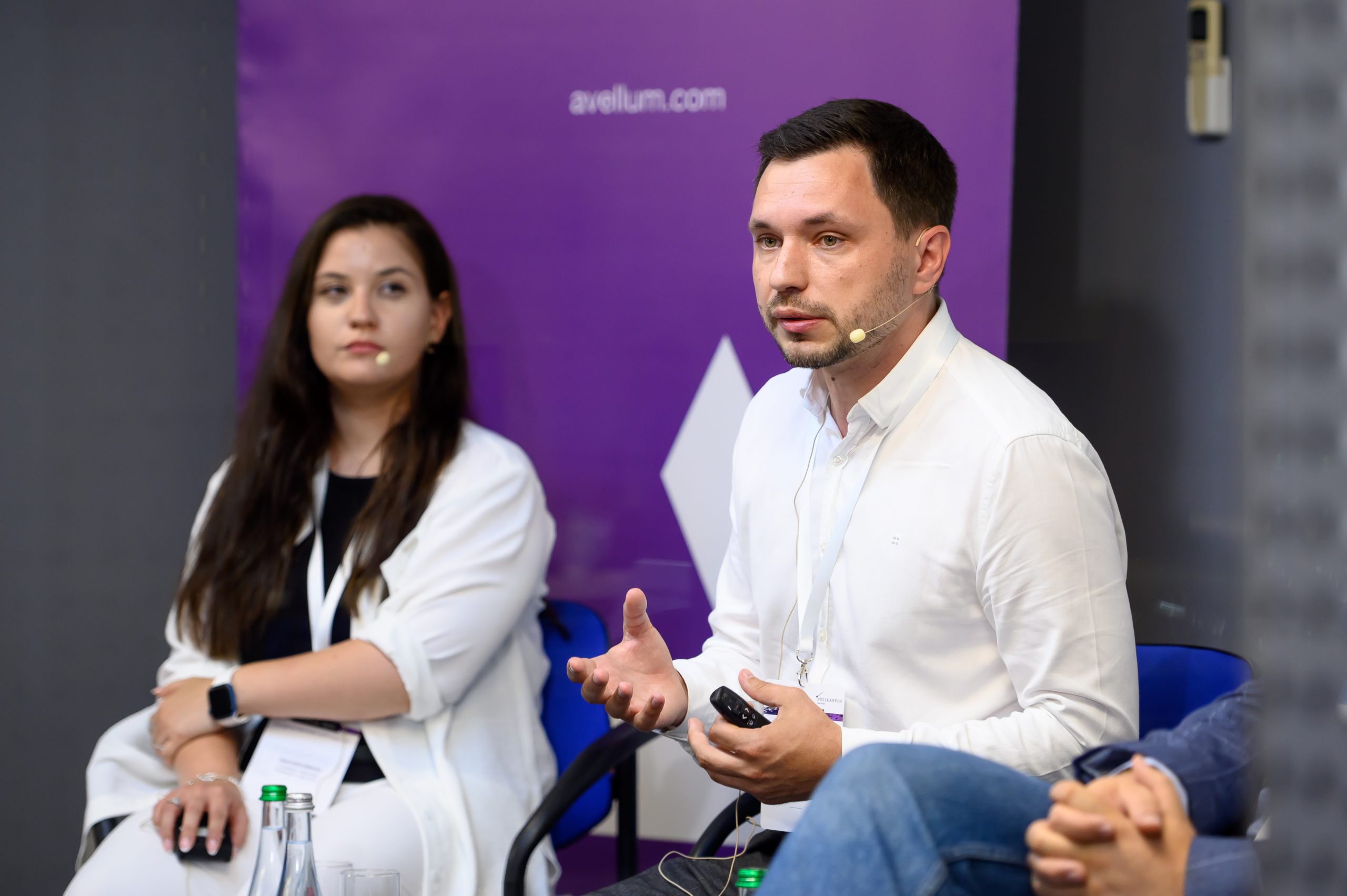
Expert Warning by Anton Polikarpov:
“Initiating a UDRP proceeding ‘on a whim,’ without rock-solid evidence of the registrant’s initial bad faith, is the worst service a consultant can provide to their client. Reverse domain name hijacking is a black mark that cannot be erased from a brand’s digital history. When we see that an opponent lawfully acquired the name prior to trademark registration, our strategy is not a senseless frontal attack via arbitration, but diplomatic negotiations, structuring escrow deals, or rebranding. The strength of a professional IP attorney lies in the ability to timely stop a client from taking a step that will cause irreparable harm to their reputation.”
Conclusions and Effective Protection of Domain Assets
The Uniform Domain Name Dispute Resolution Policy (UDRP) is an effective, relatively fast, and highly professional intellectual property rights protection tool. It ideally performs its task when it comes to eliminating site clones, phishing resources, and outright cybersquatting. However, this mechanism categorically does not tolerate pressure attempts by large corporations against legitimate asset owners.
The finding of Reverse Domain Name Hijacking (RDNH) is a strict safeguard of international arbitration against intellectual property rights abuse. Regardless of whether you are the owner of a globally famous trademark or the registrant of a valuable domain attacked by competitor claims, success depends on a qualified assessment of every piece of evidence: from registration timestamps to semantic word meanings.
The Polikarpov Law Firm team provides full legal support and defense in domain disputes both at the pre-trial settlement stage and in WIPO proceedings, UA-DRP, and Ukrainian courts of all instances. We know how to turn procedural rules into an unshakeable shield for your business.