Madrid System: How a Lviv Brand Can Establish a Presence in Europe
Lviv exporters and IT companies increasingly view the EU market as a priority, but large-scale expansion requires a solid legal foundation. Properly planned trademark registration in Lviv becomes the first step toward international recognition through the Madrid System.
Advantages of the Madrid System for Local Exporters
Entering European markets requires flexibility and maximum resource optimization from businesses while protecting their brand. We will analyze how the international procedure simplifies bureaucratic processes and ensures cost transparency for every exporter.
Single Window: One Application for Dozens of Countries
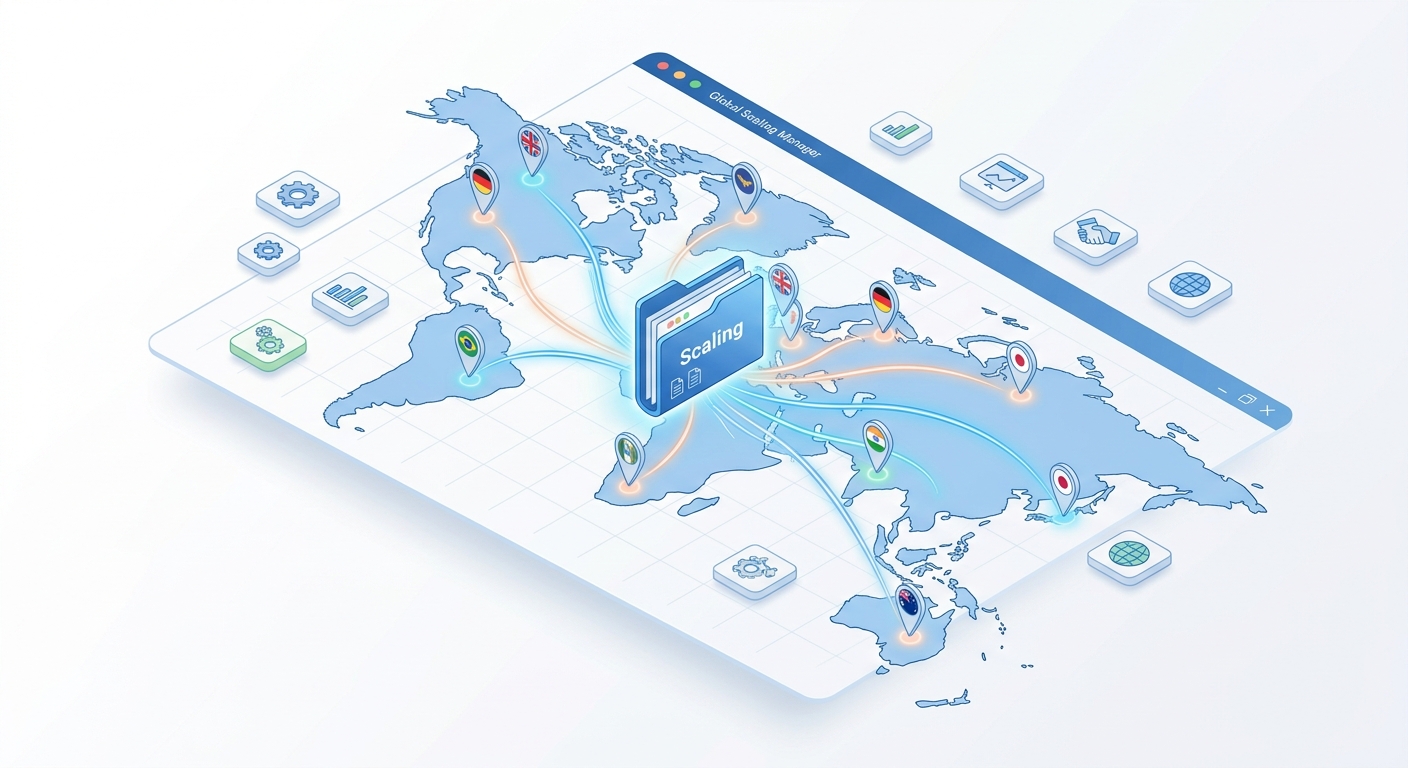
The Madrid System is a true “fast pass” for businesses looking to scale. Instead of submitting separate sets of documents to each EU country, searching for local attorneys there, and paying dozens of different fees, you file a single international application. This opens the door to legal protection in more than 130 countries worldwide, which is critical for the effective protection of Lviv brands in foreign markets where the risks of product copying grow proportionally to your popularity.
The administrative convenience of the system also lies in the absence of language barriers at the start. All documentation is handled in English, French, or Spanish, which avoids the costs of numerous legal translations. Unlike situations where local trademark registration in Dnipro or another region is limited only to the territory of Ukraine, the international procedure creates a single management center for your intellectual property portfolio. If you decide to change the owner’s address or add new countries to the protection list, this is done with a single entry in the International Register of the World Intellectual Property Organization (WIPO).
It is important to understand that trademark registration through this “single window” provides the same exclusive rights as national certificates in each individual country. You gain a legal tool to block counterfeits at customs and remove infringing products from marketplaces like Amazon or eBay, making your business transparent and secure for European partners and investors. This approach transforms a legal formality into a strategic asset that capitalizes your company before entering the global arena.
Economic Benefit and Cost Transparency
The financial rationality of the international procedure lies in the radical reduction of initial operating costs. The greatest savings provided by trademark registration in Lviv through the Madrid System are achieved by avoiding the mandatory engagement of foreign patent attorneys in each individual country at the filing stage. Instead of paying lawyer fees in every European capital, the business interacts exclusively with the national intellectual property office, which avoids costs for numerous consultations and local translations.
Budget transparency is guaranteed by the use of a single currency — the Swiss franc (CHF). The official WIPO Schedule of Fees allows for the advance calculation of costs without the risk of unpredictable exchange rate fluctuations of local currencies or hidden payments from national offices. This is particularly convenient for those who have already conducted a preliminary similarity search and precisely identified priority markets for scaling.
Professional trademark registration under the international protocol also simplifies subsequent rights management. Any changes — from the owner’s address to the transfer of rights — are made through a single entry in the International Register. This is significantly cheaper than performing similar actions in the registries of each country separately, making the Madrid System the most economically viable tool for brand capitalization abroad.
This aspect is covered in more detail in a separate article: Similarity Search: This Option for Food Projects.
Algorithm for Entering the EU Market: From Lviv to Geneva
For successful expansion, it is necessary to understand a clear sequence of legal steps. We will look at the role of the national application as a foundation and detail your brand’s journey through international authorities until protection is obtained.
Basic National Registration as a Foundation
International registration under the Madrid System is not autonomous — it always relies on “home” protection. For a Lviv entrepreneur, this means that the first step is filing an application or obtaining a certificate in Ukraine through the UANIPIO (National Intellectual Property and Innovations Office). This basic document becomes a legal certificate of authenticity, based on which WIPO will begin the process of extending your rights to the territory of the European Union or other countries.
It is important to understand a critical detail: an international trademark remains fully dependent on the Ukrainian one for the first five years. In professional circles, this phenomenon is called a “central attack.” If the basic registration in Ukraine is canceled or declared invalid during this period, international protection will automatically cease to be effective in all selected countries. This is why high-quality preparation of documents for brand protection during export at the level of the Ukrainian application is the key to the stability of your business abroad.
Our specialists provide full support for this process, monitoring the compliance of classes of goods and services with international standards to avoid rejections at the start. Once the national foundation is laid, the next stage begins, where your brand passes through the sieve of international examinations.
Stages of the International Examination of Your TM
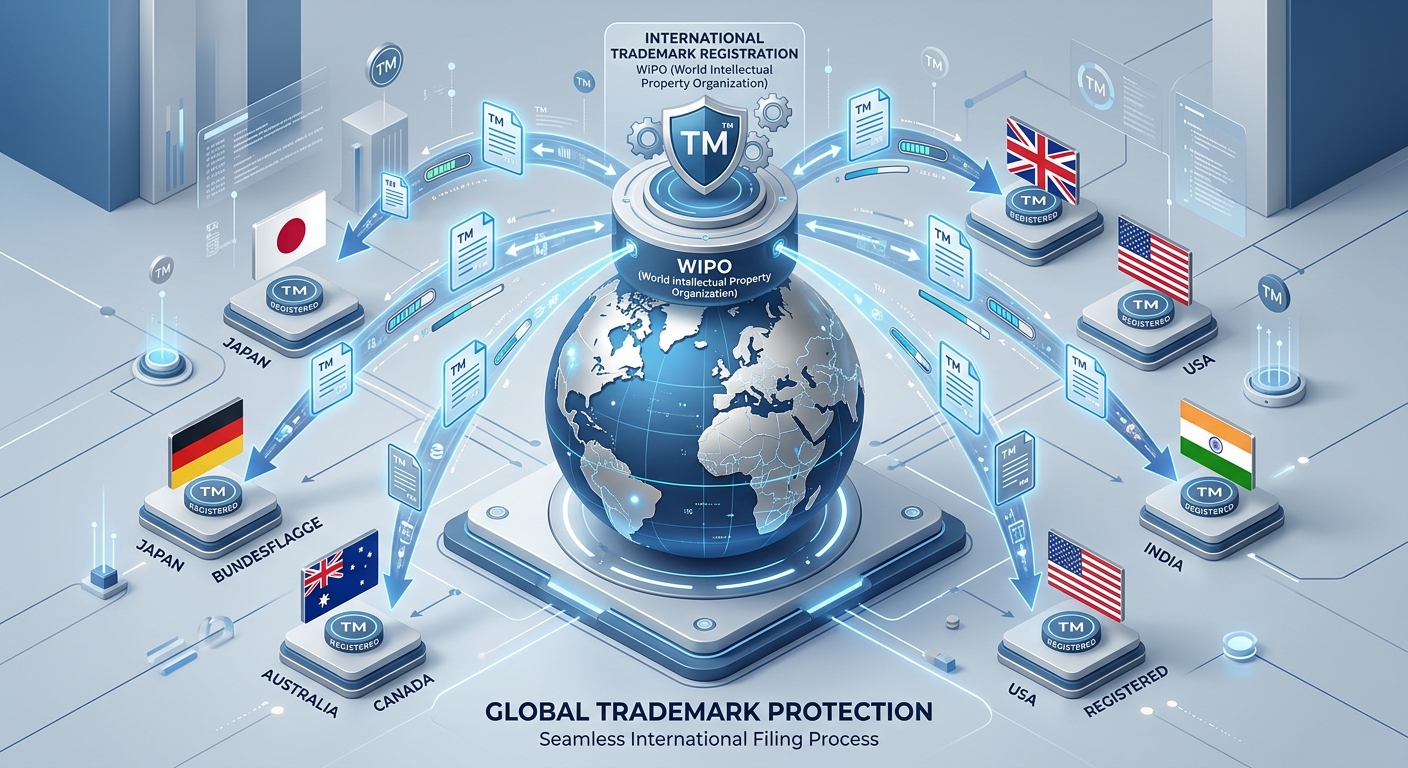
Once UANIPIO confirms that the international application matches your basic registration, the documents are forwarded to the WIPO International Bureau in Geneva. At this stage, the Bureau’s specialists conduct a formal examination: they verify the correct classification of goods and services according to the Nice Classification (NCL), the accuracy of the applicant’s data, and the payment of international fees. If the application meets all requirements, the brand information is entered into the International Register, and you receive a certificate of registration. However, it is important to understand: this certificate only records the fact of filing and does not guarantee protection in every country.
The key stage is the substantive examination in the national offices of the selected countries. Each state reviews the application according to its own legislation. Pursuant to the Madrid Protocol, this process takes between 12 and 18 months. During this period, local experts check whether your logo contradicts the country’s moral standards and whether it conflicts with marks already registered there. If the national office does not send a notice of Provisional Refusal within this period, protection is considered granted automatically under the principle of “tacit consent.”
To successfully pass these stages, professional trademark registration should include a preliminary risk analysis right at the start. For example, one of our clients from Lviv planned to expand into the Polish and German markets, but thanks to a preliminary search, we discovered a similar designation in the German registry, which allowed us to adjust the strategy in time and avoid lengthy disputes. Understanding the 12–18 month timeline helps businesses synchronize legal processes with their marketing plans for entering new markets.
Costs and Financial Planning for Protection
A clear understanding of costs allows you to avoid financial surprises when entering foreign markets. We will break down the structure of international fees in detail and look at available benefits that significantly reduce the burden on the business budget.
Fee Structure: What the Business Pays For
An international brand protection strategy requires mathematical precision, as the budget is calculated in Swiss francs (CHF). This ensures planning stability but requires attention to the payment structure. Trademark registration through the Madrid System involves several levels of fees, which depend on the graphic representation of the mark and the geographical coverage.
According to the official WIPO fee schedule, the main financial burden is distributed as follows:
| Fee Type | Amount (CHF) | Comment |
|---|---|---|
| Basic fee (black and white TM) | 653 | Mandatory payment for application administration |
| Basic fee (color TM) | 903 | Paid if color is part of the legal protection |
| Additional class (beyond three) | 100 | For each NCL class, starting from the fourth |
| Supplementary fee per country | 100 | For countries that have not established individual fees |
It is important to consider that countries with developed markets (USA, UK, Japan) usually apply individual fees. Their amount can significantly exceed the standard 100 francs, making a preliminary calculation via the WIPO Fee Calculator critical for Lviv businesses before entering foreign markets.
Expert Advice: A preliminary similarity search is not an expense, but an investment in budget security. If the national office of a selected country (e.g., Germany) refuses registration due to a conflict with a local mark, international fees for that jurisdiction are not refunded.
Practical Example: One of our clients in the furniture manufacturing industry discovered an identical designation in Spain through a preliminary search. Changing the name of the product line before filing the documents allowed them to avoid a predicted refusal and saved over 850 CHF in direct fees that could have been lost during the official examination.
In addition to international fees, the procedure involves paying a national fee in Ukraine for forwarding the application to the International Bureau. However, there are mechanisms that allow for compensating up to 75% of these costs, which we will discuss in detail below.
Disclaimer: The amounts shown are current as of the date of publication. This material is for informational purposes and does not constitute individual advice. For accurate budgeting, an analysis of the specific list of goods and services is required.
Benefits and Opportunities for Ukrainian SMEs
Entering the European market requires not only legal precision but also a financial strategy. For Ukrainian SMEs, there are mechanisms that allow turning registration from a budget expense into an investment with a high rate of return. A key tool is the SME Fund “Ideas Powered for Business” program, implemented by EUIPO.
Professional registration using this technique, combined with grant opportunities, allows Lviv exporters to claim the following benefits:
- Fee Vouchers: reimbursement of up to 75% of the cost of national and regional applications within the EU and 50% of the basic fees of the Madrid System.
- IP Scan Service: compensation of up to 90% of the cost of a professional audit, which helps identify assets requiring protection even before filing an application in Geneva.
Case Insight: One of our clients (a cabinet furniture manufacturer from the Lviv region), while preparing for distribution in Germany, first used an IP Scan voucher. This allowed them to timely identify the risks of confusion with a local brand in Bavaria and adjust the graphic design of the logo. After this, the company received a grant to reimburse 75% of EUIPO fees, which effectively eliminated the costs of official payments for one class of goods.
Checklist: Does your business meet the grant criteria?
- You are registered as an SME (up to 250 employees, turnover up to 50 million euros).
- The grant application is submitted strictly before the official registration of such a vehicle in Lviv or through WIPO.
- You have an active enterprise status in Ukraine (taking into account the special conditions for Ukrainian businesses introduced after 2022).
- Availability of a bank account capable of receiving foreign currency transfers (Euro) to receive the reimbursement.
It is worth remembering that grant funds have a limited annual budget and are distributed on a “first-come, first-served” basis. Therefore, planning an entry into EU markets should start with monitoring the voucher application windows to minimize the financial threshold for entering the international legal field as much as possible.
Important: SME Fund conditions and reimbursement percentages are set by EUIPO and are subject to change. This material is for informational purposes and does not replace an individual legal assessment of your case.
Risks: What to Consider Before Starting
International expansion hides legal traps that can nullify all efforts. We will examine the critical dependence on the Ukrainian application and methods for dealing with local refusals so that your brand stands firm under the pressure of European bureaucracy.
The “Central Attack” Phenomenon
International registration under the Madrid System has one specific vulnerability that is often forgotten in the rush to enter new markets. During the first five years, your international certificate remains in a “legal symbiosis” with the basic Ukrainian registration. This period is known as the dependency period, and it is during this time that competitors can use a mechanism known as a “Central Attack.”
The essence of the risk is that if the basic registration in Ukraine is annulled, declared invalid, or terminated during these 5 years, the entire international protection network will collapse like a house of cards. This applies to all selected countries simultaneously—from Poland to Germany. For example, if a Ukrainian furniture manufacturer faces a successful lawsuit for early termination of a trademark due to non-use in Ukraine, their protection throughout the European Union is automatically canceled.
To minimize such threats, we recommend:
- Conducting the deepest possible audit of the designation’s clarity at the stage of preparing the Ukrainian application.
- Regularly monitoring competitor activity in the domestic market to react timely to annulment attempts.
- Using the brand in Ukraine exactly in the form it is registered to avoid accusations of non-use.
Such vigilance is especially important when registering the chosen solution in Lviv for businesses with high levels of competition, which I discussed in more detail in the similarity analysis for the food segment. Even if a “Central Attack” is avoided, there remains a possibility of local obstacles in each individual EU country.
In addition to the threat from the basic application, brand owners often face internal barriers from the national offices of the selected states.
Provisional Refusals and How to Overcome Them

Receiving a provisional refusal (Provisional Refusal) from a national office is not a final decision but a procedural stage that requires legal argumentation. Even after successful verification by WIPO, examiners in the target countries conduct their own examination. Refusals are most often based on “absolute grounds” (for example, the name is descriptive for the local market, such as using German words in a brand for Germany) or “relative grounds”—the existence of similar local trademarks.
EUIPO statistics show that a significant portion of objections relates specifically to the likelihood of confusion with brands that are not represented globally but have strong positions within a single country (Poland, France, etc.). Such resistance can be overcome by limiting the list of goods, providing evidence of acquired distinctiveness, or drafting co-existence agreements. It is important to remember: correspondence with national offices (for example, the DPMA in Germany) usually requires the involvement of an accredited local attorney, which significantly increases costs.
To avoid unpredictable costs for foreign lawyers, professional registration as an option for businesses in Lviv should be accompanied by a preliminary search not only through the international registry but also through the local databases of priority EU countries. This allows the filing strategy to be adjusted even before paying significant international fees.
International Expansion Readiness Checklist
Preparing for the global market requires a systematic approach, so we have developed an algorithm for the final check of your brand. Below, we will examine the technical nuances of the audit and the principles of choosing priority countries for a successful sales launch.
Technical and Legal Verification
Before the final submission of an international application, we conduct a “dress rehearsal”—a deep technical and legal audit that identifies pitfalls even before international fees are paid. At this stage, it is critical to use WIPO’s Global Brand Database, which accumulates information on millions of marks protected in the EU. The process is based on seven key steps: from a global search for identical and phonetically similar marks in each selected jurisdiction to the verification of Nice Classification classes, which allows for avoiding conflicts in adjacent niches and accurately calculating the budget.
Since professional registration as a workflow requires considering local contexts, we conduct a linguistic examination to ensure the absence of negative meanings in the languages of the expansion countries and an audit of graphic elements according to the Vienna Classification. Important stages also include analysis of the “purity” of the basic Ukrainian application, assessment of the risk of relative grounds (potential claims from owners of similar brands in Poland or Germany), and a final budget reconciliation taking into account WIPO fees.
Such a systematic approach transforms the process from a lottery into a predictable legal algorithm. For businesses based in the western region, choosing the right solution becomes the foundation for entering EU markets, as detailed in our strategy on brand protection for export and IT. Once the technical foundation is verified, it is time to determine the priority jurisdictions where customers are waiting for your brand.
This aspect is discussed in more detail in a separate article Selected Approach: Brand Protection for Export and IT.
Choice of Jurisdictions: Where Your Customers Are Waiting
Choosing markets for international protection is not just about sales geography, but also about understanding the specifics of legal systems. For a business initiating trademark registration from Lviv, Poland often becomes the natural first step due to geographical proximity and close economic ties. However, when planning an expansion within the EU, you face a choice: register the mark through the EUIPO (European Union Intellectual Property Office), which provides protection in all 27 countries at once, or selectively choose individual states through the Madrid System. Each path has its own peculiarities: the EUIPO operates on an “all or nothing” principle, where a single successful opposition in any country of the bloc can halt registration throughout the entire Union, while the Madrid System allows for the flexible separation of problematic jurisdictions into individual proceedings without losing protection in other regions.
When analyzing the German or French markets, we always consider the activity of local players who zealously guard their rights. If your strategy involves a gradual market entry, the Madrid System is an ideal tool due to the possibility of subsequent designation. You can start with your closest neighbors and, in a year or two, without changing the priority date or filing new basic applications, add Italy or the Scandinavian countries to your portfolio. This allows for efficient budget allocation by utilizing SME Fund grants, which cover part of the costs, while maintaining a reliable legal “umbrella” where your brand is already generating revenue.
It is important to understand that each selected market is not just a checkbox in the application, but a potential expense for local attorneys in the event of disputes. That is why we recommend focusing on jurisdictions where you already have contracts or plan to launch within the next year, turning intellectual property into a real tool for borderless brand capitalization.
Your Borderless Brand: Next Steps
International protection under the Madrid System means transforming a local name into a capitalized asset recognized in over 130 countries. For Lviv-based companies planning expansion, registration via this method through Geneva is a way not only to secure a place in the EU market but also to save significantly. According to WIPO data, the Madrid System allows for the centralized management of a brand portfolio, avoiding the costs of hiring separate lawyers in every country.
Decision-making matrix for exporters:
- Risk Assessment: If the basic Ukrainian TM has weak distinctiveness, there is a threat of a “central attack” for 5 years. Our audit helps identify these weaknesses before Swiss fees are paid.
- Geographical Flexibility: You can start with Poland and Germany, and a year later “add” the USA or China to the same registration without losing the priority date.
- Cost Compensation: Lviv entrepreneurs can apply for vouchers from the EUIPO SME Fund, which cover a significant portion of the fees [Source: euipo.europa.eu].
Practical Case: Our client, a craft equipment manufacturer from Lviv, discovered an identical mark in Spain thanks to a preliminary search in the Global Brand Database. Changing one element in the logo during the preparation stage avoided a refusal from the Madrid Office and potential losses of approximately €4,500 in EU legal disputes.
Legal Disclaimer: This material is for informational purposes only. The scope of rights, the likelihood of successful registration, and timelines depend on the specific mark, Nice Classification classes, and the results of a similarity search. Individual legal assessment is required for decision-making.
Do not leave your brand vulnerable across the border. Order a professional export potential audit to ensure your strategy is legally protected. To understand how to build a solid foundation in Ukraine, we recommend studying our guide on how this process works.
If you need assistance with this task, use the Trademark Registration service.
Frequently Asked Questions
Can the geographic scope of protection be expanded after filing an international application?
Yes, the Madrid System provides a flexible mechanism known as “subsequent designation.” This means you can add new countries to your existing international registration at any time when your business is ready for new markets.
For example, if a Lviv-based manufacturer initially registered a brand only in Poland and Germany, and a year later decided to enter the French or Italian markets, they do not need to file a new basic application. It is sufficient to file a request for territorial expansion through WIPO. This significantly saves on administrative fees and simplifies trademark portfolio management.
How does international trademark registration help when working with Amazon Brand Registry?
For exporters planning to sell goods on Amazon in EU countries, having a registered trademark is a mandatory requirement for activating Brand Registry. The Madrid System is officially recognized by the platform as proper proof of intellectual property rights.
Registration provides the brand owner with additional tools:
- Protection against listing copying and counterfeit goods (“hijackers”).
- Access to enhanced marketing content (A+ Content).
- The ability to create your own Brand Store on the marketplace.
- Priority support from Amazon in resolving intellectual property infringement disputes.
Do you need to hire foreign patent attorneys in every EU country when using the Madrid System?
One of the key advantages of the Madrid System is the lack of need to involve local lawyers in each individual country at the application stage. The entire process is coordinated through a single window in Ukraine. Trademark registration in this manner allows you to avoid paying fees to foreign specialists in 130+ member countries.
The assistance of a local lawyer (for example, in Germany or Spain) may only be needed in an exceptional case—if the national office of a specific country sends a provisional refusal. In such a situation, the response to the objection must be filed by a certified attorney of that specific jurisdiction.
What is the role of a domain name in international trademark registration for IT companies?
For the IT sector in Lviv and Ukraine as a whole, trademark registration is a critical step for protecting digital assets. Although obtaining an international certificate does not grant an automatic right to a domain, it is the only legitimate tool for fighting cybersquatting.
With a trademark registered under the Madrid System, a company can initiate the UDRP (Uniform Domain-Name Dispute-Resolution Policy) procedure. This allows for reclaiming domain names in .com, .net, or national EU zones (e.g., .de or .pl) through WIPO arbitration if they were registered by third parties maliciously or for resale at an inflated price.
What happens to the international registration if the Ukrainian trademark is canceled?
According to the rules of the Madrid Protocol, there is a so-called “dependency period” that lasts 5 years from the date of the international registration. If during this term the basic Ukrainian application or registration is canceled, withdrawn, or declared invalid, the international registration automatically loses its force in all selected countries.
This phenomenon is known as a “Central Attack.” This is why professional brand clearance in Ukraine is mandatory before filing documents. If the risk of basic trademark cancellation is high, lawyers may recommend the procedure of “transformation” of the international registration into separate national applications, which allows for maintaining the priority date but requires additional fee expenditures.
How to calculate registration costs, considering individual fees of EU countries?
The total cost consists of the basic WIPO fee (653 or 903 Swiss francs) and the individual fees of each selected country. Most EU countries, as well as EUIPO itself, set their own rates, which are regularly updated.
When planning a budget, the following should be considered:
- Number of Nice Classification classes: the more categories of goods or services you choose, the higher the fee.
- Type of designation: color logos usually have the same cost as black-and-white ones, but the examination procedure may differ.
- Availability of benefits: Ukrainian small and medium-sized enterprises (SMEs) can periodically apply for grant support from EUIPO (SME Fund), which allows for the reimbursement of up to 75% of registration fee costs.