Battle for the Domain: Why a Store Name Is Not Property
Imagine that you have been building a recognizable brand for three years, investing in SEO and customer loyalty, and one day you receive a lawsuit or see your website blocked due to a complaint from the owner of a similar certificate. Many entrepreneurs mistakenly believe that ownership rights arise at the moment of logo design or the creation of an Instagram profile. In reality, without an official document, your project’s name remains vulnerable to competitors and scammers.
We discussed in more detail why this becomes a critical survival factor in e-commerce in our material on trademark registration for online stores and fashion brands. To safely register a store name, you need to understand not only the marketing appeal but also the legal structure behind it. This is not just a formality, but the creation of a capitalized asset that protects your marketing investments and reputation from third-party infringements.
In this article, we will break down the practical steps: from checking a name that will pass the state examination of the NIPA (National Intellectual Property Authority) to obtaining a prestigious domain in the .UA zone. You will learn how to avoid the traps of patent trolls and provide your business with legal immunity in the digital space. Understanding these processes will help you avoid situations where a store name or trademark becomes a reason for business suspension instead of being its main driver.
Store Name or Trademark: The Legal Difference
Did you know that an entry in the register of individual entrepreneurs or the name of your LLC has nothing to do with protecting your brand in the market? This is the most common illusion: that since the state registered a business with such a name, the brand is automatically protected. The short answer is no; the registration of a legal entity only identifies the business entity but does not grant exclusive rights to the commercial use of the name on the internet.
In this section, we will break down how to distinguish between a legal “signboard” and a real intangible asset, and why it is important to register a trademark in time for full control over the business. We will look at the difference between commercial names and official certificates so that you can build a solid foundation for scaling, including the prospects opened up by trademark registration for selling on Amazon or other global platforms.
Understanding the legal nuances will allow you not only to protect your rights but also to create a base for scaling. Let’s start with a detailed comparison of a commercial name and an official certificate for a mark for goods and services.
Commercial Name vs. Official TM
To effectively register a store name, it is important to clearly distinguish between protection tools. A commercial name is the name of your enterprise (PE or LLC) by which the tax authorities and counterparties know you when signing contracts. However, it has an extremely narrow range of action. A trademark, on the contrary, creates a monopoly on the use of a word or logo specifically for the promotion of goods and services, which is critical for e-commerce.
| Comparison Criterion | Commercial Name (PE/LLC) | Trademark (TM) |
|---|---|---|
| Object of protection | Name of the business entity. | Brand, logo, slogan, unique name. |
| Territory of action | Limited to the jurisdiction of registration. | The entire territory of Ukraine (or the world via the Madrid system). |
| Right to a .UA domain | None. | Grants the exclusive right to register a short .UA domain. |
| Protection against copying | Minimal, violation is difficult to prove. | Maximum, allows blocking competitors in court and on social media. |
It is important to understand that business registration is only obtaining a “ticket” for the right to engage in entrepreneurship. It does not protect you from a competitor opening a website tomorrow with an identical name but registering it as a TM. In such a case, the law will be on their side, even if you have been working in the market for ten years. Ownership rights to a brand in Ukraine arise not at the moment of the first sale, but at the moment the entry is made in the State Register of Certificates.
Such a legal model requires proactivity from the business owner. Registering a trademark for providing services or selling goods becomes the only legitimate way to prohibit other players from parasitizing your recognition. Now that we have clarified the legal nature of these concepts, it is worth understanding why even many years of experience in the market does not guarantee you the rights to a name by default.
Why your store name doesn’t automatically belong to you
A dangerous illusion prevails among entrepreneurs: “I was the first to start selling under this name, I have a domain and a sign, so the brand is mine.” From a legal standpoint, this is a critical mistake. In Ukraine, as in most continental European countries, the “first-to-file” principle applies rather than “first-to-use.” Until you decide to officially register your store name in the State Register, it remains legally unowned.
Prior use vs. state registration
The right of “prior use” does exist, but it is extremely limited. If someone else obtains a certificate for an identical name, you will only be able to continue your activities to the same extent as before, but you won’t be able to expand, open a franchise, or prohibit a competitor from copying you. In effect, you find yourself in a legal trap on your own territory.
- Legal monopoly: Only arises after an entry is made in the register of the IP Office (National Intellectual Property Authority).
- Priority date: This is the moment the application is filed. Whoever files the documents first has the right to the name, even if another business has operated under it for years.
- Risk of forced rebranding: A certificate owner can legally demand that you remove your sign, change your website name, and destroy product packaging.
That is why trademark registration is not a bureaucratic formality, but the creation of a protective perimeter around your capital. In the world of e-commerce, where competition is measured by a single click, the lack of title documents makes your business vulnerable to aggressive attacks that can halt sales in a matter of days.
The lack of official brand owner status opens the door to specific digital threats that can instantly destroy a reputation you’ve worked years to build.
E-commerce risks: from trolling to blocking
Are you prepared for your successful online store to be banned from Instagram tomorrow morning, or for your domain name to be blocked due to an infringement complaint? This is not a bleak future scenario; it is the daily reality of e-commerce, where intellectual property becomes a weapon in the hands of competitors and scammers. If you haven’t managed to register your store name in time, you automatically fall into a high-risk group.
Online business risks go far beyond simple lawsuits. We are talking about a complete shutdown of operations: from account blocking on marketplaces to the loss of valuable traffic due to cybersquatting. For more details on how to build a comprehensive protection strategy, read our complete guide to trademark registration for online stores. Understanding these mechanisms is critical, especially if you plan to scale and enter Amazon or other global markets.
Next, we will break down the most insidious threat — the activities of so-called patent trolls who specialize in extorting money from honest businesses.
Patent trolling and online blackmail
Patent trolling in the trademark sphere is a cynical but legally calculated form of business blackmail. The scheme is simple: scammers monitor marketplaces, social networks, and domain registries looking for successful projects that have failed to register their store name as a trademark. Finding a “victim,” the trolls file a registration application for the same name in their own name, and after receiving priority, they issue claims against the owner of the active business.
Mechanics of blackmail
Instead of actually selling goods, these individuals engage in “claims trading.” They send letters of demand offering either to sell the trademark to you for a substantial sum (often tens of thousands of dollars) or to pay regular royalties for the right to use “their” name. If the business refuses, the trolls block the website’s operation through complaints to hosting providers and domain registrars.
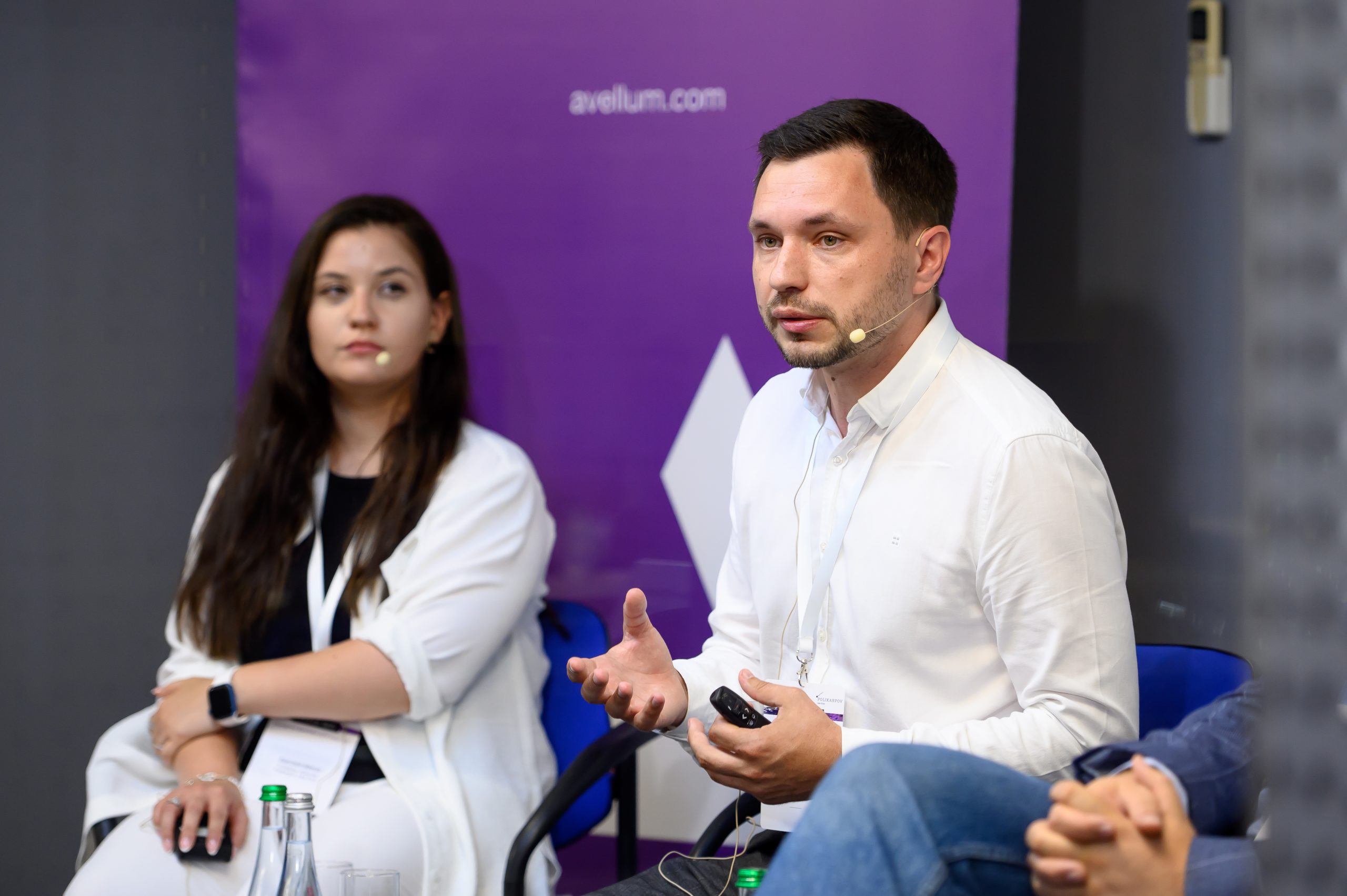
Expert Insight from Anton Polikarpov:
If you have received a claim from someone who clearly registered your name for the purpose of blackmail — do not rush to pay. Our first step is always to check their filing date and whether there is any actual use of the mark. Ukrainian law provides mechanisms to challenge such registrations on the grounds of “bad faith.” However, remember: it is always cheaper to fend off an attack if you have your own active application or certificate. The best defense against trolls is preventive trademark registration at the very start of the project.
Patent trolls rely on your fear of losing access to customers. However, trolling is only half the battle, as intellectual property protection tools on major platforms work automatically, and competitors often use them to instantly destroy your digital assets.
Blocking Accounts on Marketplaces and Social Networks
The Notice-and-takedown mechanism is a “red button” in the hands of a rights holder, capable of instantly stopping sales through Instagram, Facebook, or Prom.ua. Social networks and marketplaces are not judicial bodies; they will not investigate who came up with the naming first. For technical support, the only valid argument is a legal document. If a competitor provides a Trademark Certificate, the platform administration automatically removes your content or completely blocks the account without the right to restoration until you prove your case in court.
This is especially painful in e-commerce, where reputation and the age of a page directly impact customer trust. Losing an Instagram account with tens of thousands of followers because you failed to register your store name in time means not just a halt in trade, but the total destruction of a marketing asset into which years of work and advertising budgets were invested. Competitors often use this tool for unfair competition: they register a TM for a popular generic word in your niche and “wipe out” all players from the market through mass complaints.
To protect your digital asset, you must have priority. When you have your own trademark (or at least a filed application), any attempt to block your store turns into a legal dispute where you act from a position of strength. Instead of making excuses to tech support, you become the one dictating the rules of the game on the platform. Understanding these risks leads to a logical step — careful preparation and verification of your brand before officially securing your rights.
Checklist for Name Verification Before Filing Documents
Can success in registration be guaranteed even before the documents hit the desk of the NOIP expert? The answer is affirmative: yes, if you approach the process with cold calculation and deep analysis. Most rejections happen not because of the whims of government officials, but due to ignoring basic rules of uniqueness and mistakes in choosing activity categories. This stage is critical because any inaccuracy in the documents can lead to the loss of the state fee and time, which in the field of intellectual property is measured in months.
Before you register a store name, you need to ensure it doesn’t overlap with existing brands in your market segment. Our “Trademark Registration for Online Stores and Fashion Brands: A Complete Guide,” where we broke down the fundamental principles of brand protection, can help you with this. However, for practical implementation, you will need a clear algorithm of actions: from self-searching in databases to the meticulous selection of Nice Classification classes. This is the only way you can build a solid legal foundation that will withstand any scrutiny. By the way, if you plan to scale, we recommend learning about the specifics of trademark registration for selling on Amazon so that your entry into the global market is protected from day one.
Let’s move on to specific steps that will help you identify potential conflicts before the official procedure begins.
How to Check Name Uniqueness on Your Own
A self-check is the “zero” stage that allows you to weed out obvious matches and avoid spending money on knowingly losing options. The problem is that the NOIP (National Office of Intellectual Property) expertise checks names not only for identity but also for confusing similarity. This means that names like “Zirka,” “Zirochka,” and “Зірка” can be considered conflicting if they are registered for the same goods or services.
- Search the NOIP Special Information System: Check not only issued certificates but also filed applications. It is important to monitor names written in Latin and Cyrillic scripts and those that sound similar.
- Phonetic Similarity Analysis: Say the name out loud. If it sounds like a well-known brand (e.g., “Abibas” instead of “Adidas”), you will receive a rejection due to the risk of misleading the consumer.
- Checking the Domain Landscape: If you plan to obtain a domain in the .UA zone, check if it is already taken. Although a Certificate is required for .UA, the presence of similar domains in the .com.ua or .net zones can lead to legal disputes in the future.
- Conceptual Verification: Does your name use generic terms (“Store,” “Clothing,” “Best”) that lack distinctive character? Such words cannot become your monopoly property.
Remember that a successful uniqueness check is only half the battle. Even if you have decided to register a store name, which is absolutely original, it needs to be correctly “linked” to your business model through the Nice Classification. Choosing the wrong classes will make your protection formal but practically useless against real infringers.
The next critical step will be accurately determining the scope of protection for your future brand through the correct selection of Nice Classification classes.
Choosing the Right Nice Classes for Your Store
Choosing classes of the Nice Classification (International Classification of Goods and Services) is more than just a formality; it is the definition of a “security perimeter” for your business. Many entrepreneurs make the mistake of thinking it is enough to register a store name in just one class that generally describes their activities. However, intellectual property works differently: your protection extends only to the categories you clearly specified in the application.
Class 35 vs. Manufacturing Categories
For most online platforms, Class 35 of the Nice Classification is the baseline, covering retail or wholesale services. This allows you to have the exclusive right to use the name for the sales service itself. However, if you are not just reselling other people’s goods but creating your own products, Class 35 will not be enough. For example, clothing brand registration necessarily requires Class 25, and trademark registration for cosmetics requires Class 3.
| Activity | Recommended Nice Classes | What exactly are we protecting? |
|---|---|---|
| Online store (platform) | 35 | Store name, advertising, business administration. |
| Own clothing or footwear brand | 25, 35 | The right to put a logo on tags and sell this clothing. |
| Furniture production and sales | 20, 35 | Product design and the furniture chain brand. |
| Educational courses at the store | 41 | A trademark for educational services protects the name of the school or academy. |
Why You Should Cover Related Fields
Full protection involves registering “with a margin.” If you only sell goods today but plan to launch a mobile app for customer loyalty tomorrow, you will need Class 9. Trademark registration for a mobile app will prevent the appearance of clones in the App Store or Google Play. An understanding of why a PE (Sole Proprietor) needs TM registration often comes at the moment of business expansion, when it turns out that related niches are already occupied by competitors under similar names.
A correctly selected list of Nice classes creates the legal foundation upon which further brand capitalization is built, including the transition to premium domain name levels.
The Link Between a Trademark and the Elite .UA Domain
Have you ever wondered why the most successful Ukrainian companies always choose the .UA domain zone, even though obtaining it is more difficult than any other? The answer is simple: it represents the highest level of user trust and the most powerful filter against cybercriminals. You gain the right to register a store name in this zone only after you become the official owner of the intellectual property.
This issue is fundamentally addressed in our full guide to trademark registration, where we explain that the Certificate is the only legitimate key to an elite web address. In the following sections, we will break down in detail the strict rules of the .UA zone regulations and the mechanisms for combating cybersquatting, which is especially relevant if you plan to enter Amazon and global markets, where clean domain rights are critical.
Let’s look at why the system is built this way and how to go from an application to the NIPA to a short and recognizable address for your website.
Why You Can’t Simply Buy a .UA Domain
The .UA domain policy is one of the strictest in the world, and this is a major plus for honest businesses. Unlike the .com.ua, .net, or .org zones, where anyone can purchase an available name in minutes, this top-level zone is designed to protect real rights holders, making TM registration for an online store a mandatory requirement for obtaining such an address.
According to the rules of the zone administrator (the “Hostmaster” company), to delegate a domain, you must provide the number of your Trademark Certificate. Furthermore, the domain name must exactly match the name specified in the document. This eliminates situations where an accidental person can hijack your name. For example, if you decide to register the store name “BrandX,” only the person who has this exact word in their Certificate will be able to obtain the brandx.ua domain.
Algorithm for Obtaining a .UA Domain
- Obtaining a TM Certificate: Going through the full procedure at the NIPA (takes from 18 to 24 months).
- Certificate Number: Each document has a unique number, which serves as your identifier for the registrar.
- Submitting an Application to a Registrar: You specify the desired name and your Certificate data.
- Verification and Delegation: The registrar checks the correspondence between the TM and the domain, after which you become the owner of the address.
It is important to understand that you pay for trademark registration for services or the sale of goods once (with renewal every 10 years), and the .UA domain becomes your exclusive digital asset. If someone tries to create a clone site with a similar name in another zone, the presence of your Certificate will be the main argument in court or during WIPO arbitration.
Such a strict link to intellectual property is the best safeguard against the manipulations we will consider in the context of cybersquatting and methods of protection against traffic hijacking.
Cybersquatting and How to Protect Your Website Address
Cybersquatting in the .UA domain zone works specifically due to the rigid link to intellectual property objects. If you decided to register a store name, it is important to realize: as long as your site functions on third-level domains (for example, .com.ua, .org.ua or regional zones), you remain vulnerable to the actions of unfair competitors who can hijack an identical name in a prestigious top-level zone.
Case Study: Loss of Brand Traffic Due to Delay
The owner of a well-known online electronics store developed a project on the tech-space.com.ua domain for five years. When the company decided to move to a new level and obtain the tech-space.ua address, it turned out that the name had already been registered as a trademark belonging to a third party. Since a TM Certificate grants priority rights to the corresponding .UA domain, the legitimate owner of the .com.ua site was unable to obtain the desired address. Moreover, the opponent began demanding the cessation of the name’s use even in the .com.ua zone, citing brand rights infringement.
Protection Mechanism via WIPO Arbitration
If your name has already fallen victim to a cybersquatter (a person who registered a domain for the purpose of resale or damaging your reputation), there is a civilized way to resolve the conflict — the UA-DRP procedure. This is a pre-trial domain dispute resolution mechanism administered by the World Intellectual Property Organization (WIPO).
To successfully defend in arbitration, it is necessary to prove three key facts:
- The domain name is identical or confusingly similar to your trademark.
- The current domain owner has no legitimate rights or interests in this name.
- The domain was registered or is being used in bad faith (for example, for resale to you at an inflated price).
Having an official TM Certificate is a fundamental condition for initiating such a dispute. Without this document, proving your rights to a web address is practically impossible. Understanding how a site’s technical parameters and legal protection interact allows for building a solid foundation for scaling an e-commerce business.
Your Brand is Your Asset, Not Just a Signboard
Your brand is not just visual design or a catchy name on Instagram, but a full-fledged intangible asset that forms the business’s capitalization. Today, the decision to register a store name is the only effective way to avoid claims from patent trolls, social media page blocks, and forced loss of a domain name. Registration with the IP Office (NOIV) turns a name into an object that can be protected, valued, and scaled.
As a practicing lawyer, I recommend not waiting for the moment when competitors use your lack of protection against you. Investing in a TM Certificate today is an investment in the security of your advertising budgets and reputation in the future. For those ready for the next steps, we have developed a comprehensive guide to trademark registration for the e-commerce and fashion industries, where you will find detailed explanations of each stage of the procedure.
Maintaining the legal integrity of a brand allows the owner to focus on sales and development rather than litigation. In our next material, we will analyze industry specifics in the article “Clothing Brand Registration: 5 Steps to Your Own Trademark.”
Frequently Asked Questions
How long does the trademark registration process take in Ukraine?
To date, the standard TM registration procedure in Ukraine takes an average of 18 to 24 months. This is due to the stages of formal and substantive examination, during which the IP Office checks the application for compliance with legislation and the absence of similar marks.
It should be noted that during martial law, timelines may vary slightly; however, the priority date (protection of your right) is fixed on the day the application is filed. There was also an expedited registration procedure (7-9 months), but its current availability should be clarified immediately before submitting documents due to changes in the operation of the NIPA.
When can I start using the ® symbol next to my store name?
You can only use the warning marking in the form of the ® (Registered) symbol after you have officially received a Trademark Certificate. Using this symbol without registration is illegal and may be considered misleading to consumers.
Until the certificate is received, while your application is pending, you can use the ™ symbol. It signals to competitors that you have already begun the process of protecting your brand and consider this name your intellectual property.
What should I do if an identical name is already registered, but for a completely different type of goods?
The principle of specialization applies in intellectual property law. This means that identical names can coexist if they are registered for different classes of the Nice Classification that are not related to each other. For example, the name “Zirka” can simultaneously belong to a clothing store (Class 35) and a fertilizer manufacturer (Class 1) without violating the rights of either party.
However, if a name is well-known (such as Apple or Coca-Cola), its protection extends to all classes of goods and services regardless of the field of activity. Therefore, before registration, it is important to conduct a professional similarity search to avoid the risk of refusal due to “likelihood of confusion” in the mind of the consumer.
Does a Ukrainian TM Certificate protect my brand when entering international marketplaces like Amazon or Etsy?
No, a Certificate issued in Ukraine has territorial effect and protects the brand only within our state. If you plan to sell goods abroad, you must register the trademark in the countries where you operate.
There are two main ways to do this:
- Madrid System: allows you to file one international application through the IP Office, specifying the list of countries you are interested in.
- National Procedure: filing separate applications directly with the patent offices of specific countries (e.g., USPTO in the USA).
TM registration in the country of sale is critical for protection against blocks on international platforms.
What government fees must be paid for TM registration, and what determines their amount?
The cost of registration is not fixed and depends on several factors. The main costs include:
- Application fee: depends on the number of classes under the Nice Classification (the more areas of activity you choose, the higher the amount).
- Color scheme: if you register a logo in color, the fee will be higher than for a black-and-white image.
- Publication and certificate issuance fee: paid at the final stage after successfully passing the examination.
Current fee amounts are set by the Cabinet of Ministers of Ukraine. For entities filing an application electronically, a 20% discount on official fees usually applies.
Can trademark rights be transferred to other persons or leased?
Yes, a trademark is a full-fledged intangible asset that can be disposed of at your discretion. There are two main ways to transfer rights:
- Assignment agreement (transfer of rights): you completely sell the ownership of the TM to another person, after which they become the new owner in the register.
- License agreement (lease): you grant another person the right to use your TM under certain conditions (term, territory, royalty payments). This is often used in franchise networks.
It is recommended to register any changes regarding the owner or the granting of a license in the official NIPA register so that they have legal force for third parties.