The Art of Cost-Saving in International Trademark Registration
Export expansion in 2026 should not resemble a rocket launch in terms of budget — it is, first and foremost, a mathematical equation where the right variables yield results at a reasonable cost. The Madrid System serves as the primary optimization tool, allowing businesses to scale without maintaining an army of local lawyers in every country. This article is your practical checklist for obtaining global protection without overpaying for unnecessary options.
View international registration not as a tax on success, but as an investment where every step can be calculated. We will examine how smart class grouping and a well-thought-out geography allow you to achieve the goal: when international trademark registration, cost, and savings are no longer mutually exclusive concepts but part of a single business strategy. Before moving on to specific life hacks, it is essential to understand which elements form the financial foundation of your application.
Components of the International Protection Budget
Understanding the cost structure is the first step toward effective budget management. When planning to enter foreign markets, trademark registration should be based on a clear calculation, where every franc works toward asset capitalization instead of just disappearing in bureaucratic corridors. We have gathered detailed figures and current tariffs in our main guide “International Trademark Registration: Full Cost Calculation in 2026”, which serves as a foundation for any optimization strategy.
We will break down how World Intellectual Property Organization (WIPO) fees are formed and why it is important to consider hidden costs even at the document preparation stage. This will allow you not only to avoid mistakes but also to prepare in advance for the specifics of individual jurisdictions. By evaluating the basic parameters, you will better understand the benefits of international TM registration under the Madrid System, comparing them with national procedures, particularly in the context of the European Union market, which we will discuss in detail in the article “Trademark Registration in the EU: Analysis of Prices and Fees 2026”. Let’s start with the most predictable part — mandatory payments to the international authority.
Basic Fees and Their Variations
The basis of your expenses consists of the official fees of the WIPO International Bureau, which are fixed in Swiss Francs (CHF). In 2026, it is critically important to account for currency volatility: since payment is made at the exchange rate on the day of the transaction, even minor fluctuations can significantly change the final amount. The choice between a black-and-white or color logo design also directly affects the total cost, so it is worth assessing in advance whether color is an essential feature of your brand or if protecting only its shape and text portion is sufficient.
The structure of WIPO basic fees remains stable; however, it requires a careful count of the number of selected classes of goods and services:
- 653 CHF — basic fee for a black-and-white trademark application (for one or more categories of goods).
- 903 CHF — registration fee for a trademark in color.
- 100 CHF — additional fee for each Nice Classification class beyond the third (unless individual fees are established in specific countries).
Beyond the basic figures, international trademark registration costs and savings depend on your ability to mitigate exchange rate risks. I recommend making payments from the company’s foreign currency accounts, avoiding double conversion through Hryvnia, which can “eat up” up to 3–5% of the total budget. Also, keep in mind that filing an application through the national office (UANIPIO) requires a separate state fee, which is fixed in Hryvnia and does not depend on the Franc exchange rate. Understanding these basic constants sets the stage for analyzing more flexible cost items that arise directly during the filing process.
Additional Costs at the Filing Stage
In addition to standard WIPO fees, the international application budget is burdened by individual fees from specific states, which often come as a surprise to businesses. Unlike countries that agree to the standard supplementary fee of 100 CHF, jurisdictions such as the USA, Brazil, Australia, or Japan set their own tariffs. In 2026, the individual fee for a single country can exceed 400–600 Swiss francs, which fundamentally changes the financial filing model.
- Individual fees: Some countries (e.g., the USA) require payment in two stages — upon filing and after the decision on registration, which should be factored into the company’s cash flow.
- Bank commissions: For cross-border transfers via the SWIFT system or currency conversion, banks may charge significant commissions. Using currency cards or direct accounts in the fee currency (CHF) minimizes these indirect losses.
- Fees for the number of classes: Keep in mind that in some countries, the individual fee for the second and each subsequent Nice Class is higher than for the first, or vice versa — it may follow a progressive scale.
True international trademark registration, where cost savings are achieved at the planning stage, is impossible without considering these “details.” Also, pay attention to document certification requirements: if a country is not a member of the Madrid System (and you are registering there separately), costs for apostille and legalization can double the budget. Within the Madrid System, you avoid costs for local attorneys at the start, but only on the condition that your application “passes” perfectly through the formal examination of the International Bureau. Any error in the list of goods will lead to inquiries, responses to which will require additional payments. This brings us to one of the most significant levers of price influence — the structure of the application itself.
Optimization of the List of Goods and Services
The “substance” of your application—the list of goods and services—is the primary price driver after geographic coverage. Many entrepreneurs mistakenly believe that maximum coverage of Nice Classification classes provides better protection, but in the reality of 2026, such an approach only inflates the budget and creates legal risks. Professional trademark registration begins with a surgically precise selection of categories that truly reflect your business today and in the next two to three years.
We will break down in detail how to avoid the “over-classification” trap, which often leads to refusals from national offices. By optimizing the list, you not only reduce the international trademark registration cost, but also build a stronger foundation for future rights protection. Detailed calculations for each specific Nice class can be found in our reference material “International Trademark Registration: Full Cost Calculation in 2026”. In the following sections, we will examine the benefits of international TM registration under the Madrid System through the lens of strategic grouping and analyze why an inflated list of goods can become your most expensive liability. We will also briefly compare this approach with how EU trademark registration works: an analysis of 2026 prices and fees will highlight the difference in classification approaches.
Let’s take a closer look at how professional grouping transforms a chaotic list into an effective tool for cost saving.
Benefits of Strategic Nice Classification Grouping
Within the framework of the “Optimization of the List of Goods and Services” strategy, professional Nice Classification grouping is a key tool. “Over-classification” is a legal ailment where a business attempts to protect software in Class 9, consulting in Class 35, and training in Class 41, even though it actually provides a single comprehensive service that can be effectively “covered” by one or two aptly chosen formulations. In this case, international trademark registration cost savings result not from waiving protection, but from concentrating it.
| Comparison Parameter | Haphazard Selection (5 classes) | Strategic Grouping (3 classes) |
|---|---|---|
| WIPO basic fee (exceeding the limit) | +200 CHF (for the 4th and 5th classes) | 0 CHF (included in the base fee) |
| Risk of provisional refusals | High (due to broad formulations) | Minimal (specific items) |
| Additional fees (e.g., USA) | Significant increase proportional to classes | Optimal fixed budget |
An expert audit of the list allows for the identification of substitute goods and services that overlap. By leveraging the benefits of international trademark registration under the Madrid System, you can submit a single list for all countries, but this is where the trap lies: if the description of goods seems too broad in one country, you will receive a refusal that halts the process everywhere. Strategic grouping is your insurance against costs for local attorneys who charge from $200 per hour to “cure” a poorly drafted application. Read more about the financial consequences of classification errors in the section “International Trademark Registration: Full Cost Calculation in 2026.”
However, saving on quantity is only part of the story; far more dangerous than extra costs is the legal deadweight that an excessive list of goods entails.
Why an Inflated List of Goods is Detrimental
An inflated list of goods is not only a direct cause of increased fees for every extra Nice class, but also an open invitation to legal conflicts. In 2026, we are increasingly seeing cases where the “desire to protect everything” leads to provisional refusals from national offices due to your brand’s similarity to already registered trademarks in related categories that you never even intended to enter. Each such refusal requires involving a local attorney, whose fees quickly outweigh any theoretical benefit of broad coverage.
A 2026 practical case study: when entering the US and Brazilian markets, a Ukrainian IT project included not only software (Class 9) in its application but also retail trade, souvenir products, and educational services. The result was three provisional refusals due to conflicts with local players in the merchandise and training sectors. Instead of the planned registration, the business spent over $4,500 on legal support to respond to objections in each country. This could have been avoided if the list had been focused on the product’s core.
List hygiene is not about artificially restricting your rights, but about removing “legal noise.” Excessiveness creates unnecessary targets for opponents and provokes unwanted bills. International trademark registration, where cost savings are achieved through precise wording, protects your asset better than a vague ten-page list.
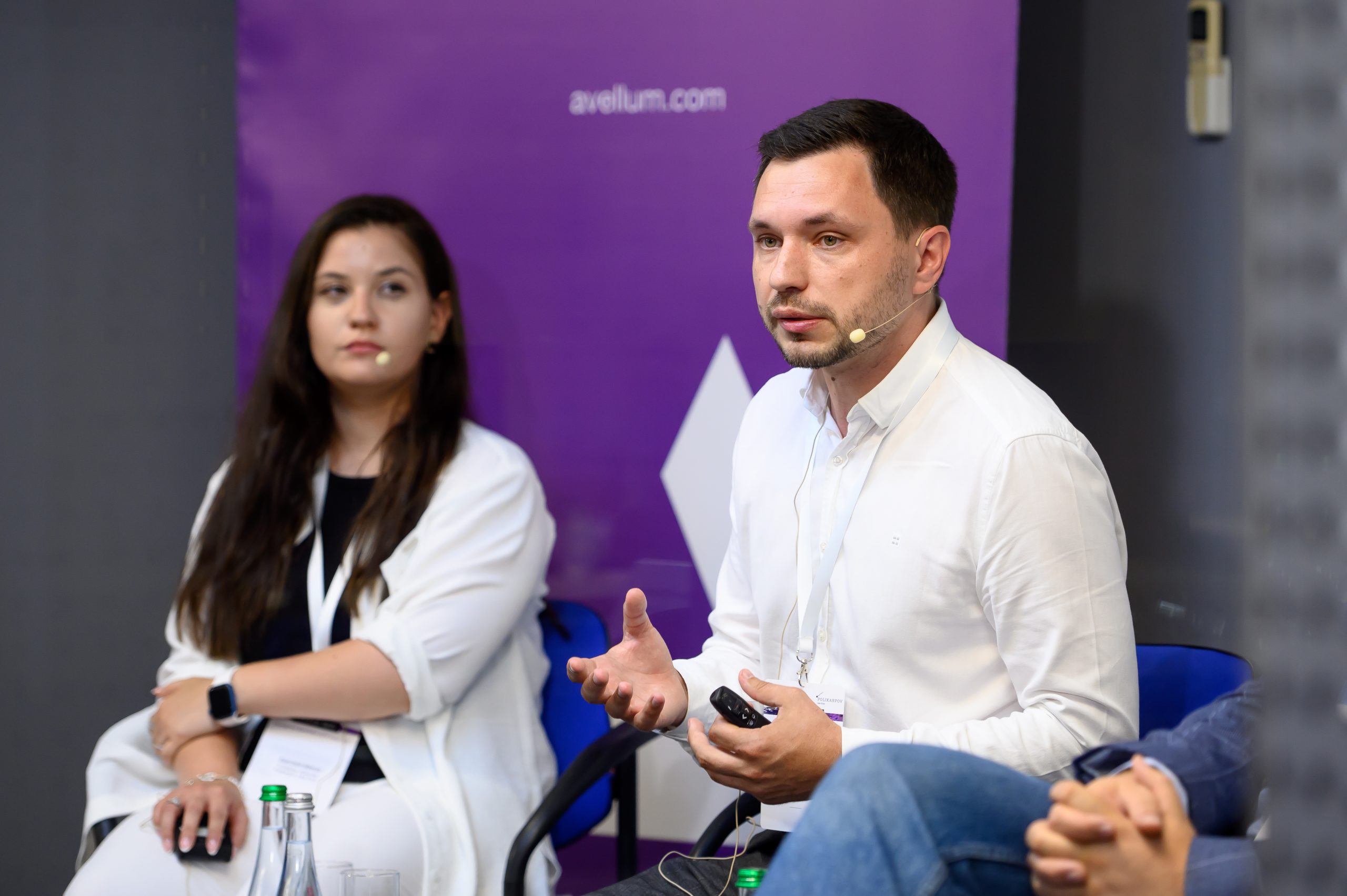
— Anton Polikarpov
Remember that the Madrid System allows for a “limitation” procedure of the list for specific countries, but this again involves additional fees and administrative work. It is much more efficient to first invest time in a preventive cleaning of the list of goods and services than to pay later for correcting errors in each jurisdiction separately. This approach paves the way for the next critical optimization stage—the strategic selection of geographical protection.
Strategy for Selecting Countries for Registration
Choosing countries to extend protection is the stage where you finalize the financial outcome of your intellectual property strategy. Every new “checkbox” in an international application is not just a legal formality but a separate financial expense consisting of fees and potential administrative costs. Before making a decision, I strongly recommend reviewing our guide “International Trademark Registration: Full Cost Calculation in 2026” to understand the math behind each jurisdiction.
International trademark registration, the cost savings of which are based on a sober market analysis, prevents your business from “burning out” at the start. You must distinguish between countries where protection is critically necessary today (manufacturing sites and primary sales markets) and regions that are only theoretically attractive. Professional trademark registration involves a phased approach: the Madrid System allows for adding new countries later through the Subsequent Designation procedure, so there is no point in paying for protection in a country you will only enter in 5 years.
In the following sections, we will examine a specific list of “Do/Don’t” rules to help cut out the unnecessary and provide a real-life calculation for a small business entering Western markets. For those considering Europe as a priority, it will also be useful to compare this data with the article “EU Trademark Registration: Analysis of Prices and Fees 2026” to choose the most advantageous path — the Madrid System or regional registration.
Do/Don’t List for Smart Budgeting
For effective budget management within the country selection strategy, it is necessary to be guided by the principle of business expediency rather than legal perfectionism. The advantages of international trademark registration under the Madrid System allow you to flexibly maneuver geographically; however, every mistake in jurisdiction selection leads to the freezing of working capital. Below is a checklist that will help you distinguish strategic investment from wastefulness.
| DO (What you should do) | DON’T (What to avoid) |
|---|---|
|
|
International trademark registration—where cost savings are achieved precisely at this stage—requires moving away from emotional decisions. Remember that you can always add a country to your international portfolio later, paying only the subsequent designation fee and the corresponding national fee. This is much more cost-effective than investing thousands of francs today in protection for markets where your product will only appear in the next decade.
To clearly demonstrate how these rules work with real numbers, let’s move on to a specific calculation example for a small business, which will help you see the difference between a deliberate and a chaotic filing.
Calculation Example for Small Business
Let’s consider a practical case study of an IT startup planning to enter the US, UK, and Kazakhstan markets in 2026 with a new SaaS product. In the first scenario (“reckless filing”), the founder acts intuitively: they add three Nice classes (9 — software, 35 — advertising, 42 — development), choose a color version of the logo, and submit the application without prior analysis. In the second scenario (“optimized filing”), we apply “list hygiene,” focusing only on the critical Class 9, use a black-and-white format (which provides a broader scope of protection in many jurisdictions), and avoid unnecessary cross-border fees.
| Cost Item (approx. in CHF) | Reckless Filing | Optimized Filing |
|---|---|---|
| WIPO Basic Fee | 903 (color) | 653 (B&W) |
| Individual Fees (USA, UK, Kazakhstan) | ~1300 (for 3 classes) | ~680 (for 1 class) |
| Bank Fees and Conversion | ~90 (double conversion) | ~30 (foreign currency account) |
| Final Amount Due | ~2293 CHF | ~1363 CHF |
A difference of nearly 930 Swiss francs arises just at the start. However, the true value and savings of international trademark registration, which become apparent over time, lie in the absence of hidden risks: the startup in the second scenario has a 95% probability of completing registration without additional inquiries. In the first case, a vague list in Class 35 (“advertising”) is almost guaranteed to trigger objections from owners of similar trademarks in the US, forcing the business to spend another $1500+ on local attorney services to overcome the refusal. Thus, precise goal-setting and leveraging the advantages of international trademark registration via the Madrid System allow the actual budget to be cut in half.
Choosing the right strategy at the filing stage lays the groundwork for successfully establishing your brand in the global market.
How to Achieve Maximum Protection for Minimum Cost
Effective international trademark registration, where cost savings are established as early as the legal audit stage, is not about forfeiting protection, but about surgically cutting away everything unnecessary. In 2026, businesses succeed not because of the number of countries covered “for the future,” but due to the quality of protection in key markets. By leveraging the advantages of international TM registration under the Madrid System, you gain the flexibility to scale your asset portfolio gradually without tying up capital in excessive fees.
To finalize your budget and for detailed expense planning, I recommend revisiting our material “International Trademark Registration: Full Cost Calculation in 2026,” as well as exploring the specifics and pricing for trademark registration in the EU in the next article of our cluster. Such a comprehensive approach will help you choose the most cost-effective path for your brand’s expansion.
Before starting the procedure, I invite you for a professional audit of your trademark—this will help identify potential conflicts with existing registrations and optimize the list of goods even before paying the first franc of international fees. Invest in precision to avoid the costs of correcting mistakes in the future.
Frequently Asked Questions
Can new countries be added to an existing international registration later to avoid paying for everything at once?
Yes, the Madrid System allows for so-called “subsequent designation”. This is one of the system’s key advantages, enabling businesses to scale gradually. If you registered a TM only in the EU and the USA in 2026 and decided to enter the Chinese market a year later, you do not need to file a new international application.
You simply file a request to expand the geographical protection for the existing international registration number. This allows you to:
- Save on the WIPO basic fee (it is paid only once during the initial filing);
- Simplify portfolio management, as all countries will be linked to a single registration number;
- Respond flexibly to changes in market strategy without having to repeat all registration stages from scratch.
What is a "Central Attack" and How Can It Invalidate All International Registration Costs?
When planning a budget, it is important to consider the principle of dependency of an international registration on the basic mark during the first 5 years. If, during this period, your Ukrainian TM (the basis for the international application) is canceled or refused, the international registration will automatically lose its validity in all selected countries.
This phenomenon is called a “central attack.” To minimize this risk and protect your investment, it is essential to do the following before starting the international process:
- Conduct a comprehensive trademark search in Ukraine;
- Ensure that the basic mark does not infringe on anyone’s rights;
- In case of a cancellation risk — consider the possibility of “transforming” the international registration into national applications (which is a costly procedure).
Which countries have the highest "individual fees" in 2026 to watch out for?
Although the Madrid System is standardized, many countries set their own individual fees, which significantly exceed standard charges. When budgeting, you should be particularly careful with jurisdictions such as:
- USA, Japan, and South Korea: they have high fees and strict requirements for the description of goods.
- Brazil and Mexico: often require additional payments at the certificate issuance stage.
- United Arab Emirates: traditionally remains one of the most expensive countries for trademark registration in the world.
Current fee amounts for each country can be checked on the official WIPO calculator, which will help avoid unpleasant surprises after filing an application.
How to Avoid Costs for Local Lawyers in Registration Countries?
The primary savings when using the Madrid System lie in the fact that you do not need to hire patent attorneys in each individual country during the filing stage. However, if a national office (for example, the USPTO in the USA) issues a Provisional Refusal, you will have to engage a local lawyer to respond.
To minimize these costs, it is recommended to:
- Formulate the list of goods as clearly as possible in accordance with the requirements of specific offices right from the start;
- Use MGS Manager (a WIPO tool) to check the acceptability of terms in different countries;
- Conduct a preliminary risk analysis of refusals (Searches) before filing to proactively avoid potential conflicts with already registered trademarks.
Do I need to pay for trademark renewal in each country separately after 10 years?
No, and this is another way to achieve long-term savings. International registration is valid for 10 years. When the time comes for renewal, you pay a single renewal fee directly to WIPO. You do not need to file separate applications with the offices of each country where the protection is active.
This is significantly cheaper and simpler from an administrative point of view, as you avoid:
- Fees for foreign lawyers to handle the renewal process;
- Different deadlines (you have a single renewal date for the entire set of countries);
- The risk of accidentally missing a payment deadline in one of the jurisdictions.
Can the logo or name be changed in an international registration after the fees have been paid?
Unfortunately, the Madrid System does not allow making any substantive changes to the trademark itself (image or text) after the application has been filed. Any change to the design or name will require filing a completely new application and paying all fees again.
However, you can make administrative changes for free or for a small fee:
- Change the owner’s name or address (owner details);
- Reduce the list of goods and services (limitation of protection);
- Appoint or change a representative (lawyer).
This is why it is important to finalize your brand book before filing an application, so as not to waste your budget on registering logo versions that will become irrelevant in a year.