How to reliably protect your atelier from plagiarism
Many business owners mistakenly believe that a bright sign on their workshop door automatically protects their brand from being copied. In reality, without proper trademark registration covering the specific Class 40 of the Nice Classification for garment manufacturing, your unique patterns and brand name remain vulnerable to plagiarists.
Why Class 25 is not enough
Registering a brand solely for the sale of finished goods often leaves a legal loophole in the protection of artisan services, which is why it is worth understanding why the traditional approach will not work for an atelier. Before legally securing a name, it is important to understand the fundamental differences between product and service categories to ensure reliable protection for your business name.
The difference between a product and a service
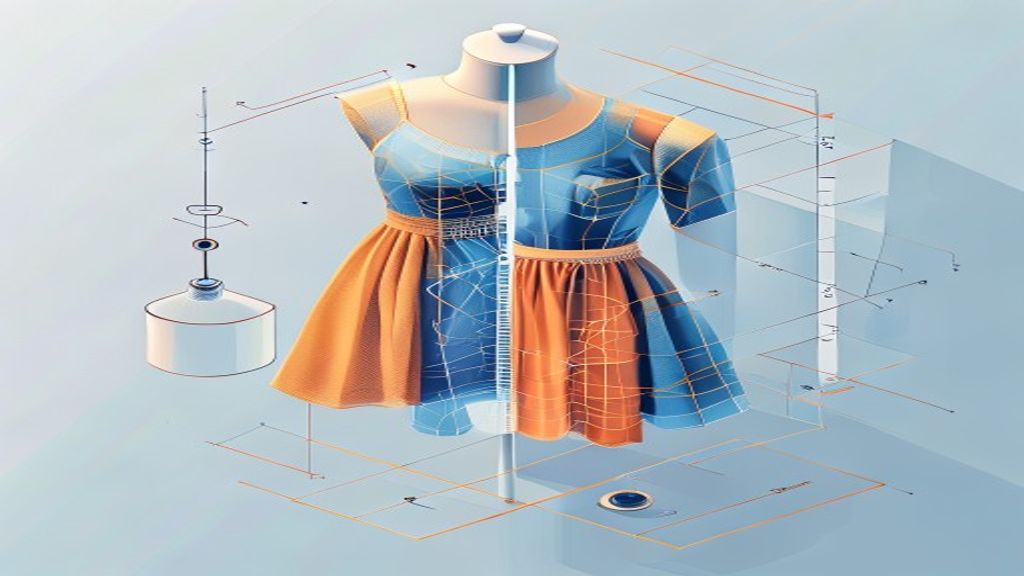
Many designers believe that brand protection is limited only to Class 25 of the Nice Classification (ready-to-wear clothing). However, for an atelier, it is critical to also cover the service component so that unscrupulous competitors cannot use your name for identical workshops. To ensure comprehensive legal protection for your business, it is necessary to correctly combine Nice Classification classes.
| Criterion | Class 25 (Product) | Class 40 (Service) |
|---|---|---|
| Object | Ready-to-wear clothing, accessories | Custom tailoring, processing |
| Typical case | Selling items “off the rack” | Cutting and fitting to measurements |
| Target protection | Design of a specific item | Manufacturing method and service |
For full protection, it is worth combining Class 40 (custom manufacturing) with Class 42, which covers the intellectual work of fashion designers. It is Class 42 that allows you to protect your unique design solutions and patterns from unauthorized copying. Registering a trademark in the appropriate classes is a key tool for securing your business reputation and creating a barrier against competitors.
Risks of Not Protecting Services
Understanding the difference between selling finished products and providing services for their creation is critical for business security. If you have registered a trademark only for goods (NCL Class 25), you are leaving a “back door” open for competitors. They could open an atelier under your name, legally offering services under NCL Class 40 (custom clothing manufacturing), and you would be unable to stop them. This creates reputational risks: customers expecting your level of service receive poor-quality work from third parties.
Why this is important: protecting intellectual assets
Registration in Class 40 is not just about the name, but also about protecting your working methods. For example, if you have developed a unique leather processing technology or a proprietary cutting technique, without proper legal protection, contractors could use your patterns for their own production. Combining classes 37 (repair), 40 (manufacturing), and 42 (design services) creates a “bulletproof vest” for your brand, covering the full cycle—from the initial idea to the finished product.
To avoid mistakes when choosing the scope of legal protection, learn how to properly select NCL classes for your niche. This will help secure your business against plagiarism and unfair competition. To obtain a personalized strategy and secure rights to your name, you can order trademark registration, which will serve as the foundation of your legal protection.
Related material on the topic: Which NCL classes to choose for clothing, footwear, and accessories.
Class 40: The Foundation for an Atelier
Registering a brand for material processing services is the heart of a modern workshop’s business model. In this section, we will analyze the specifics of Class 40 and the legal tools for protecting unique cutting technologies.
What exactly is included in Class 40
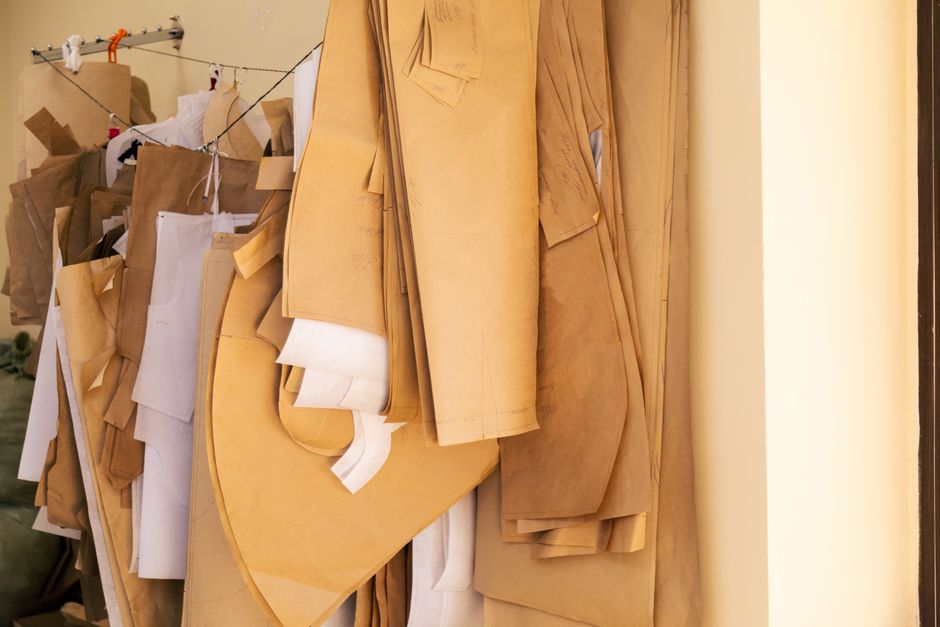
Class 40 covers all processes where physical or chemical characteristics of a material are altered. For the fashion industry, this means that it is not the result (the finished dress) that is protected, but the craftsmanship and the process of its creation. This is critically important, as most ateliers earn their revenue from bringing a client’s ideas to life, rather than selling goods from stock.
By protecting your business under this category, you gain the exclusive right to use your name for a wide range of professional manipulations with fabric, leather, and fur. Here are the main services that should be included in your application:
- Custom tailoring: manufacturing clothing according to the customer’s measurements.
- Garment fitting: altering the size or style of finished items to fit a figure.
- Custom pattern making: developing design documentation for models.
- Textile processing: dyeing, printing, embroidery, or pleating of fabric.
- Repair and restoration: restoring damaged wardrobe items (if it requires recutting).
Correct identification of these processes helps avoid rejections during examination at the National Intellectual Property Office. Entrepreneurs often make the mistake of choosing only general wording, which leaves some services unprotected. To ensure full-cycle security, it is important to understand which Nice Classification classes are needed for an online store if you plan to scale your atelier services through an online platform. In addition to the standard list of services, it is sometimes necessary to protect specific “know-how” that makes your products recognizable.
That is why the next step is to consider methods for protecting technological secrets that provide an atelier with a competitive advantage.
Related material on the topic: Online clothing sales.
Case Study: How to Protect a Unique Technology
Understanding exactly what this Nice Classification segment covers allows you to turn a standard registration into a powerful tool for protecting business logic. When we talk about custom-made items, the legal focus shifts from the finished product to the craftsmanship and proprietary algorithms used in its creation.
Case Study: Protecting Proprietary Tailoring via Class 40
One of our clients developed a unique patternless tailoring system that allowed for perfect suit fits on non-standard figures in a single visit. The main risk was that former atelier staff could open their own businesses using the same methodology under a similar name. Since the trademark was registered specifically for Class 40 of the Nice Classification, we were able to block the activities of “clone” competitors who were attempting to sell an identical service. If the trademark had only been in Class 25 (goods), it would have been nearly impossible to prove infringement, as they were not selling ready-made items in a store, but rather providing a manufacturing service.
For a full security cycle for a design bureau, we recommend a combined strategy. This allows you to close all “gray areas” where competitors typically look for loopholes for plagiarism. Here is how it works in practice:
- Class 40: This is the foundation for an atelier. It includes direct clothing manufacturing, resizing (alterations), pattern making, and fabric heat treatment.
- Class 42: Protects the intellectual component — modeling, sketching, and designer consultations.
- Class 37: Covers repair and restoration services, which is important for full-cycle ateliers.
Why is this critically important? Without registration in Class 40, your unique technological charts and processing methods remain vulnerable. You are essentially gifting your expertise to the market without the ability to prohibit its use under your name. Legally securing rights through professional trademark registration creates the foundation upon which your brand’s capitalization rests. Beyond production processes, a modern atelier often provides services that extend beyond the workshop floor.
Related classes: 37 and 42
To build a comprehensive security system for an atelier, it is worth going beyond the production workshop by integrating design protection and service maintenance through related classes of the Nice Classification.
The Role of Design and Consulting (Class 42)

A special place in a protection strategy is occupied by Class 42, which is often ignored by owners of traditional ateliers. For a modern brand, where the intellectual component outweighs the cost of materials, this class is indispensable for legally separating creativity from craftsmanship.
It is a mistake to assume that Nice Class 40 automatically protects a designer’s work. In reality, creating sketches, selecting capsule wardrobes, and artistic modeling are intellectual services that fall under Class 42. If your atelier positions itself as a design bureau or offers stylist consultations, the absence of this class in your trademark certificate leaves your core value—your creativity—defenseless against copying.
Protection under Class 42 allows you to monopolize the right to provide professional style advice and develop unique models under your brand. This is especially relevant if you plan to scale your business through franchises or licensing agreements. Below is a list of key services that should be included in your application to fully cover your creative activities:
- Modeling: The process of creating new styles and artistically designing collections.
- Packaging design: If your business uses specific branded boxes or covers.
- Design consulting: Services provided by stylists who help clients form their image.
It is important to understand that Class 42 protects the process of developing an “intellectual product,” which is subsequently materialized in the atelier. However, an equally important part of the product lifecycle is maintaining items in perfect condition, which is regulated by a different segment of the classification system.
Repair and Maintenance (Class 37)
When a client receives a finished garment, your relationship with them does not end — it moves into the phase of service support. Repair and maintenance are the logical conclusion of a product’s lifecycle, allowing an atelier not only to earn from additional services but also to maintain the brand’s reputation through high-quality garment care.
Protection for these processes is provided through Class 37 of the Nice Classification, which covers physical intervention on existing objects. While Class 40 is responsible for creating something new, Class 37 is responsible for maintaining its functionality and aesthetics. This is critically important for ateliers that position themselves as restoration centers or offer care services for delicate fabrics and leather.
The list of services worth protecting in this segment includes:
- Clothing repair (darning, hardware replacement, patching).
- Restoration of textile and leather goods.
- Cleaning and laundering, if the atelier provides professional care services.
- Ironing and thermal reshaping of garments.
For comprehensive protection of a design bureau or a modern atelier, we recommend a combined approach. Class 42 protects the intellectual stage (design, sketches), Class 40 of the Nice Classification covers production and customization, and Class 37 guarantees a monopoly on service maintenance under your brand. This strategy blocks attempts by third-party workshops to parasitize on your brand name by offering a supposedly “official service” for repairing your original items. This is especially relevant for preserving the exclusivity of patterns and technical assemblies that require specific expertise for correct restoration.
Understanding the role of each class allows you to build a legal foundation that will withstand any attempts to copy your business model.
Comprehensive Registration Strategy for a Brand
The legal security of an atelier requires a systematic approach that combines the correct selection of service categories with meticulous document preparation. We will break down the step-by-step algorithm of actions and the tools for protecting your visual identity in the market.
Pre-submission Checklist
Before submitting documents for the registration of your atelier’s name, it is necessary to minimize the risks of refusal, which often arise due to haste or ignoring procedural nuances. A comprehensive strategy involves not only choosing the right tools but also critically evaluating your brand for compliance with legal requirements.
The first and most important step is a professional search. It is not enough to simply check for available domains or names on social media. A legally significant search includes analyzing databases of registered trademarks and pending applications in the categories where you plan to operate (manufacturing, design, or service). This allows you to identify not only identical names but also those similar to the point of confusion, which could lead to lawsuits in the future.
- Preliminary search: Checking the name and logo for uniqueness in Ukrainian registries and international databases (if entering foreign markets is planned).
- Classification: Precise definition of the list of services, including custom tailoring and design.
- Distinctiveness check: The name must not be purely descriptive (for example, it is impossible to monopolize the phrase “Quality Tailoring”).
- Document preparation: Correct preparation of the application in accordance with the requirements of current legislation.
Keep in mind that the official procedure in Ukraine does not provide for acceleration mechanisms, so the accuracy of the application at the start is the only way to avoid delays caused by expert inquiries. Choosing the correct wording within Class 40 of the Nice Classification for clothing manufacturing and related areas creates a reliable protective perimeter for your business. Each step of this checklist brings you closer to obtaining a certificate, which will become the primary argument in any intellectual property disputes.
After completing the preparatory stage, it is critically important to properly format the visual and verbal elements of the brand.
Legal protection of a name and logo
Once you have verified the uniqueness of your name and are ready to submit an application, the question arises: how exactly can you secure your rights so that competitors cannot even come close to your identity? Legal protection is not just a piece of paper; it is the capitalization of your experience, where your name and logo become assets protected by the Law of Ukraine “On the Protection of Rights to Trademarks for Goods and Services.”
For an atelier that does not just sell ready-made dresses but creates them for the customer, the 40th class of the Nice Classification (NCL) is key, as it directly covers the process of material processing and manufacturing products to individual measurements. It is important to understand the distinction: if you are sewing a batch for a store, it is a product (Class 25), but if you are providing a service to a specific client, it is the 40th class. To build impenetrable protection, you should focus on the following combination of services:
- Class 40: custom tailoring, embroidery, dressmaking services, fitting, and fabric treatment.
- Class 37: repair, restoration, and cleaning of items (important for the after-sales service of your products).
- Class 42: fashion design services and industrial design, which protects the intellectual component of pattern development.
Why this is important: protection against pattern copying
One of our clients faced a situation where a former employee opened their own workshop and began using identical collection names and patterns that had been developed over years. Thanks to comprehensive trademark registration, we were able to legally prove unfair competition and protect the unique cutting technology as a trade secret, supported by the brand.
Registering a logo along with the name allows you to block the use of similar visual identity by other market players. A mistake at the stage of selecting classes often leads to refusals or a weak position in court, so involving experts at the start saves not only money on repeat fees but also years of peace of mind for your business. A properly structured protection strategy makes your atelier unattractive to plagiarists, as any attempt at copying becomes a legally documented violation.
Realizing that every stitch and every sketch must be legally secured leads to the final stage: building a clear action plan to launch the registration process.
If you need help with this task, take advantage of our offer: Trademark Registration.
How to start protecting your atelier
A comprehensive approach to registration, combining Class 40 of the Nice Classification for clothing manufacturing with related classes for repair and design, turns your atelier’s name into a protected asset capable of stopping pattern plagiarism and brand copying. For a confident start and legal clarity of your name, you can order professional trademark registration, and to expand your business online, it is worth learning in advance which specific classes an online store needs for legal online sales.
Frequently Asked Questions
Does registering a trademark in Ukraine protect my brand abroad?
Trademark registration in Ukraine is valid exclusively within the territory of our country. The principle of territoriality is fundamental in intellectual property: your protection is limited to the borders of the country where the application was filed.
If you are planning to enter the international market, opening a showroom abroad, or selling custom tailoring services to clients in other countries, you need to expand the protection of your brand. This can be done in two ways:
- National registration: Filing separate applications with the patent offices of each specific country where you plan to operate.
- International registration (Madrid System): Filing a single international application through WIPO, which allows you to extend the validity of your Ukrainian application to dozens of member countries of the agreement.
Important: A strategy for entering foreign markets should be planned in advance, as many jurisdictions operate under a priority rule, and someone else may register your name before you do.
What should I do if I discover that another studio is using my name or a similar logo?
Before taking legal action, you must ensure that you have a valid trademark registration for the relevant classes (40, 37, 42, etc.). If the trademark is registered, the procedure is as follows:
- Documenting evidence: Take screenshots of social media pages, the website, photos of signage, and receipts confirming that they are providing services under your brand.
- Analyzing the infringement: Assess whether the similarity of the designations is likely to mislead consumers.
- Pre-trial claim process: Send an official cease-and-desist letter demanding the discontinuation of the use of the designation. Often, the conflict is resolved out of court at this stage.
- Legal action: If the infringer ignores the demands, the next steps include filing complaints with platforms (e.g., Meta, Google) or taking the matter to court to recover damages and seek compensation.
Without an official trademark registration, proving your rights to a name in court is significantly more difficult, and sometimes practically impossible.
Is it possible to register a designer’s surname or the name of a cutting technique as a trademark?
Legislation allows for the registration of names and surnames, but with certain limitations. The main requirement is that the name must be distinctive rather than merely descriptive. For example, if a surname is very common, the examination process may impose requirements for additional logo elements.
As for the names of cutting techniques or sewing methods, the rule is: it is impossible to monopolize commonly used terms. You cannot prevent others from using the term “patternless method,” as it is a descriptive term for a production process. However, you can register the name of your unique methodology if it is a fanciful (invented) name that you have established as your brand.
How to check if my services infringe on the rights of existing brands?
Before submitting an application for trademark registration, it is critical to conduct a professional preliminary search in the IP Office of Ukraine (UkrNOIVI) databases. A self-check via Google or Instagram does not provide a complete picture because:
- You may not be aware of the existence of trademarks that do not yet have an active online presence but are already registered.
- There is a concept of “confusing similarity,” which specialists evaluate based on complex criteria, taking into account phonetics, graphics, and semantics.
We recommend opting for professional trademark registration, where experts will analyze the risks of refusal and help you choose classes that minimize the likelihood of conflicts with competitors.
Is it necessary to register a separate trademark for each new atelier direction, for example, when launching your own line of accessories?
You do not need to register a new trademark if you are expanding your range of goods or services under the same brand. However, you must expand the list of Nice Classification (NCL) classes for your existing trademark.
If you initially registered only under Class 40 (tailoring), and later started producing bags, belts, or footwear, you should file a new application for registration (or expansion) for Class 18 (leather goods) or Class 25 (clothing and accessories). Each application is considered separately, so it is important to think about business scaling from the start to avoid overpaying for new registration procedures in the future.