Is it safe to conduct business on Instagram and Facebook without a trademark?
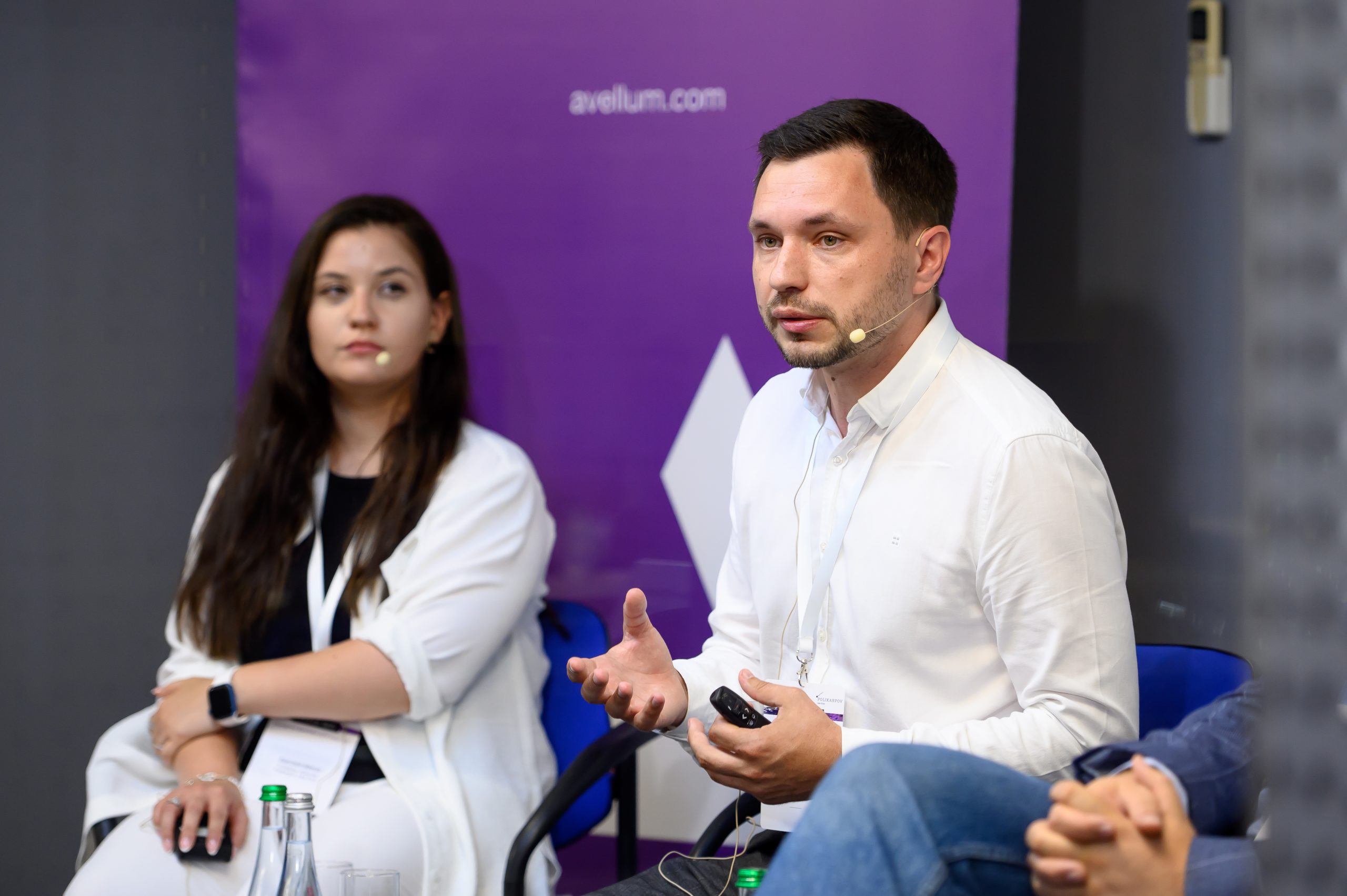
Using a name without a trademark on Instagram and Facebook is possible, but risky. You do not have exclusive rights to the name, so anyone else can register it and file a complaint against your account, which will lead to its permanent deletion. Trademark registration is the only way to legally protect your digital assets. I am Anton Polikarpov, and we will examine whether it is worth risking your business for the sake of illusory savings.
How Meta’s Intellectual Property Policy Works
Meta’s algorithms do not verify the existence of a certificate at the page creation stage, but they react instantly to substantiated claims from rights holders. Let’s examine the mechanics of blocking due to intellectual property rights violations and the critical difference between technical account ownership and legal rights to a brand.
Why trademark complaints lead to bans

Meta’s policy is built on the principle of unconditional protection of registered intellectual property objects. When a rights holder uses Meta’s special Reporting Tool, they provide legal proof of their rights (registration number or a link to an official registry). For the social network, this becomes a signal for immediate action, as the platform seeks to avoid liability for facilitating rights violations. If you are operating under someone else’s name, even unintentionally, your content or your entire page can disappear within hours without the right to appeal.
| Rights holder action | Consequences for your account |
|---|---|
| Filing a complaint via the Reporting Tool (Meta’s rights protection service) with a TM number | Immediate removal of the post or advertisement |
| Reporting repeated violations | Permanent page ban with no possibility of recovery through technical support |
| Demand to transfer control of the username (handle) | Risk of forced profile name change or deactivation |
Entrepreneurs often confuse the risks of using a name without registration with a simple technical error. In reality, Meta acts strictly: if the legal owner of a brand proves that you are unlawfully using the brand’s reputation, moderators will not investigate who created the page first. The lack of an official certificate makes your business vulnerable to any competitor who decides to claim your name through the official procedure. Timely trademark registration allows you not only to attack infringers but also to build a reliable defensive barrier around your digital asset.
It is important to understand that in the digital ecosystem, the status of a profile administrator does not give you actual rights to the name by which your customers recognize you.
The difference between an ‘account owner’ and a ‘brand owner’
Many entrepreneurs mistakenly believe that successfully registering a unique login on Instagram or Facebook automatically grants them ownership rights to a brand. In reality, Meta views technical account ownership merely as compliance with the platform’s terms of service. Legally, the status of a profile administrator is not equivalent to the legal protection of intellectual property.
When a conflict arises due to similar names, the social network’s algorithms prioritize the holder of a certificate issued by a government authority. In such situations, only trademark registration allows you to assert your rights through Meta’s specialized tools: Reporting Tool (a form for filing complaints regarding intellectual property rights violations) and Meta Rights Manager (a content rights management system for tracking and protecting copyrighted materials). Without a certificate, you remain merely a tenant of digital space, whose account can be restricted or deleted upon a complaint from the actual rights holder.
The fundamental difference between these statuses is as follows:
| Criterion | Account Owner (no TM) | Brand Owner (with TM) |
|---|---|---|
| Legal basis | Social network terms of use | Trademark certificate |
| Right to the name | Local (within the social network) | National (IP rights) |
| Meta’s response | Formal, often ignored | Priority (via protection tools) |
| Stability | Risk of blocking due to complaints | Protection against bad-faith impersonators |
It should be noted that having a trademark does not guarantee absolute immunity in all cases—the scope of rights depends on the selected Nice Classification classes and the territory of validity, so the approach to registration should be strategic rather than formal.
Case Studies: How Accounts Are Lost Due to the Lack of a Trademark
The lack of legal protection for a brand name often becomes a point of no return for successful projects, leading to the sudden loss of access to their audience. We will analyze the real mechanisms by which successful profiles are hijacked through the registration of identical marks by opponents, and the role of a trademark certificate as the primary tool for countering corporate raiding.
Scenario: ‘Competitor hijacks the brand name’
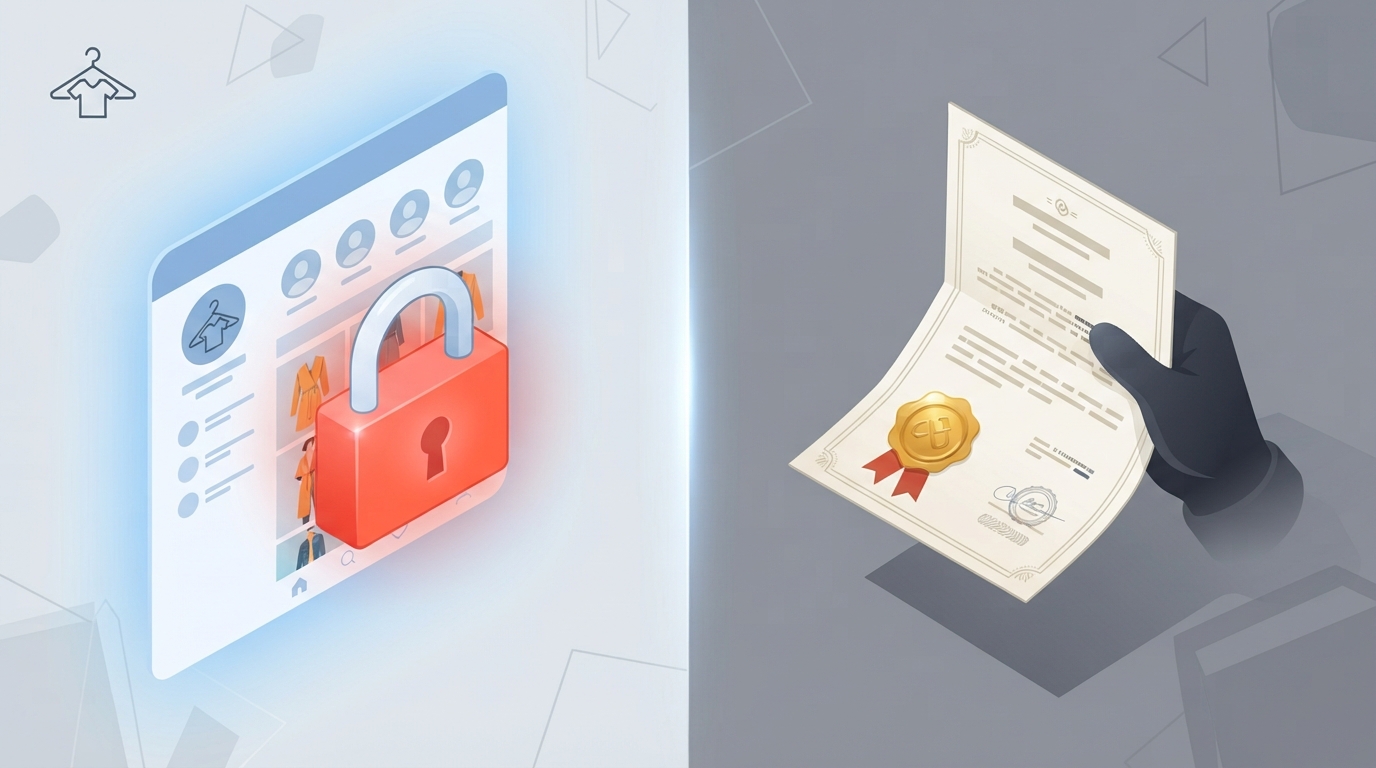
Imagine a situation that has become a classic in Ukrainian e-commerce: an entrepreneur spends two years developing an Instagram shop, investing thousands of dollars in targeted ads and influencer marketing, only to wake up one morning to a notification from Meta support. It turns out that their brand name now belongs to someone else who received a registration certificate just yesterday. This is not just an unfortunate mistake, but a targeted strategy to eliminate a competitor from the market.
Case Study: Losing an asset in a single day
Before the incident: Our client (a local clothing brand) had 150,000 active followers and an established sales system via Direct. The name was recognizable but not registered as a trademark, as the owner considered it an “unnecessary expense at the start.”
The incident: A competitor, noticing the success, filed an application for the identical name. Upon receiving the document, they immediately filed a complaint through Meta’s intellectual property rights infringement form.
Aftermath: Within 48 hours, the client’s account was blocked with no right to restore it under the old name. All advertising accounts, customer correspondence history, and accumulated social capital were lost. Attempts to explain to support that the brand had existed longer were unsuccessful, as Meta operates based on legal facts, not the chronology of post creation.
This situation demonstrates the primary risks of lacking legal protection. When a business becomes visible, it automatically becomes a target. Opponents exploit gaps in registration to “hijack” your traffic or block your operations. In the digital environment, the winner is the one who files documents with the IP office first, which is why we have detailed the risks of using a name without TM registration in a special article.
Such aggressive behavior by competitors forces business owners to seek ways to create a reliable security system, where a trademark becomes not just a piece of paper, but an effective weapon in response to any attempts to infringe upon your intellectual property.
How a Trademark Becomes a ‘Shield’ Against Corporate Raiding
Your name on Instagram and Facebook is a digital asset that remains vulnerable to infringement without registration. The legal regulation of intellectual property in Ukraine, specifically the Law of Ukraine “On the Protection of Rights to Marks for Goods and Services,” provides the certificate holder with tools to exert real influence on violators. Trademark (TM) registration effectively becomes a “shield” that secures the exclusive right to use a designation.
Having a registered mark changes the status of your account in the eyes of social media administration and competitors:
- Priority in disputes: Using Meta Rights Manager (Meta’s tool for managing intellectual property and combating content copying) requires documentary proof of rights. A TM certificate is key evidence when filing complaints against clone accounts.
- Legal prevention: Registration allows you to get ahead of unscrupulous competitors who might attempt to “seize” your brand by registering an identical or confusingly similar name.
- Strategic security: Obtaining a certificate is not just protection against page deletion, but also a legal basis for prohibiting other businesses from using your brand in similar product categories.
It is worth noting that Meta reviews complaints individually, comparing the Nice Classification (NCL) and the territory of the TM’s validity. For businesses planning to scale, we offer professional trademark registration, which ensures proper protection of the name on social media and minimizes risks when entering new markets.
Note: This material is for informational purposes only. The effectiveness of protection depends on the uniqueness of the designation, the correct selection of Nice Classification classes, and the absence of prior rights held by others.
Checklist: How to verify a name before launching on social media
Minimizing the risks of account suspension requires a systematic approach to brand auditing, which includes a step-by-step verification plan and a clear understanding of the trademark registration stages for the secure development of your project.
Step-by-Step Brand Verification Plan

Before investing thousands of dollars in targeted advertising and profile development, you must ensure that your chosen name will not become a liability. Many entrepreneurs make the mistake of assuming that an available Instagram handle guarantees freedom from legal claims. In reality, the legal status of a name is determined by official registries, not by a social media search bar. To ensure that social media name protection is backed by law, the verification process must be comprehensive and multi-layered.
- Search in the UKRNOIVI (IP Office) database. This is the first and most critical step. You must check not only for identical names but also for trademarks that are confusingly similar and have already been registered or are pending registration in Ukraine. The official website of the Ukrainian National Office for Intellectual Property and Innovations provides access to databases where you can filter results by relevant classes of goods and services.
- Search on social media and domain registries. Check for active profiles on Facebook, Instagram, and TikTok. Even if a trademark is not yet registered, the presence of a large, active competitor with the same name could lead to accusations of misleading consumers or cause Meta to deny your verification due to confusion.
- Competitor and market analysis. Study the naming conventions of companies in your niche. It is important to distinguish between a trademark and a trade name, as the latter often appears only in constituent documents but can still become the basis for future legal disputes.
Such an in-depth verification allows you to filter out names that show signs of being unregistrable as a trademark under current legislation right from the start. This will save you from a situation where, after a year of operation, you are forced to undergo a full rebranding due to a registration refusal or a lawsuit. Understanding the clarity of your brand allows you to determine the optimal moment to officially secure your rights to it.
When to Register a Trademark: Project Lifecycle Stages
Understanding when a profile name transforms into a legal asset helps avoid page blocks due to intellectual property infringement complaints. Choosing the right moment for registration depends on strategic goals and the level of brand awareness.
The decision-making process can be structured according to business development stages:
- At the start (minimal risks): The main goal is to check the name for identity in the databases of the IP Office (UANIPIO). This allows you to avoid conflicts with existing marks while testing your hypotheses.
- During scaling (mandatory stage): When your audience reaches 5,000–10,000 followers and competition in your niche grows, trademark registration becomes an essential protection tool. An official application provides priority, allowing you to use Meta’s internal mechanisms (such as Rights Manager) to combat clone accounts.
A common mistake is ignoring registration until a complaint is received from a competitor. Remember that successful registration requires a professional name search and the correct selection of Nice Classification classes, so it is best to engage a specialist before filing the application.
If you need assistance with this task, take advantage of our Trademark Registration offer.
Your brand is an asset, not just a name
Operating on social media without an official certificate is like playing Russian roulette with Meta’s algorithms, where the stakes are years of your hard work and the loyalty of thousands of followers. Even a perfect reputation won’t save your account if a third party gains legal rights to your name, as Instagram’s technical support will always prioritize the document holder over the date of the first post. To avoid becoming a victim of patent trolling or aggressive competition, it is important to understand the real risks and consequences of operating under an unprotected name. If your project has already started generating profit, it is time to turn your name into a full-fledged asset — contact the specialists at Polikarpov Legal to ensure reliable protection of your name on social media and secure the exclusive right to develop your brand.
Frequently Asked Questions
Does registering a domain name protect my rights to a name on social media?
Registering a domain name (e.g., .com or .ua) only grants you the right to use a specific address on the internet. It is not equivalent to registering a trademark. Social media platforms, such as Facebook or Instagram, view a domain name merely as a technical attribute and do not consider it legal proof of intellectual property rights when reviewing complaints.
If you own a domain but do not hold a trademark certificate, you remain vulnerable. A competitor could register an identical or similar name as a trademark in the relevant Nice Classification class, after which they would have the full right to file a complaint against your account via their Reporting Tool, citing trademark infringement, even if your domain was registered earlier.
What to do if someone is already using my name on Instagram but does not have a trademark for it?
In this situation, legal priority is often determined by who files for trademark registration first. Since social media platforms do not regulate the priority of name usage (i.e., who created the page first), you may find yourself in a “legal vacuum.”
- Swift action: If the name is still available in the UkrNOIPI database, the best strategy is to initiate the trademark registration process.
- Negotiations: Sometimes it is worth trying to buy the page or reach an agreement; however, without a trademark registration, you have no legal leverage.
We recommend consulting with specialists for trademark registration to secure your rights and gain the ability to legally demand the removal of content that infringes upon your rights through Meta’s tools.
Are there names that cannot be registered as a trademark?
Yes, there are objects that, according to the legislation (Law of Ukraine “On the Protection of Rights to Marks for Goods and Services”), cannot receive legal protection:
- Commonly used terms: Words that indicate the type, quality, quantity, properties, or purpose of a product (for example, it is impossible to register the trademark “Bread” for selling bread).
- State symbols: Coats of arms, flags, and official names of states.
- Misleading designations: Names that falsely indicate the manufacturer or origin of the product.
- Controversial designations: Names that are contrary to public interest, principles of morality, or humanity.
Before starting the registration process, it is advisable to conduct a professional search for similarity and identity to eliminate the risks of refusal by the IP office.
What is the difference between a trade name and a trademark?
These are two different legal instruments that are often confused:
- Trade name: This is the name under which a business entity conducts its activities (for example, the name of an LLC in the registry). It is protected within the scope of business operations, but it is very difficult to prove and defend in courts or on social media, as it does not grant an exclusive right to use a specific word or logo as a brand.
- Trademark (TM): This is an object of intellectual property that allows you to label goods and services. It is the TM that provides the exclusive right to prohibit others from using your name or designations that are confusingly similar.
To protect a brand on Instagram and Facebook, registering a TM is the legally effective option.
Is there a difference between protecting a logo and a brand name?
Yes, you can register both a word trademark (the name) and a combined trademark (the name together with a graphic image/logo) separately. A word trademark provides broader protection because it protects the word itself, regardless of the font or color in which it is written. A combined trademark protects the unique combination of graphics and the word.
For businesses on social media, it is most often recommended to register the name as a word trademark so that you can file complaints against any use of a similar inscription by others, even if they have changed the visual style or logo.