More Than Waiting: What Happens After Filing the Application
Most entrepreneurs mistakenly believe that after clicking the “submit” button, the hardest part is over, and all that remains is to passively wait for the mail. In reality, this is exactly when the real legal quest begins, where every document and every letter from a state examiner can become either a step toward success or a reason for a final refusal. Professional trademark application prosecution is not just an exchange of letters, but strategic risk management that allows for pulling even the most complex cases out of bureaucratic traps.
In this article, we will break down the roadmap of your application after it reaches the offices of the National Intellectual Property Authority (UANIPIO). You will learn how to recognize critical examination requests, why a timely response to them is a matter of life or death for your brand, and how a professional approach turns dry correspondence into a tool for protecting your interests. Understanding these processes will help you avoid “stuck” application status and preserve your investment in intellectual capital.
Below, we will take a detailed look at the structure of the verification process and how professionals lay the groundwork for a trouble-free certificate acquisition.
Stages of Examination: From Formality to Substance
Have you ever wondered why some brands receive protection within the standard timeframe while others remain in limbo for years? The answer lies in the quality of passing through two fundamental verification stages, where every detail matters for the final result. If you decide to order brand registration from professionals, the path through the Office’s filters becomes significantly more predictable, as experienced lawyers know the “weak spots” of each procedure.
As part of the comprehensive approach we detailed in our guide on turnkey trademark registration, case prosecution after filing becomes a logical continuation of meticulous document preparation. Next, we will analyze the specifics of formal document verification and the more complex phase — the fight for the mark’s uniqueness during substantive examination.
Let’s start with the first barrier, where technical errors most often occur, which can stop the entire process at the very beginning.
Formal Examination and Its Pitfalls
Formal examination is the first filter of UANIPIO, where the technical compliance of your application with established legal requirements is verified. At this stage, the examiner does not evaluate the aesthetics of the logo or its originality; their task is to ensure all “checkboxes” are correctly marked and fees are paid in full. Despite the apparent simplicity, this is where the foundation for successful trademark application prosecution is laid, as any inaccuracy triggers a request that automatically extends the processing time.
The most critical points at this stage are the accuracy of the mark description and the correct classification of goods and services. If the description does not match the provided image or if you made a mistake in the payment details for the state fee, the Office will send a request to rectify the deficiencies. Ignoring such a letter or providing an incorrect response will lead to the application being considered withdrawn, and your funds and time priority will be lost.
Typical errors leading to requests at the “formal” stage:
- Discrepancy in payer details: data in the fee payment receipt does not match the applicant’s data.
- Errors in Nice Classification (NCL): incorrect assignment of goods or services to specific classes or the use of outdated wording.
- Incorrect description of the mark: failure to mention all colors present in the logo or incorrect indication of verbal elements.
- Representation issues: lack of a properly executed power of attorney if interests are represented by a lawyer or patent attorney.
High-quality document preparation allows you to pass this stage without a single question from the Office, significantly saving time and stress for the business owner. However, the real challenge lies ahead when the examiner begins comparing your brand with thousands of other already existing designations.
Substantive Examination: The Battle for Uniqueness
Substantive examination is a significant stage where UANIPIO specialists check your designation for “absolute” and “relative” grounds for refusal. Unlike the formal stage, the very essence of the mark is analyzed here: whether it is too simple, whether it misleads the consumer, and most importantly, whether it copies already registered brands. It is at this stage of trademark application prosecution that maximum concentration is required, as the examiner searches databases, comparing your mark with thousands of others based on phonetic, visual, and conceptual criteria.
The search is carried out not only among identical names but also among those that have a likelihood of confusion. This means that even if a name is spelled differently but sounds almost the same or evokes identical associations in the consumer, you risk receiving a refusal. Examiners evaluate goods and services according to the relevant Nice classes, and the broader the list you have declared, the higher the probability of “crossing paths” with the interests of other right holders.
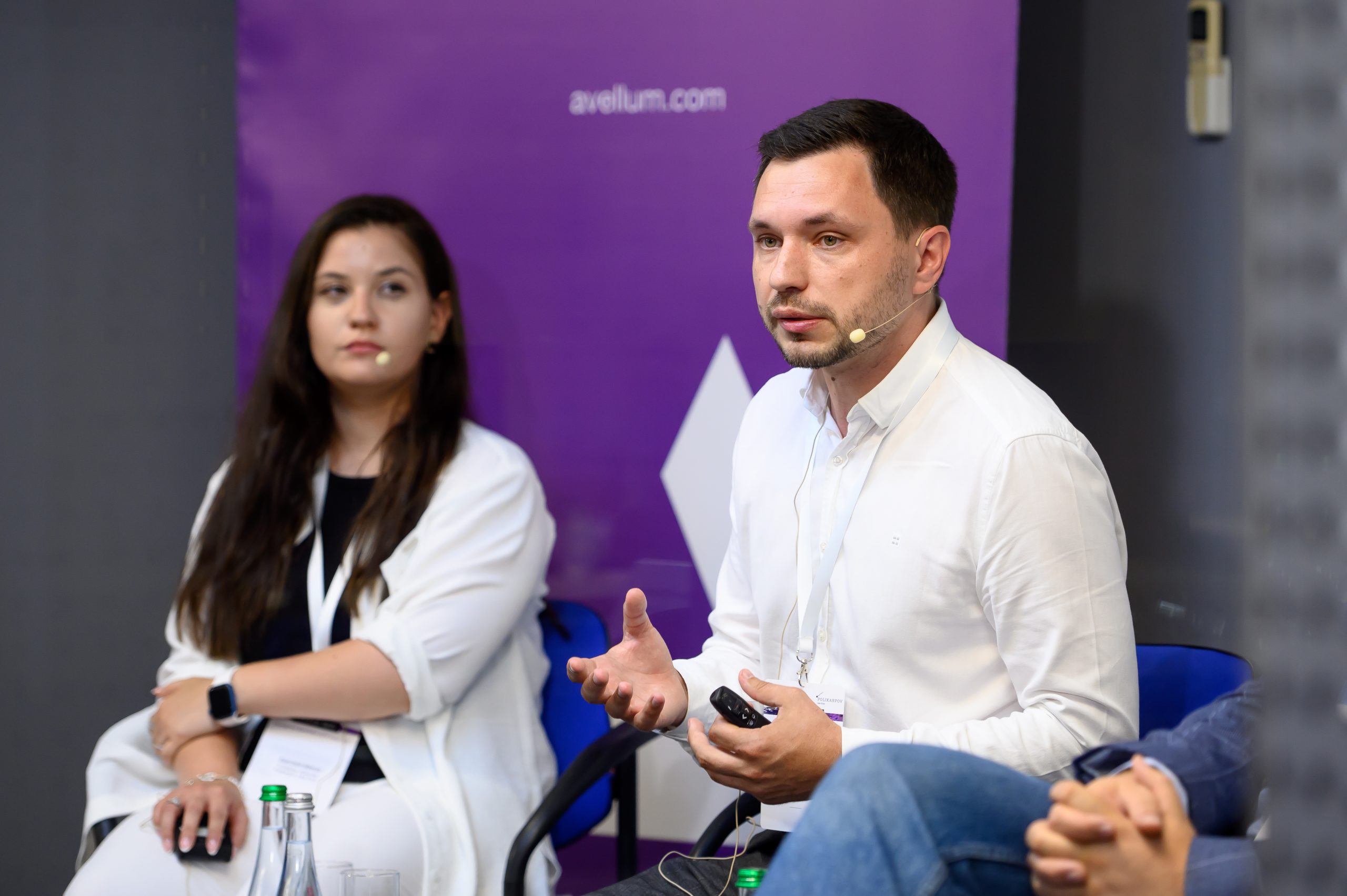
Expert Insight from Anton Polikarpov: Subjectivity is the main risk factor in substantive examination. One examiner may see a critical similarity where another finds no problems. That is why we never file an application “blindly.” A defense strategy is developed even before the fees are paid: we prepare the evidence base for the mark’s distinctiveness and analyze the weaknesses of competitors to have a ready legal position in case questions arise.
An effective strategy for overcoming potential claims is usually based on a detailed analysis of the market and legal precedents. If an examiner believes that your brand is too similar to another, professional trademark application prosecution allows for providing arguments regarding the absence of real confusion in the eyes of consumers or narrowing the list of goods to separate the brands into different niches. Such an approach turns the waiting process into managed communication with the office.
Communication with the Office: How to Respond to Inquiries
Is receiving an inquiry from a UANIPIO examiner a sign that the registration has failed? In fact, no—it is just the beginning of an active phase of dialogue. Successful trademark registration often depends not on the perfection of the initial application, but on how professionally you can argue your position in response to the office’s comments. An examination inquiry is an opportunity to clarify details, correct technical errors, or protect your brand’s uniqueness within the legal framework.
The process of trademark application prosecution at this stage requires a deep understanding of the examination methodology. It is necessary to understand that the examiner acts within strict instructions, and your response must be written in “legal language” that addresses the regulator’s specific concerns. In the following subsections, we will analyze in detail how to act if you have received a provisional refusal and show examples of which arguments help tip the scales in your favor.
Comprehensive turnkey trademark registration minimizes your risks, as professional lawyers monitor every letter from the office and know how to turn a potential refusal into a positive registration decision.
Provisional Refusal: The Applicant’s Action Plan
A notification of refusal to register a mark (the so-called Provisional Refusal) is a procedural document that gives the applicant one last chance to prove the legitimacy of obtaining a certificate. This is not yet a final decision, but only the examiner’s “preliminary opinion.” Competent trademark application prosecution at this stage involves a thorough analysis of the office’s arguments and the preparation of a reasoned response within the period established by law (usually two months with the possibility of extension).
The action plan upon receiving a provisional refusal is as follows:
- Deconstructing arguments: A lawyer analyzes what the refusal is based on—absolute grounds (for example, the name is generic or descriptive) or relative grounds (similarity to someone else’s mark).
- Finding counterarguments: We collect evidence of brand use in the market, conduct a comparative analysis of phonetics and semantics, and look for weak elements in the conflicting marks.
- Using Letters of Consent: If the obstacle is a similar mark of another company, sometimes the fastest way is to obtain official permission from the owner of that mark to register your brand.
- Adjusting the list of Nice classes: Sometimes it is enough to exclude one or two items from the application to eliminate a conflict of interest with the owner of an earlier mark.
It is important to understand that every detail in the response has legal significance. For example, if an examiner claims a similarity between logos, we emphasize different target audiences or the specifics of the goods’ sale. Such professional trademark application prosecution allows for removing claims even in complex cases where the situation seems hopeless at first glance. We will look at exactly how these methods work in real conditions in our Case Study.
Case Study: Defending Trademark Rights
Successfully overcoming a provisional refusal often depends not only on knowledge of the law but also on the lawyer’s ability to find weaknesses in the examiner’s position. When we handle trademark prosecution, every case is treated as an individual strategic session where legal norms, market analysis, and consumer perception psychology intertwine. Our firm’s practice confirms: even the most “hopeless” notifications from the NIPO can be turned into a positive decision if the argumentation is built on a deep understanding of the examination methodology.
Case Study: Similarity of Names in Adjacent Niches
Situation: The client applied for the registration of a combined mark for an IT logistics automation service. The UkrNIPO examiner issued a provisional refusal, citing a likelihood of confusion with a previously registered word mark of a large transport company. Both marks belonged to Class 39 of the Nice Classification.
Our Solution: During the prosecution of this trademark application, we developed a three-tier defense system:
- Semantic Gap: We proved that despite the similarity of the word roots, the overall meaning of the brands is different. The client’s mark emphasized “algorithmic speed,” while the opponent focused on the “reliability of physical transportation.”
- Consumer Group Analysis: Our lawyers provided evidence that the client’s services are used exclusively by B2B developers, whereas the opponent operates in the B2C segment. This minimizes the risk of brand confusion in the minds of actual buyers.
- Phonetic Distinction: By adding a graphic element (logo) and a specific stress derived from the context of use, we convinced the examiner of the mark’s visual and phonetic originality.
Result: The examination accepted our arguments, and the client received a trademark certificate without excluding key services from the list.
This example demonstrates that trademark prosecution is not just an exchange of letters, but an active phase of protecting business interests. A qualified lawyer knows how to “highlight” those details that usually fall out of sight with a formal approach. However, even the strongest legal arguments lose meaning if they are submitted in violation of the time regulations set by the office.
Compliance with Deadlines as a Key to Success
Can a perfectly designed brand that has passed all stages of uniqueness checks “die” because of one missed calendar day? In the field of intellectual property, the answer is a definite yes. Even if you have chosen a path where turnkey trademark registration is carried out, the success of the procedure depends 50% on iron discipline in observing procedural deadlines. Each stage—from filing an opposition to a provisional refusal to paying the state fee for publication—has its own strict timeframes that cannot be ignored without fatal consequences for the application.
High-quality legal support and systematic trademark prosecution allow turning the chaotic process of correspondence with the state apparatus into a clearly controlled schedule. Many entrepreneurs mistakenly believe that after receiving an application number, they can relax; however, this is exactly when the active phase begins, where every notification from the NIPO requires an immediate response. In the following subsections, we will analyze the critical points of the “applicant’s calendar” and find out why silence in response to examination requests is a brand’s most expensive mistake.
Applicant’s Calendar: Don’t Miss the Deadline
Within the process encompassing trademark prosecution, time is the most critical resource. Ukrainian legislation establishes clear deadlines for every action by the applicant, and most of them are peremptory—meaning they are not subject to automatic renewal. It is important to understand that UkrNIPO is not obliged to remind you of an approaching deadline; the duty to monitor the application status and respond in time lies entirely on the shoulders of the brand owner or their representative.
Checklist of Critical Deadlines for the Applicant
- Response to a formal examination request: Usually, you have 2 months from the date of receipt of the request to correct errors in documents or clarify the list of Nice classes.
- Response to a notice of refusal (Provisional Refusal): The standard term is 2 months. This is your main chance to provide arguments in favor of registration.
- Payment of fees for publication and issuance of the certificate: After receiving a positive decision, the applicant has 3 months to make the payment. Missing this deadline results in the application being considered withdrawn.
- Filing a petition for an extension of time: If you do not have time to prepare a response, a petition for an extension (usually for 2 months) must be filed BEFORE the end of the main term.
- Appealing the decision to the Appeals Chamber: In case of a final refusal, you have 2 months to file an objection with the specialized body of the office.
Professional trademark prosecution involves using specialized monitoring systems that eliminate the human factor. For example, at Polikarpov Law Firm, we set internal “checkpoints” 10–14 days before the official deadline to have time for final adjustments to the legal position. This strategy allows us to avoid emergency situations where a response is prepared on the last night, which inevitably affects the quality of argumentation. Understanding these timings helps to realize the scale of risks, as the price of forgetfulness is not just a delay, but the complete cancellation of all previous efforts and investments.
Neglecting these dates leads to legal paralysis of the application, triggering a chain reaction of negative events that one should be aware of in advance.
Consequences of Ignoring Correspondence from UANIPIO
Ignoring official correspondence from UANIPIO is the shortest path to annulling the results of months of work. Many entrepreneurs mistakenly believe that a lack of response to a request merely “freezes” the process; however, in reality, the state machine works differently: the applicant’s silence is interpreted as a loss of interest in registration, which entails the automatic termination of prosecution.
The most painful consequence is the loss of priority. Priority secures your filing date, which is decisive in disputes with competitors. If, due to negligent trademark application prosecution, it is deemed withdrawn, your brand becomes vulnerable. Any other person can file an identical mark the next day, and you will not be able to appeal to your “prior experience” because, legally, your application no longer exists.
| Action / Inaction of the Applicant | Legal Consequence |
|---|---|
| Failure to respond to a formal examination request within the established timeframe | The application is considered withdrawn; filing fees are non-refundable. |
| Missing the deadline to respond to a preliminary refusal (Provisional Refusal) | Issuance of a final decision on the refusal of registration without the right to present repeated arguments. |
| Non-payment of the publication fee within 3 months after the decision | The registration decision is canceled; the application status changes to “prosecution completed without the issuance of a certificate.” |
| Failure to file a request for an extension of time in case of a real delay | Loss of the opportunity to submit evidence of brand use or letters of consent from third parties. |
In addition to procedural losses, there are significant financial risks. All state fees paid at the filing stage are “forfeited.” Resubmitting documents will not only require new investments but will also lead to higher costs for consulting services, as rectifying a situation with a “dead” application is always more complex than supporting a new one. Effective trademark application prosecution requires an immediate reaction to any letter from the office, as the price of one missed message could be a redesign of the entire business due to the inability to protect the current name.
That is why it is critically important to understand not only the deadlines but also the underlying meaning of every document sent by the examiner, which brings the role of legal support to the forefront.
Professional Support for the Prosecution Procedure
Is it possible to win a case against a bureaucratic system on your own if the examiner is skeptical? Practice shows that registration is not an automated process but a legal discussion where every word carries weight. When you delegate prosecution to professionals, you receive not just “email monitoring” but a full-scale protection of interests, where the lawyer acts as a mediator between your business vision and strict legal norms.
Professional trademark application prosecution allows you to turn a dry exchange of documents into a strategic game. While the entrepreneur focuses on product development, the legal expert analyzes each request for compliance with methodological guidelines and judicial practice. In the following sections, we will explore exactly how lawyers find opportunities where the applicant sees only a dead end, and which tools help overcome the subjectivity of the examination.
A deep understanding of the nuances helps not just to react to events but to anticipate them, which is the foundation of a successful brand protection strategy.
Why a Lawyer Reads Between the Lines of an Examiner’s Requests
Requests from UANIPIO rarely contain direct instructions on exactly how to change a position to achieve a positive result. Most often, these are veiled legal constructs hiding a specific concern regarding the description of the mark or the classification of goods. A lawyer conducting trademark application prosecution perceives such a letter not as a questionnaire, but as a signal of a potential risk zone that must be urgently “covered” with arguments.
An office examiner is, first and foremost, a person acting within the limits of instructions. If a request mentions “possible descriptiveness,” the lawyer understands: the examiner has doubts but has not yet issued a final verdict. This is the perfect moment to provide evidence of acquired distinctiveness or to shift the emphasis in the mark’s description without waiting for an official refusal.
— Anton Polikarpov
Requests often suggest excluding a certain word from protection (disclaimer) or changing the list of Nice Classes (NCL). For a businessman, this might seem like a minor detail, but a lawyer sees the consequences: for example, excluding a key element would make your brand virtually defenseless against copying by competitors. Professional trademark application prosecution involves the ability to distinguish a technical clarification from a proposal that “neuters” your legal protection. We analyze not only the text of the request but also which specific sections of the law the office specialist cites, allowing us to prepare a response that satisfies formal requirements without harming the brand’s interests.
Such meticulous work with the text and content of requests allows for the use of specific protection tools available only during the stage of active examination.
Protection Tools at the Examination Stage
The legal arsenal for brand protection during the substantive examination stage is not limited to formal correspondence. Effective trademark application prosecution involves using tactical tools to overcome even the most complex objections from the UANIPIO. When an examiner presents arguments regarding the similarity of your mark to already registered ones, we don’t just say “that’s not true”; we build a multi-level system of argumentation.
Preparing a Reasoned Response: Strategy and Evidence
Receiving a notice of provisional refusal is only the beginning of the active protection phase. For successful trademark application prosecution, we use several key methods:
- Analysis of phonetic, visual, and conceptual similarity: We prove that despite sharing common elements, the overall impression of the marks is completely different for the consumer.
- Proving acquired distinctiveness: If the examiner considers the mark descriptive, we gather evidence of its long-term and intensive use in Ukraine (through advertising budgets, sales volumes, and media publications).
- Limiting the list of goods and services (Nice Classification): Sometimes it is enough to exclude one or two items of goods or services to resolve a conflict with another owner’s trademark while maintaining the core focus of the business.
Handling Third-Party Oppositions
The registration procedure includes the publication of the application, after which any person can file a reasoned opposition against your registration. In such cases, professional trademark application prosecution turns into a true “adversarial process.”
| Protection Tool | Action Description | Result for the Client |
|---|---|---|
| Counter-opposition | Legal refutation of the arguments presented by the opponent who filed the opposition. | Neutralization of competitors’ attempts to block your brand. |
| Letters of Consent | Negotiations with owners of similar marks to obtain written permission to register your mark. | Peaceful resolution of a conflict of interest without losing the application. |
| Request for Proof of Use | If an opponent relies on an old TM that they are not using, we can initiate a cancellation procedure for non-use. | Clearing the market of “dormant” registrations that hinder your business. |
Understanding when to compromise and when to firmly stand your ground is critical. The nuances of how to act in stalemate situations and why a trademark attorney becomes your primary ally in disputes with the Office will be covered in detail in our next material on professional assistance.
Stress-Free Prosecution: Strategy Summary
Successful brand registration is not a lottery, but the result of a carefully calibrated strategy. As practice shows, the success of a case depends 50% on high-quality preliminary searches and document preparation, and another 50% on professional trademark application prosecution after its official filing. Every letter from the UANIPIO is a test of your readiness to protect your own assets.
The Formula for Trouble-Free Registration:
- Always adhere to procedural deadlines: missing a deadline by even one day can cost months of work.
- Do not ignore “minor” examiner requests: fundamental risks of refusal are often hidden behind technical clarifications.
- Involve experts to prepare responses: a reasoned objection must be based on current IP office practice and judicial precedents.
- Regularly check the application status to ensure you don’t miss notifications regarding third-party oppositions.
Remember that a registration certificate is not just a piece of paper, but a tool for capitalizing your business. If you want to be confident in every step of the process, we recommend reviewing our main guide on how turnkey trademark registration works to understand the full cycle of intellectual property protection. If you have already filed an application and received a complex inquiry or a provisional refusal—do not delay. Timely consultation and professional trademark application prosecution can help save a brand even in situations that seem hopeless.
Frequently Asked Questions
Can changes be made to a trademark or can the list of goods be expanded after the application has been filed?
The law sets strict limits on making changes to an application after it has been filed. You cannot change the actual trademark image or add new classes of goods and services (Nice Classification) that were not originally specified. Any significant change to the logo or expansion of the list requires filing a new application and repaying all fees.
However, technical corrections are allowed:
- changing the name or address of the applicant;
- correcting obvious errors or typos;
- shortening the list of goods and services (removing certain items).
Therefore, it is extremely important to conduct a trademark and class list audit during the preparation stage to avoid the need for re-filing.
What is "priority" and how does it help protect a brand internationally?
If you plan to launch your brand in the international market, you can exercise the right of convention priority. According to the Paris Convention, you have 6 months from the filing date of your application in Ukraine to file similar applications in other member countries of the convention.
Advantages of this tool:
- The filing date abroad will be considered the date of your first Ukrainian application.
- This protects you from “trademark trolls” and competitors who might try to register a similar mark during this period.
- You gain a window of time to test the market before spending significant funds on international registration.
How can I find out if someone else is trying to register a similar mark while my proceedings are ongoing?
The National Intellectual Property Office (NIPO) is not required to notify you about similar applications filed by other parties. Monitoring this process is the responsibility of the brand owner. For this purpose, there are trademark monitoring services.
Professional monitoring allows you to:
- Identify the publication of a similar application at the examination stage in a timely manner.
- File an opposition to registration within 3 months from the date of publication of the application details.
- Block a competitor’s registration even before the certificate is issued, which is significantly cheaper than trying to cancel an already issued certificate through court.
Is it mandatory to use the trademark immediately after receiving the certificate?
You are not required to start using the mark immediately; however, the law establishes an “immunity” period of 5 years. If a trademark is not used without valid reasons for a continuous period of five years from the date of publication of its registration details, any interested party may file a lawsuit for early termination of the certificate’s validity.
The following are considered “use”:
- Applying the trademark to goods, packaging, or labels.
- Using it in advertising or on the Internet (including in domain names).
- Applying it in business documentation or during the provision of services.
What should I do if I missed the deadline to respond to an examiner’s request or pay a fee?
Missing procedural deadlines usually results in the application being considered withdrawn. However, Ukrainian legislation provides mechanisms for the restoration of rights:
- Extension of the deadline: You can file a petition to extend the response deadline if you do so before it expires (a state fee must be paid).
- Reinstatement of rights: If the deadline has already passed, you can file a petition for reinstatement of rights within a certain period (usually up to 6-12 months depending on the action), providing evidence of valid reasons for the delay and paying an increased fee.
It is important to remember that not all deadlines can be reinstated, so following the applicant’s calendar is critical for maintaining priority.
Does trademark registration in Ukraine protect my brand in other countries?
No, the legal protection of a trademark is territorial in nature. A certificate issued in Ukraine is valid exclusively within the territory of Ukraine. If you plan to sell goods or provide services in the EU, USA, China, or other regions, you must register the trademark in each country separately.
There are two main ways to do this:
- Direct filing: applying directly to the patent office of a specific country through a local attorney.
- The Madrid System: filing one international application through the Ukrainian office, specifying the list of countries where you want to obtain protection. This significantly simplifies administration and saves costs on the services of foreign lawyers.