Financial Roadmap for Fashion Brand Registration: From Idea to Certificate
Launching your own collection always involves significant investments in fabrics, tailoring, and advertising campaigns. However, business owners often ignore the legal foundation, without which the name on the tag is just a set of letters that doesn’t belong to you de jure. Understanding how much it costs to register a clothing brand in Ukraine allows you to set a realistic budget at the start and protect your capital from third-party claims or design copying.
We will break down the cost structure, starting from mandatory state fees to the strategic choice of classes of goods and services. You will find out how the logo color affects the check and why electronic document filing is the most cost-effective solution for a modern entrepreneur. Our goal is to provide you with a transparent financial roadmap where there are no hidden payments, and every hryvnia spent works toward the capitalization of your fashion business.
Below, we will look in detail at the first stage of expenses — mandatory payments to the budget that accompany every step of your application.
State Fees: Mandatory Expenses at the Start
Is it possible to obtain a certificate for a trademark for goods and services without interacting with the state? The short answer is no. State fees are an integral part of the process, and they constitute the “base tariff” for the right to own intellectual property. Before filing documents, it is worth studying our complete guide to trademark registration for online stores, where we consider not only the price but also the protection strategy.
For those planning a budget in advance, it is important to take into account that the National Intellectual Property Authority (UkrIPO) sets different rates depending on the filing format. Using a professional tool for trademark registration allows you to automatically calculate these payments and avoid errors in payment details, which often lead to delays. Remember that due to martial law in Ukraine, the procedure for accelerated application review has been officially suspended, so planning the launch of new lines should take into account standard examination periods.
To better understand the logic of the subsequent steps, we also recommend reading the material on 5 steps to creating your own trademark. Now, let’s move on to the specific figures that await you when filing an online application.
Base Cost of Filing an Application Electronically
The main factor affecting how much it costs to register a clothing brand in Ukraine is the method of document submission. The state encourages digitalization; therefore, electronic document filing provides a significant advantage — a 20% discount on the base fee amount. This is the most rational path for fashion startups seeking to optimize costs without losing the quality of legal protection.
When planning a budget, you should focus on three main payment stages. Each of them is tied to a certain stage of your trademark application review:
- Application filing fee: 3,200 UAH per class (for electronic filing) instead of 4,000 UAH for paper filing.
- Publication fee: 600 UAH per class (for a black-and-white mark).
- State duty for issuing the certificate: 150 UAH (for residents of Ukraine).
It is worth noting that these amounts are provided on the condition that there is a single applicant. If you are developing a business in partnership and want the protection document to be issued to several co-owners, the filing fee increases by 30%. This is a critical nuance for those registering a clothing brand together with an investor or designer. This approach ensures parity of rights but requires additional costs at the start.
In addition to the number of applicants, the object of registration itself affects the final cost. Registering a simple text name and developing a combined logo have different legal consequences and price characteristics, which should be kept in mind when forming the visual strategy of the brand.
Additional Fees for Number of Applicants and TM Type
The amount of financial investment in legal protection depends not only on your internet speed when filing an application, but also on the business ownership structure and the type of the logo itself. If you plan to launch a new product, calculating how much it costs to register a clothing brand in Ukraine must necessarily take into account the legal form of future asset ownership.
Collaborations or partnerships are frequent in the fashion industry. It is important to understand: if there are two or more trademark owners (for example, a designer and an investor), the official filing fee automatically increases by 30%. This is a fee for the administrative complexity of managing the rights of multiple individuals. The type of designation also affects the cost. You can choose one of two paths:
- Word trademark: registration of the name only. This provides flexibility in changing fonts and styles without losing protection.
- Combined designation: registration of a unique logo along with the name. This is the most popular choice for clothing brand registration, as it protects the visual identity as a whole.
Expert Insight: Many entrepreneurs ask about the possibility of accelerating the procedure. I must state: as of today, an official expedited examination procedure does not exist in Ukraine. Due to martial law, the National Intellectual Property Authority (UkrNOIVI) operates in standard mode, so expect realistic processing times — from 18 to 24 months. Any offers to “do it in 3 months” are bad-faith promises.
In addition to formal matters regarding the number of applicants, it is of critical importance which specific goods the protection will cover. The lion’s share of the budget depends on the number of selected business directions, as each new class is an additional payment to the state treasury.
NICE Classes: How Not to Overpay for the Unnecessary
How to determine the scope of protection so as not to leave excess funds in the registrars’ offices, but also not to remain defenseless against competitors? The answer lies in the correct selection of classes of the International Classification of Goods and Services (Nice Classification). This is not just a formality, but the foundation of your security. Each category you add to the application directly increases the amount of how much it costs to register a clothing brand in Ukraine.
In our detailed guide on trademark registration for fashion brands, we have already emphasized the importance of strategic assortment planning. Professional registration involves not just mechanically filling out forms, but also a legal audit of your business model. This helps filter out categories you “might launch someday” in favor of those that actually generate income now. Such an approach allows for significant optimization of costs at the start.
Before diving into the details, it is worth understanding that for the fashion industry, there is a “golden set” of classes that provides full market coverage — from manufacturing T-shirts to launching your own online shop.
The Golden Standard for Clothing: Classes 25, 18, and 35
A successful fashion business is rarely limited to just sewing dresses or suits. When we calculate how much it costs to register a clothing brand in Ukraine, we always advise clients to look three steps ahead. Registering in only one class is the most common mistake for beginners, which later leads to competitors freely opening stores under your name or releasing bags with your logo.
Key Nice Classes for the Fashion Industry
To fully protect a brand, it is necessary to focus on three main categories, each of which covers its own front:
- Class 25: Basic and mandatory. It includes actual clothing, footwear, and headgear. Without it, your brand does not legally exist as a manufacturer of items.
- Class 18: Vital for those planning to release accessories. This includes leather goods, bags, suitcases, umbrellas, and wallets. Even if you only sew hoodies now, in a year you might want to add backpacks to the collection, and without Class 18, they will be unprotected.
- Class 35: This is trademark registration for providing services. It is this class that protects the name of your store (physical or online platform) and advertising activities. It prohibits others from using your name on store signs where clothing from other manufacturers is sold.
Using Class 35 is particularly relevant for trademark registration for an online store, as it protects not only the product but also the brand itself as a retail outlet. It is important to remember: if you produce clothing under brand “A” but sell brand “B” and “C” clothing in a multi-brand boutique, protection specifically in the services sector is critically necessary for you. Understanding this structure allows business owners to consciously approach priority selection and control the budget at the document filing stage.
However, besides expanding the list of classes, there are also legal ways not to spend money on things that will not bring real benefit to your startup tomorrow.
Saving Strategy: Choosing Priority Categories
An excessive number of Nice Classification classes in your application is a direct path to budget bloat without real necessity. While protection should be comprehensive, a startup in its early stages should focus on the categories that will generate profit today to optimize how much it costs to register a clothing brand in Ukraine at the launch.
Checklist: How to filter out unnecessary Nice classes
- Current assortment analysis: If you only produce knitwear suits, Class 25 is critical, while Class 18 (bags) can wait until your line expands.
- Determining the sales model: Are you only selling your own products, or do you plan to create a marketplace for other designers? In the first case, Class 35 is needed for advertising; in the second, it becomes primary for commercial activities.
- Geography and 2-year plans: Do not add classes “just in case” for products you definitely won’t have time to release in the next 24 months.
It is important to understand not only the financial side but also the legal risks of over-coverage. According to Ukrainian law, if a trademark is not used in a registered class for 5 years, any interested party can file a lawsuit for early termination of the certificate for those goods or services. In other words, by paying fees for “extra” categories, you risk not only your money but also the future validity of your protection document. You can find more practical tips on the first steps in our material on how to correctly navigate the clothing brand registration algorithm.
A rational approach to selecting categories allows you to invest the saved funds into high-quality visual protection, where the choice between color and monochrome also carries its own price.
Color vs. Monochrome: The Price of Visual Style
Is it worth overpaying so that your logo in the certificate looks exactly like it does on your storefront? A color solution is not just a matter of aesthetics, but a strategic choice that directly affects the amount of state fees and the future flexibility of your brand.
Before making a decision, I recommend checking out our fashion industry guide, where we break down global protection strategies. When calculating how much it costs to register a clothing brand in Ukraine, you will see that using color adds a separate expense item to each selected Nice class. In the following subsections, we will break down the financial difference between black-and-white and color filings, and explain why professional trademark registration often begins with forgoing color in favor of broader protection. This will help you prepare for the next stage—studying the stages of clothing brand registration, where visual identification plays a key role.
Understanding how color affects the scope of rights will allow you to avoid unnecessary costs even at the stage of preparing the application for the NIPA (National Intellectual Property Authority).
Why a Color Logo Costs More
State fees for filing an application in color are always higher because the examination of such a designation is considered more complex. In addition to the basic fee for each class, the applicant must pay an additional fee for the use of color, which for electronic filing is 800 UAH (the full price without a discount is 1,000 UAH).
However, the financial aspect is only the tip of the iceberg. The main difficulty lies in the legal plane: by registering a brand in specific colors, you protect that exact combination. If you later decide to rebrand and change, for example, neon pink to pastel beige, your TM may partially lose its strength against copycats who use your new combination.
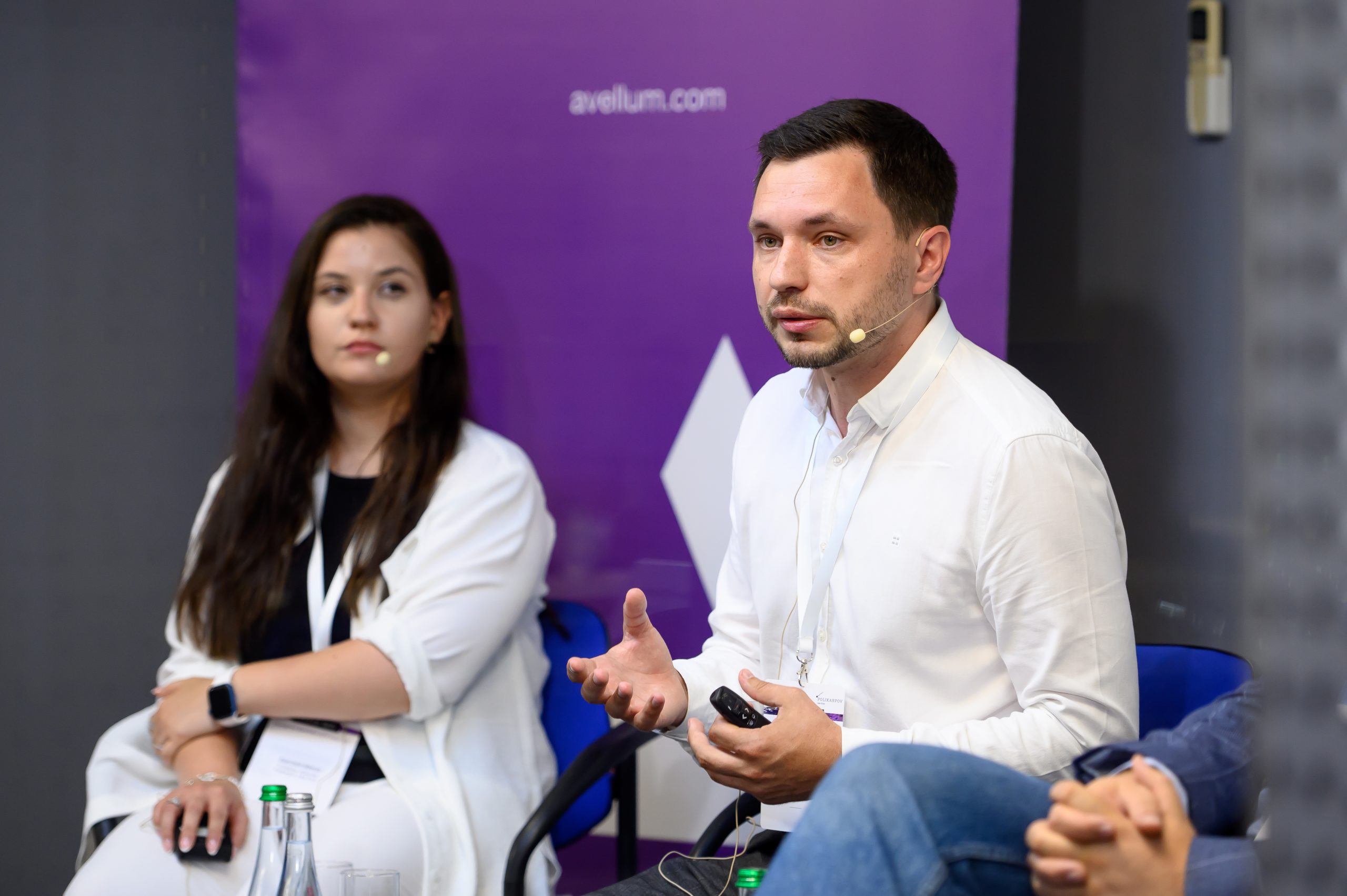
Expert Insight from Anton Polikarpov: I always recommend that clients in the fashion segment register their logo in a black-and-white (monochrome) version. According to established practice, B&W registration grants the owner the right to use the mark in any color execution. This gives you carte blanche for any experiments with corporate style without the need to file a new application and re-calculate how much it costs to register a clothing brand in Ukraine when changing the palette.
Thus, by choosing monochrome, you not only save money at the start but also obtain significantly broader legal protection. To see the difference in costs clearly, it is worth comparing specific figures for both filing options.
Cost Comparison Table: B&W vs Color
To clearly understand the financial burden at the start of a business, we have prepared a cost calculation for one Nice Class (for example, Class 25 — clothing and footwear). Since expedited registration is currently officially suspended in Ukraine due to martial law, you should focus on standard timelines and the corresponding state fees for the electronic filing method, which is the most cost-effective.
Comparison of Fees for B&W and Color Designations
Below is a calculation of the official fees of the NIPO (National Intellectual Property Office), applicable for a single applicant. When analyzing how much it costs to register a clothing brand in Ukraine, it is important to consider that each color adds not only visual appeal but also specific figures to your budget.
| Type of Payment (for 1 Nice Class) | B&W Logo (UAH) | Color Logo (UAH) |
|---|---|---|
| Fee for filing an application in electronic form | 3,200 | 3,200 |
| Additional fee for using color | 0 | 800 |
| Fee for publication of certificate issuance | 600 | 800 |
| State duty for certificate issuance | 85 | 85 |
| Total state expenses | 3,885 | 4,885 |
As we can see, the difference in cost seems small; however, it multiplies with each new class. If you plan to expand beyond just making clothes and add bags (Class 18) or open your own retail store (Class 35), these costs will increase proportionally. Furthermore, the strategic choice of monochrome is often a wise move for registering a clothing brand, as it allows you to freely change the color scheme of your corporate identity in the future.
However, the dry figures of state fees are only part of the puzzle. Real asset protection begins where the technical submission of documents ends and professional expertise steps in, helping to avoid the loss of these funds due to legal errors.
Legal Support: Investment or Unnecessary Expense
Is it worth involving professional lawyers if the application form on the NIPO website can be filled out independently? The answer lies in the difference between the process of “submitting documents” and the process of “obtaining a protection document.” At the stage of planning expenses and figuring out how much it costs to register a clothing brand in Ukraine, entrepreneurs often forget about the price of an error, which can cost not only lost fees but also the need for a complete rebranding of an already launched business.
By ordering trademark registration from a specialized professional, you are investing in a legal brand audit that minimizes the risk of receiving a “provisional refusal.” This is especially important for the fashion industry, where names often overlap with existing marks. In addition to protecting the name, we always advise looking at the issue comprehensively, including domain name protection, which we detailed in our full guide for fashion brands and online stores. In the following sections, we will break down exactly how a lawyer safeguards your money during the search and paperwork stages.
To better understand the logic of actions after making a decision on protection, check out our article on the 5 steps to your own trademark, which describes the path from idea to certificate. The first and most important stage of this journey always remains checking your name for “clearance.”
Preliminary Search as Insurance Against Refusal
A preliminary search for identity and similarity is a critical filter that separates a successful registration from a guaranteed refusal. When you are calculating how much it costs to register a clothing brand in Ukraine, the cost of a professional search should be viewed as an investment in security, as the state trademark application fee is non-refundable regardless of the examiner’s decision.
Case Study: The Price of Going It Alone
A local women’s clothing brand filed an application to register the name “Aura” independently, paying all fees for Nice Class 25. The owners did not conduct a deep search, limiting themselves to a Google check. After 12 months of waiting, NIPO sent a provisional refusal: it turned out that a certificate already existed for a trademark for goods and services with the similar name “Aura-Style,” which had priority.
Result: 12 months of lost time, approximately 4,000 UAH in lost fees, and the need for an urgent rebranding because the competitor filed a claim for intellectual property rights infringement. Hiring a lawyer at the start for a search would have cost several times less than the losses from stopping sales.
Unlike free databases, a professional search includes checking not only for full identity but also for phonetic and visual similarity. This allows for the identification of potential conflicts before you print the first batch of labels or order an expensive sign. A legal brand audit at this stage provides an understanding of whether it is worth investing money in the chosen name at all, or if it is better to make adjustments now.
Once the name’s clearance is confirmed, the stage of technical implementation begins—forming the document package and managing the correspondence with the state authority.
Preparation of the Application Package and Case Management
Proper application filing is not just filling out digital fields, but building a protection strategy that will withstand the test of time and competitors. A lawyer handles the full cycle of interaction with the National Intellectual Property Authority (NIPA), allowing the business owner to focus on production rather than bureaucratic nuances. The specialist’s fee for assisting with **clothing brand registration** usually covers all stages of the proceedings, from filing documents to the moment you receive your trademark certificate.
What is Included in Professional Legal Support
Engaging a professional minimizes the risk of a so-called “preliminary refusal.” If the NIPA examination finds grounds for rejecting the application, the lawyer prepares a reasoned response. It is important to understand: writing a response to such a refusal often costs as much as the entire initial filing, so it is better to avoid problems from the start.
- Classification and optimization: selecting the correct NCL classes to protect the name on tags, online sales, and potential accessories.
- Correspondence with NIPA: monitoring fee payment deadlines and responding to clarifying requests from examiners.
- Error correction: fixing inaccuracies in the graphic representation of the logo or product descriptions that could halt the process.
Currently, there is no official accelerated registration procedure in Ukraine due to martial law. This means the process will take the standard 18–24 months. Any error in the documents made during independent filing can push you to the end of the queue or lead to the loss of priority, which is critical for the dynamic fashion market.
When evaluating **how much it costs to register a clothing brand in Ukraine**, keep hidden costs in mind. Independent filing without experience often ends in the loss of the state fee, which is non-refundable in case of refusal. Professional support is insurance for your capital against double payments and legal dead ends. The next logical step after securing the rights to the name is moving to the practical stages of clothing brand registration, where each step brings you closer to the status of the legal owner of the trademark.
Your Brand Deserves Reliable Protection
The calculation of **how much it costs to register a clothing brand in Ukraine** clearly demonstrates: legal protection costs are only a small fraction of the total business launch budget, but they are what guarantee the stability of your project. By investing in state fees and professional support today, you avoid thousands in losses from rebranding or litigation in the future, gaining a full-fledged intellectual property asset.
For a successful start in the fashion industry, it is not enough to just create a beautiful item—you need to make it legally untouchable. We recommend a comprehensive approach, detailed in our guide for fashion brands, which accounts for all nuances from choosing NCL classes to design protection. Do not risk your capital for the sake of questionable savings on legal compliance.
Your **trademark certificate** will become the foundation for scaling, entering Amazon, or franchising. By protecting the name and logo, you also gain the right to exclusive use of the corresponding .UA domain name, which we will discuss in detail in our next article on protecting a store’s online presence.
Frequently Asked Questions
How much does international trademark registration cost for a fashion brand?
If you plan to sell clothing abroad, the most cost-effective path is the Madrid System. The cost depends on the number of selected countries and classes. The basic fee is 653 Swiss francs (for a black and white mark) or 903 francs (for a colored one), plus additional fees for each country. This is significantly cheaper than filing separate applications in each state, as you pay one set of fees and work with a single set of documents.
Is it mandatory to have a trademark to obtain a .UA domain?
Yes, trademark registration is the only legal basis for obtaining a prestigious .UA top-level domain. This is critically important for online stores, as such a domain increases customer trust and protects against cybersquatting. When planning your budget, keep in mind that the domain name must exactly match the verbal part of your registered trademark.
How to record trademark registration expenses in accounting?
Costs for brand registration in Ukraine are not considered current expenses. They form the value of an intangible asset. This amount includes:
- state fees for filing and publication;
- payment for the services of patent attorneys or lawyers;
- the fee for issuing the certificate.
After receiving the protection document, the object is placed on the balance sheet (Account 12), and its value is gradually written off through amortization over a set period (usually 10 years).
What is the validity period of a trademark certificate and how much does renewal cost?
A certificate for a mark for goods and services is valid for 10 years from the application filing date. After this period, ownership can be renewed every 10 years an unlimited number of times. The fee for renewing the certificate’s validity is currently higher than the initial registration fees, so it is important to include these costs in the brand’s strategic financial development plan for the decade.
Can the logo be changed after the application has already been filed?
Legislation does not allow for significant changes to the image or text of a trademark after the application is submitted. Only technical error corrections that do not affect the perception of the mark are possible. If you decide to rebrand and change the logo design, you will have to file a new application and go through the entire process of paying state fees again. This is why experts advise registering a trademark only when the brand’s visual style has been finalized.
What is ‘trademark monitoring’ and why is it an additional expense item?
Registration is only the first step. To ensure your brand is not diluted, it is necessary to regularly track the appearance of similar names in official IP registry databases. Law firms offer a monthly monitoring service, which allows for the detection of competitors attempting to register a similar mark at the application filing stage. This provides the opportunity to file an opposition in time and avoid expensive legal proceedings in the future.