Who actually registers brands in Ukraine?
Many entrepreneurs are still confused by the intellectual property reform, so it is important to clearly understand who actually issues certificates today. I will explain how UANIPIO works and where to register a trademark in Kyiv officially so that your brand receives real legal protection.
UANIPIO as the center of intellectual property in Ukraine
The central office in the capital has become a single window for registration procedures across the country. We will look at the logistics of submitting documents through the physical reception window and the advantages of modern digital services for fast interaction.
Physical office or digital cabinet

Although the IP Office is geographically located in the capital at 17 Hlybochytska St., modern infrastructure allows businesses to choose between the traditional paper format and fully digital interaction. Physically visiting the office through the “reception window” is often the choice of those for whom it is psychologically important to receive a physical acknowledgment stamp on a copy of the application. However, for a modern business looking for where to register a trademark in Kyiv with maximum efficiency, speed and technology become the priority.
Submitting documents through the SIPO information and telecommunication system is a strategic decision. Unlike the paper form, where the delivery time of documents by mail or courier can affect the priority date, the digital cabinet ensures instant recording of the application. In addition to efficiency, the electronic format provides a state benefit in the form of a reduced filing fee, making this method more economically advantageous. Even if the trademark registration is for a local project, online tools allow you to monitor the status of the examination without paper correspondence.
As a specialist with many years of experience in the field of intellectual property, I always recommend choosing the digital path. In addition to direct savings on fees, you receive legally significant proof of application submission in a matter of minutes. This reliably protects the brand from the risk of “premature” filing of similar marks by competitors in other regions, whether it be Lviv, Odesa, or Kharkiv.
For successful interaction with the IP Office in remote mode, an entrepreneur needs to prepare the technical base in advance. This avoids geographical attachment to Kyiv and ensures process continuity regardless of the brand owner’s location.
- Activated Qualified Electronic Signature (QES) for system authorization.
- High-quality graphic image of the mark that meets the office’s technical requirements.
- A prepared list of goods and services in accordance with the current edition of the Nice Classification.
- Ability to make online fee payments for immediate activation of the review process.
It is important to remember that despite the convenience of SIPO interfaces, the state examination remains a strict legal filter, where the quality of preparing the initial package of documents determines the final success of the registration.
This aspect is covered in more detail in a separate article This option: step-by-step instructions for business.
Professional Assistance in TM Registration
Interaction with the IP Office (UANIPIO) is not merely a technical task of filling out a form, but a complex legal process where the state authority acts as a strict censor. According to the Law of Ukraine “On Protection of Rights to Marks for Goods and Services”, the examination assesses the designation against dozens of criteria. Direct application to the institution without a professional audit often results in rejection, as businesses tend to choose names that are descriptive or resonate with already existing brands.
Professional trademark registration through a lawyer acts as a filter: a specialist identifies risks even before paying the state fees under CMU Decree No. 1716. This is critically important because, in the event of a negative decision, the fees for the examination are non-refundable. The lawyer acts as a strategic mediator who adapts the commercial name to legal requirements, turning it into a viable object of protection.
| Preparation Stage | Risk of Independent Filing | Advantage of Involving an Expert |
|---|---|---|
| Nice Classification | Incorrect choice of classes narrows protection or makes registration more expensive | Precise selection according to real business processes and development plans |
| Similarity Search | Ignoring applications that are currently under consideration | Analysis of the SIS database and international registers (WIPO) for conflicts |
| Communication with the Office | Missing deadlines or weak argumentation in responses | Professional preparation of motivated objections to preliminary refusals |
When looking for a solution, entrepreneurs often choose the path of least resistance — filing through the digital cabinet. However, digitalization only simplifies logistics and does not change the essence of the examination. Our specialists help avoid mistakes that make a brand “unregistrable,” such as the use of common terms or symbols that are misleading regarding the manufacturer.
- The name contains geographical names or surnames;
- The logo combines many elements that may infringe on the copyrights of third parties;
- An expansion into international markets through the WIPO system is planned;
- The designation is “weak” in terms of distinctiveness.
Disclaimer: This material is for informational purposes. The scope of rights and the success of the procedure depend on the specific circumstances of the case and the current practice of the UANIPIO.
Stages of Your TM Examination by the Office

The brand legalization process does not end the moment the form is sent to the SIPO system. To understand the general context of the procedure, it is worth familiarizing yourself with the instructions for registering trademarks in Kyiv, which detail the path from idea to certificate. After the documents are received by the IP Office, the internal “magic” of the examination begins, consisting of two key filters.
The first filter is the formal examination. At this stage, a UANIPIO specialist checks whether you have completed the paperwork correctly, paid the state fee in full, and if the logo image meets technical standards. Any inaccuracy in the applicant’s details or an incorrectly chosen class of goods and services can stop the process right at the start. If everything is in order here, the application proceeds to the most difficult stage — the qualification examination.
During the qualification (substantive) examination, an office specialist conducts a detailed analysis of your designation based on many parameters:
- Check for identity and similarity: the expert looks for brands already registered or previously filed in Dnipro, Odesa, or any other city in Ukraine that may conflict with yours.
- Distinctiveness analysis: whether the name is just a description of the product (for example, the word “Milk” cannot be registered for the sale of milk).
- Check for non-deceptiveness: the name must not mislead the consumer regarding the manufacturer or the place of origin of the goods.
Each of these stages takes time, as specialists work with massive amounts of data. Understanding how an expert thinks allows us to prepare a document package so that the office has no unnecessary questions. The next logical step after studying the office’s “inner workings” is to create your own preparation roadmap to pass all these checks the first time.
Preparation for Registration: A 4-Week Plan
Chaotic application filing is the shortest path to receiving a refusal. For trademark registration in Kyiv to be successful, I recommend following a clear 4-week preparation schedule. This will allow you to avoid haste and identify “pitfalls” even before you pay the first state fees.
Week 1: Audit and Strategy. At this stage, we analyze your business: exactly what goods you sell, what services you provide, and where you plan to develop. It is important not just to choose Nice classes “with a margin,” but to clearly define the brand’s core. If you operate primarily online, your protection strategy will differ from that of a local manufacturer in Kharkiv or Lviv. We form a list of objects for protection — just the name, just the logo, or a combined version.
Week 2: Deep Search. This is a critical moment. We check your designation against databases of registered marks and filed applications. The goal is to find not only identical names but also those that are confusingly similar. If you find a similar brand in Dnipro operating in your niche, we will still have time to change the design or add unique elements to the name without wasting money on filing a deliberately losing application.
Week 3: Document Package Formation. Once the name is verified, we prepare the technical description and the application. Every word in the description of goods and services matters — overly broad wording may provoke objections from third parties, while overly narrow wording will limit your business in the future. Also, at this stage, we prepare high-resolution digital copies of images that meet the IP Office’s requirements.
Week 4: Filing and Fixing Priority. In the final stage, we upload documents through the SIPO system. Using a Qualified Electronic Signature (QES) and immediate payment of the fee allows for fixing the priority date — the day from which you become “first in line” for your brand in Ukraine. Such a systematic approach minimizes risks, but even an ideal plan may encounter nuances that only the experienced eye of a lawyer sees during the final check.
However, even after successful filing, there are typical traps that young brands fall into. Next, I will share tips on how to recognize these threats and protect your intellectual property from aggressive competitors.
Expert Advice: How to Avoid Refusal
Knowing the filing schedule is only part of the strategy. Even a technically flawless package of documents can be refused at the substantive examination stage due to specific IP Office filters. Before filing, it is worth analyzing all options for legal brand registration in the capital to avoid a situation where the state fee has already been paid, but ownership rights are blocked due to legal nuances.
Why the IP Office says “no”: the most common filters
The key reason for a “red light” from experts is a lack of distinctiveness. If a name directly indicates the characteristics of a product or its place of origin, the chances of success are minimal. The factor of similarity to the point of confusion is also critical. Since professional trademark registration implies obtaining a monopoly for the entire country, experts look for matches not only in Kyiv but throughout the entire state register.
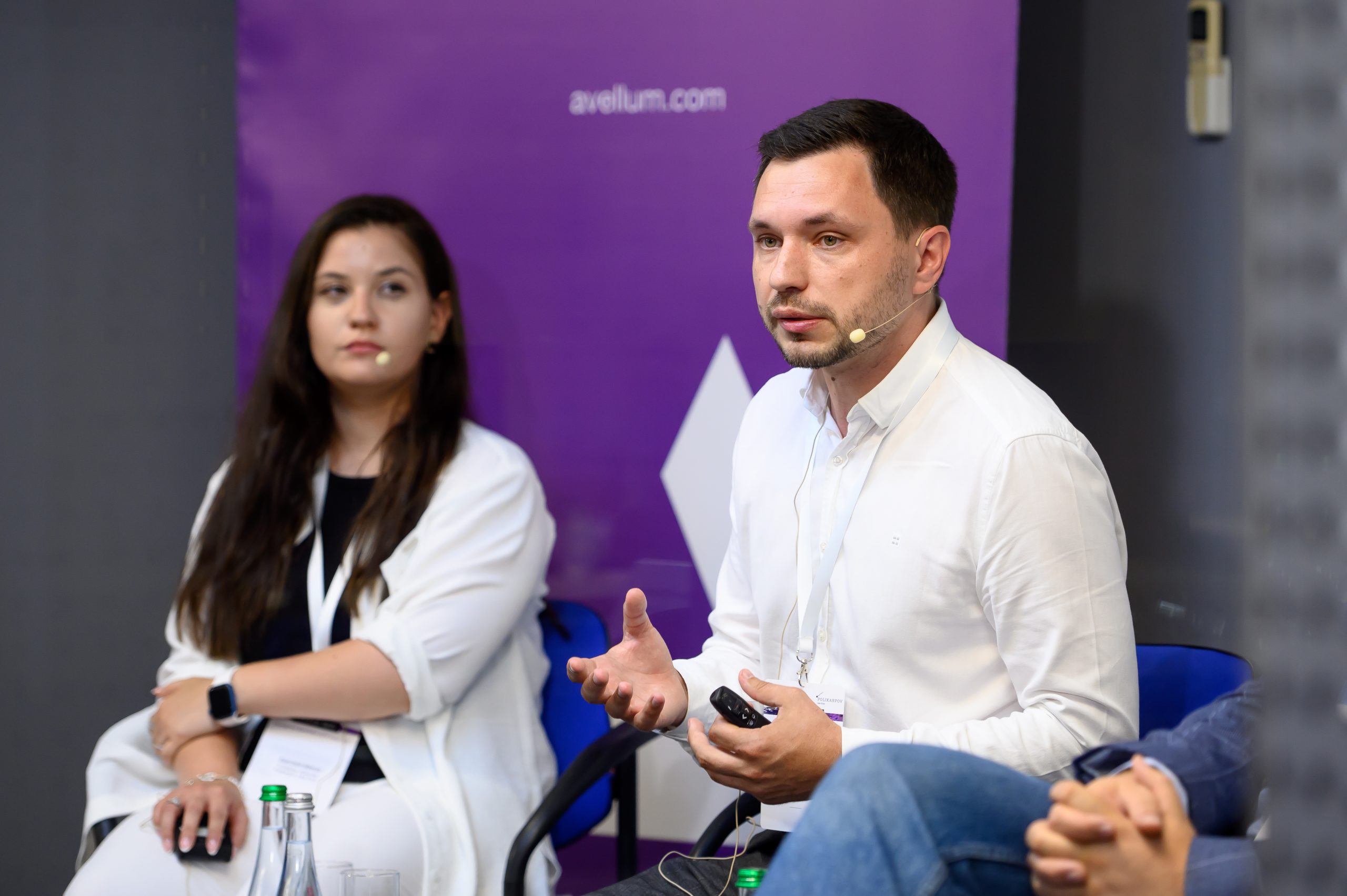
Expert insight from Anton Polikarpov:
A classic business mistake is trying to privatize commonly used terms. For example, attempts to register the designation “Kyivskyi Khlib” for confectionery or bakery products are usually blocked by the IP Office. The word “Kyivskyi” indicates geographical origin, and “khlib” (bread) refers to the product category itself. These are free lexemes that cannot belong to a single player. In such cases, we recommend strengthening the name with unique graphic symbols or fanciful elements that have no direct descriptive meaning.
Geography of conflicts: from Lviv to Kharkiv
It is important to understand that trademark conflicts have no regional borders. If a similar trademark registration in Lviv or trademark registration in Odesa was carried out earlier in your NCL class, a Kyiv business is guaranteed to receive a refusal. The search must be comprehensive: trademark registration in Kharkiv or trademark registration in Dnipro often creates unexpected precedents for Kyiv companies due to filing priority. In addition to these legal intricacies, there are technical aspects of the digital age that allow these risks to be monitored in real-time.
Digital Registration Infrastructure in Kyiv

The modern rhythm of the capital dictates a transition to completely paperless technologies. Digital interaction with the IP Office (UANIPIO) today is not just an option, but a standard for business. The key tool here is the Special Information System (SIPS) and the SIS information and reference database. Using these resources allows you to submit documents without leaving your office in the center of Kyiv, but it requires attention to technical details, particularly the validity of the qualified electronic signature (QES).
When deciding how to approach filing officially, applicants often hesitate between traditional mail delivery and the online portal. Below is a comparison to help choose the optimal path:
| Parameter | Online (SIPS) | Paper Filing |
|---|---|---|
| Date recording (priority) | Instantly after QES signing | Depends on the postmark |
| Fee amount | Reduced rate (per Res. No. 1716) | Full amount |
| Communication | Through personal account | Registered letters |
Practical case: QES error. One of our clients filed an application independently using the director’s personal QES instead of the legal entity’s QES. This led to discrepancies in the applicant and signatory data, forcing the IP Office to send a request for clarification. Such small details can delay the process by several weeks, so signature verification is a critical stage.
To monitor the status of proceedings, we recommend using the official SIS database. This allows you to see notifications about passing the formal examination in time. We remind you that after receiving an application number, you have a limited time to pay the state fees, which are discussed in more detail in the following sections.
Important: Digital infrastructure only ensures the technical delivery of documents. It does not guarantee successful registration if the designation itself has signs of descriptiveness or conflicts with previously registered rights. This material is for informational purposes; to develop a brand protection strategy, you should involve specialized lawyers.
Moving to the Financial Side of Registration
Transitioning to the active phase of the procedure requires clear budget planning. Digital submission of documents through IP Office resources is only the technical start that triggers the state verification mechanism. To effectively begin this journey, it is worth distinguishing between the technical filing process and the legal requirements for financing each stage.
Fees as a legal filter and investment
According to Resolution of the Cabinet of Ministers of Ukraine No. 1716, payment of state fees is a mandatory condition for the application to proceed to the examination stage. It is important to consider the strict deadline: the applicant has exactly two months from the date of filing the documents to pay the fees. If this deadline is missed, the application is considered withdrawn, and the priority right is lost irrevocably. That is why professional trademark registration always involves an audit of financial obligations even before contacting the regulator.
Official payments are an investment in the security of your business. They cover the work of experts who effectively stand in defense of the brand’s uniqueness, checking it for conflict with thousands of other designations from all over the country. Without paying the fee and obtaining a certificate, marketing investments remain unprotected, as ownership rights arise only from the moment of registration. For more details on current tariffs, benefits for the digital format, and algorithms to avoid overpayments, read our special material: State Fees and Expenses: How to Register a Brand in Kyiv Without Overpaying. Understanding these figures allows you to turn expenses into a reliable legal asset.
The IP Office is the door, and you hold the keys
Understanding that this task is only the initial stage of business protection. UANIPIO (the IP Office) acts as a state arbiter, but the quality of your “entry” into the registry depends entirely on your preparatory strategy. According to the Law of Ukraine “On the Protection of Rights to Marks for Goods and Services,” legal protection is granted only to a designation that has successfully passed a qualifying examination for the absence of conflicts with pre-existing rights.
To turn a name into an asset, it is worth comparing registration approaches:
Expert Advice: Remember that application priority applies across the entire territory of Ukraine. Even if you operate exclusively in the capital, the registration of a similar brand in Lviv or Odesa could block your activities in the future. That is why professional trademark registration involves monitoring not only the Kyiv market but also nationwide databases.
As Anton Polikarpov concludes, a legally sound application submitted today is the foundation for the steady development of a brand tomorrow. To gain a comprehensive understanding of all procedural nuances, we recommend studying our step-by-step guide for businesses, which details every stage of interaction with the IP Office. Please note that this information is of a general nature; every case requires an individual analysis of the list of goods and the specifics of the logo.
If you need assistance with this task, please use the Trademark Registration service.
Frequently Asked Questions
Does Ukrainian registration provide brand protection abroad?
State registration with UANIPIO is territorial in nature, meaning it is valid exclusively within the territory of Ukraine. If your business plans to enter international markets, the Ukrainian certificate becomes the foundation for filing an application under the international procedure (Madrid System) or directly with the patent offices of other countries.
To obtain legal protection in other states, you can choose one of the following paths:
- Madrid System: allows filing a single application through the IP Office of Ukraine, specifying a list of member countries (over 120 countries), which significantly saves on the services of foreign lawyers.
- National Procedure: filing separate applications directly with the office of a specific country (e.g., USPTO in the USA), which is advisable if you are interested in only 1-2 specific jurisdictions.
What is the validity period of a trademark certificate and how to renew it?
A trademark certificate in Ukraine is valid for 10 years from the date of filing the application with UANIPIO. It is important to understand that the term is calculated not from the date of the document’s issuance, but from the moment the application is registered at the office.
The owner has the right to renew the registration every time for the next 10 years an unlimited number of times. To do this, it is necessary to:
- Pay the state fee for the renewal of the certificate’s validity period.
- Submit the corresponding petition during the last year of the current term’s validity.
- If you missed the deadline, the law provides an additional 6 months for a “late” renewal, subject to the payment of a fee increased by 50%.
What is “non-use of a trademark” and why is it dangerous for business?
According to Ukrainian legislation, if a trademark is not used by the owner continuously for 5 years from the date of publication of the information on the issuance of the certificate, any interested person may apply to the court with a lawsuit for early termination of the certificate’s validity.
To avoid the risk of losing rights to the brand, it is recommended to:
- Keep evidence of TM use: supply contracts, acts of acceptance of work performed, advertising layouts, product labels, receipts.
- Use the mark exactly in the form in which it is registered.
- If you plan a rebranding, it is worth registering the new version of the logo in time, without waiting for the old one to be canceled.
Can something other than a name and logo be registered as a TM?
Yes, Ukrainian legislation allows the registration of a fairly wide range of designations. In addition to standard word (name) and figurative (logo) marks, the objects of registration can be:
- Combined marks: a combination of text and graphics.
- Three-dimensional (volumetric): the shape of the product itself or its packaging (for example, a unique shape of a perfume bottle or a beverage bottle).
- Colors and color combinations: if it can be proven that a specific color has become associated exclusively with your brand.
- Sound marks: short melodies or jingles that identify the company.
The main requirement for any such object is its ability to distinguish the goods or services of one manufacturer from those of others.
How to find out if someone is trying to register a similar name after me?
The IP Office is not obliged to notify the owners of already registered marks about the filing of new similar applications. It is the responsibility of the business itself to monitor potential infringers. This process is called “trademark monitoring.”
If a similar application is detected during the monitoring process at the examination stage, you have the right to:
- File an opposition against the application (Opposition) with UANIPIO.
- Provide evidence that the registration of a new designation will lead to confusion in the eyes of consumers.
- Block the registration even before the moment the certificate is issued to a competitor, which is significantly cheaper and faster than subsequent cancellation of the registration through the court.
Can trademark rights be transferred to another person or company?
A trademark is an intangible asset that can be disposed of in the same way as real estate or equipment. There are two main ways to transfer rights:
- Agreement on the transfer of exclusive property rights: a full sale of the mark (change of owner in the register). This is relevant when selling a business or a franchise.
- License agreement: granting the right to use the mark for a certain time for a fee (royalty), while you remain the owner.
Important: any changes regarding the owner or the issuance of a license are recommended to be registered with UANIPIO so that they take effect for third parties and are officially reflected in the State Register.