Lviv Business: From Local Brand to Global Expansion
Lviv entrepreneurs often perceive a brand as just a sign, forgetting that without legal consolidation of rights, any expansion in IT or the food industry is a walk through a minefield. Let’s explore why systematic trademark registration is essential for protecting assets from copying and ensuring successful business scaling.
Similarity Search: Trademarks for Food Projects in Lviv
The success of Lviv restaurants begins not with a recipe, but with a name check; therefore, a similarity search during trademark registration in Lviv is a critical stage. Let’s examine the main risks of ignoring this procedure and the specifics of choosing Nice Classification classes.
Risks of Ignoring the Preliminary Search
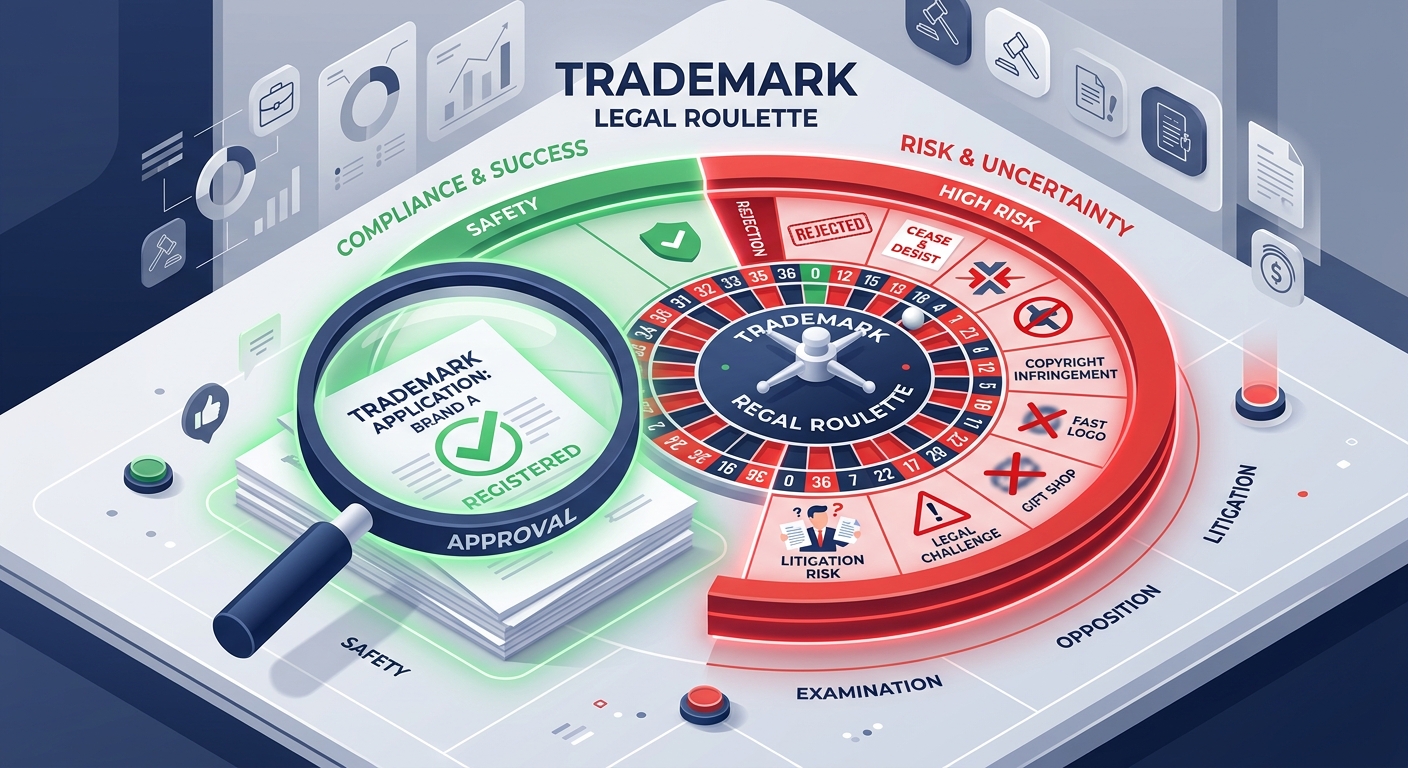
Filing an application without preliminary analysis is a game of legal roulette, where your budget and time are at stake. UANIPIO (UKRNOIVI) experts check signs not only for identity but also for the degree of similarity that could confuse the consumer; thus, even a phonetic resemblance to an existing brand in your niche will lead to a refusal. For professional trademark registration to be successful, we assess the chances even before the state fee is paid.
| Evaluation Criterion | Low-risk Brand | High-risk Brand (Refusal) |
|---|---|---|
| Phonetics | A unique, coined word (e.g., “Zyrkon”). | Similarity in sound with a famous player (e.g., “Abibas” or “Star-Bucks”). |
| Visuals | Original graphics and custom fonts. | Copying distinctive stylistic elements of competitors. |
| Semantics | A fanciful name that does not describe the product. | Descriptive names (e.g., “Delicious Coffee”) or synonyms of existing trademarks. |
Ignoring the search often results in a forced rebranding after you have already invested thousands of dollars in marketing, packaging, and signage. Besides losing the fee, you risk facing a lawsuit from the owner of a previously registered similar sign. That is why we recommend starting with an in-depth audit of the database of filed and registered marks to identify hidden conflicts at the very beginning.
In addition to the name itself, the territory of protection and the correct selection of goods and services categories are of critical importance.
Nice Classification Specifics for Restaurants and Manufacturers
For restaurateurs and craft producers, choosing classes under the Nice Classification (NCL) is not just a legal formality but the foundation of a protection strategy. Often, establishments focus solely on guest service, ignoring the potential of their own products on store shelves. If your brand plans to expand beyond the establishment, proper trademark registration in Lviv should cover not only services but also specific product groups to prevent competitors from releasing coffee or sauces under your name.
The choice of classes depends on the business model: whether it’s a local pastry shop or a chain with its own line of semi-finished products. For food projects, it is critically important to cover three key areas of influence:
- Class 29: meat products, canned vegetables, dairy. Essential for those who make their own pâtés or yogurts for sale.
- Class 30: coffee, tea, confectionery, sauces (except salad dressings). This is a must-have for Lviv coffee shops and bakeries.
- Class 43: directly covers services for providing food and drink, and table reservations.
For Lviv gastro-projects preparing for scaling, we recommend forming the list of goods with a “buffer.” For example, a restaurant planning to sell branded merch or enter retail with its own roasted beans should account for these ambitions at the application stage. This avoids paying government fees again in the future. In addition to local protection, it is worth analyzing the prospects offered by the Madrid System for exporting your products to EU countries in advance.
The logical progression of protecting intellectual assets in the Lviv region is the high-tech sector, where brand registration requirements have their own unique rules.
This aspect is covered in more detail in a separate article Search for Similarity: Trademark Registration in Lviv for Food Projects.
Trademarks for IT Startups: Protecting Software and Products
The Lviv IT sector requires a different approach, where protecting digital assets becomes a priority. Let’s consider the specifics of choosing classes for software and the strategic preparation of a brand for global recognition on the Product Hunt platform.
Nice Classification Classes for Digital Products

In the IT industry, the line between a product and a service is often blurred, which creates risks when choosing protection classes. If you are developing a mobile application or a cloud platform, it is not enough to simply state “software.” It is important to clearly distinguish between software as a downloadable product and software as a service (SaaS) that operates through a browser.
For comprehensive protection of a digital product, a combination of the following classes is typically used:
- Class 9: downloadable computer programs, mobile applications, digital files (e.g., NFTs).
- Class 35: online stores, marketplaces, business administration, and advertising services.
- Class 42: providing software online (SaaS), software development and maintenance, hosting, IT consulting.
In my experience, the most common mistake made by Lviv startups is registering only in Class 9. However, in 90% of cases, modern software operates as a cloud service. If your brand is protected only as a “downloadable file,” you become vulnerable to competitors who can register a similar name for a SaaS platform in Class 42.
Special attention should be paid to the specifics of the markets you plan to enter. For Ukrainian products targeting Western users, trademark registration for IT becomes a ticket to operating safely on global marketplaces. This is particularly critical when it comes to publicity and the first major announcements on international platforms.
Preparing for a public release requires not only technical excellence but also legal confidence when launching on Product Hunt.
Brand Protection when Launching on Product Hunt
A public release on Product Hunt is a moment of truth, when your product becomes visible to the entire world, including not only investors but also patent trolls. In intellectual property law, a strict priority principle prevails: the first to file becomes the legal owner. If this process was initiated as early as the MVP development stage, you enter the global arena with an already reserved name, which significantly simplifies software and digital asset protection from copying by competitors.
Case Study: Success Trajectory vs. Copying Risks
One of our clients, a Lviv-based EdTech startup, filed a TM application a month before their Product Hunt pitch. When the product went viral, a “clone” appeared in Southeast Asia under an identical name. Thanks to the filed application with an early priority date, we managed to block the infringer’s advertisements on social media and the App Store within days. Conversely, another team that neglected the formalities faced a ransom demand for their own domain from a cybersquatter after their success, which effectively paralyzed their marketing for six months.
Filing documents with the national intellectual property office in advance creates a legal shield that allows for confident product scaling. This is not just a bureaucratic procedure, but a strategic step that determines your project’s capitalization in the eyes of future investors. When the foundation of protection is laid, it is time to think about global expansion and simplifying procedures using international tools.
This aspect is covered in more detail in a separate article: TM for IT Startups: This Solution and Software Protection.
The Madrid System: A Lviv Brand’s Path to the EU
Entering European and global markets requires a strategic approach to brand protection. Let’s consider the advantages of the Madrid System and the optimal export geography that allows Lviv entrepreneurs to scale globally.
Advantages of International Registration via Ukraine
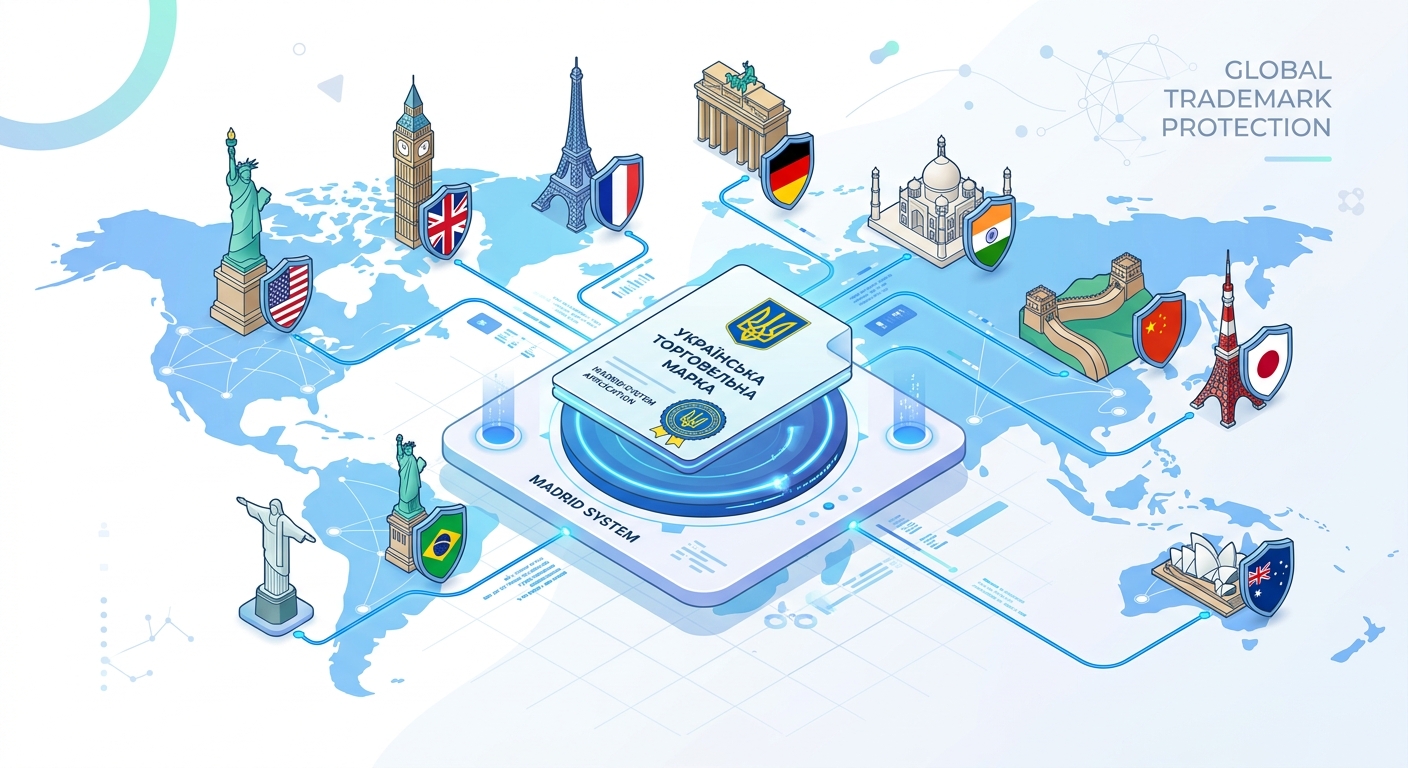
The Madrid System transforms the chaotic process of international protection into a clear algorithm. The main advantage for exporters is the ability to expand the geography of protection to over 130 countries through a single application. Professional trademark registration through the Ukrainian office (UANIPIO) eliminates the need to engage separate patent attorneys in each destination country, which significantly saves the budget on legal fees.
| Stage | Responsible Party | Process Essence |
|---|---|---|
| 1. Basic Application | Applicant / UANIPIO | Existence of a national TM registration in Lviv or another city in Ukraine. |
| 2. International Filing | WIPO | Formal examination, entry into the register, and publication in the bulletin. |
| 3. Distribution to Countries | National Offices | Examination in selected jurisdictions (e.g., Poland or the USA). |
| 4. Obtaining Certificates | WIPO / Applicant | Confirmation of protection (if no refusal is issued within 12/18 months). |
Practical Case: One of our clients, a Lviv-based craft furniture manufacturer, planned to enter the EU and Canadian markets. Instead of paying three separate national fees and searching for lawyers in Ottawa and Warsaw, they filed one application through the Madrid System. This allowed them to pay all fees in a single payment in Swiss Francs (CHF) directly to WIPO.
It is important to remember the “five-year dependency rule”: for the first five years, international registration is inextricably linked to the fate of the basic Ukrainian application. If the national trademark registration is canceled in Ukraine, international protection will also cease. Therefore, the quality of the primary document preparation is critical for export security. This approach ensures legal certainty, as the owner knows the exact deadlines for a decision to be rendered by each office.
Please note: the provided algorithm is for informational purposes. The success of registration depends on the uniqueness of the designation and the absence of conflicting rights of third parties in each individual country. The material does not constitute individual legal advice.
This aspect is covered in more detail in a separate article: The Madrid System: The Chosen Approach for Entering EU Markets.
Export Geography: Where Lviv Entrepreneurs Should Apply
For Lviv entrepreneurs, choosing a market is a balance between logistical proximity and purchasing power. According to reports from the Ministry of Economy of Ukraine, Poland remains the main trading partner for the western region, serving as a “food hub” for Ukrainian food products. However, entering EU markets requires preliminary verification: in Germany or France, competition is so high that even partial similarity of a name to a local brand can lead to goods being blocked at customs.
For the IT sector concentrated in Lviv, the geography is different. The main targets are the USA and the United Kingdom. Here, trademark registration is not just a legal formality but a technical requirement. For example, one of our clients (an EdTech project) was able to unblock payment processing through Stripe and Amazon only after providing a registration certificate in the relevant jurisdiction.
| Business Sector | Priority Countries | Main Goal of Protection |
|---|---|---|
| Food & Beverage | Poland, Germany, Czech Republic | Combating counterfeit products on shelves |
| IT & SaaS | USA, UK, Cyprus | Working with stores and payment gateways |
| Fashion & Design | Italy, France, UAE | Protection against visual style copying |
When planning, it is important to consider Article 6 of the Paris Convention: brand rights are strictly territorial. We recommend the “three-year rule” to Lviv exporters: register a TM only in countries where you are guaranteed to start sales within this period. This will help avoid non-use cancellation of the TM, which is a common practice in the EU and the USA [Source: WIPO, Guide to the International Registration of Marks].
In addition to market protection, a trademark under NAS 8 (National Accounting Standard) is an intangible asset. An officially registered brand in international markets increases the company’s capitalization and becomes the foundation for selling a franchise abroad. If your strategy involves scaling, ensure the name is available not only in the UANIPIO (IP Office) register but also in the target export countries.
Note: This article is for informational purposes. Each situation requires an analysis of the specific designation and sales markets.
TM Registration in Lviv is an Investment, Not an Expense
In summary, legal brand protection in the western region is not just a formality but the creation of a capitalized asset. According to the norms of the Law of Ukraine “On the Protection of Rights to Marks for Goods and Services” and the provisions of NAS 8, a registered trademark becomes an intangible asset that increases the valuation of the company when attracting investment or selling a business.
For Lviv companies oriented toward the EU and US markets, having a certificate is the only effective tool against “patent trolling” and blocks on marketplaces. Our experience shows: one of our clients (a craft product manufacturer) almost lost access to the Polish market due to a similar designation by a local competitor. Only the existence of an international application filed in advance allowed them to keep the name and avoid a total rebranding, the cost of which would have been ten times higher than the registration fee.
| Business Line | Strategic Benefit of a TM |
|---|---|
| Export (Food & Fashion) | Ability to use the customs registry to block counterfeits at the border. |
| IT and Outsourcing | Obtaining Brand Registry on Amazon and verification in the App Store. |
| HoReCa and Franchising | Legal transfer of brand usage rights for royalties. |
Do not delay the protection of your intellectual capital. You can receive full support and qualified assistance by ordering trademark registration services from a specialized professional.
Disclaimer: Information is current as of the publication date and is based on the practice of the Ukrainian IP Office (UANIPIO). The material does not replace individual legal advice.
If you need help with this task, use the Selected Trademark Solution service.
Frequently Asked Questions
Does registering a company name (LLC) grant automatic trademark rights?
No, this is one of the most common misconceptions among entrepreneurs. Registering a legal entity’s name in the Unified State Register (USR) only identifies you as a business entity before tax and administrative authorities. It does not grant the right to prohibit others from releasing products under a similar brand.
Only trademark registration ensures exclusive ownership of a name or logo within the chosen classes of goods and services. Without a TM certificate, you might find yourself in a situation where another company registers your name as a brand and legally demands that you stop using it or even pay compensation.
How long does trademark protection last and how can it be renewed?
In Ukraine, a trademark certificate is valid for 10 years from the date of filing the application with the UkrNOIVI (IP Office). This term can be renewed for an additional 10 years an unlimited number of times.
To renew, you must:
- Submit a corresponding petition during the last year of the certificate’s validity.
- Pay the state fee for the term extension.
If you miss the deadline, the law provides an additional 6 months (grace period) to file the application; however, in this case, the state fee increases by 50%.
Who owns the TM rights if the logo was created by a freelance designer?
By default, the copyright for a graphic image belongs to its creator (the designer). For IT startups and brands, this creates risks: even if you paid for the work, without a legal transfer of rights, you will not be able to fully register a TM or sell the business to an investor.
It is critically important to have a signed agreement on the transfer of intellectual property rights. The agreement must clearly state that all rights to the created object are transferred to the client in full upon payment or the signing of the acceptance act. Only with such a document do you become the full owner of the brand.
What does the “use it or lose it” rule (Non-use cancellation) mean?
TM registration imposes not only rights but also certain obligations on the owner. If a trademark is not used in Ukraine continuously for 5 years, any interested party (e.g., a competitor) may file a lawsuit for the early termination of your certificate.
Use is defined as:
- Applying the TM to goods, packaging, or labels.
- Using the brand in advertising, on the internet, or in printed publications.
- Offering goods for sale under this designation.
Therefore, it is important to keep evidence of actual brand use (receipts, invoices, advertising layouts) to protect your asset in the event of legal claims.
How does a trademark help in scaling a business through franchising?
For successful Lviv restaurant chains or service companies, a TM is the primary object of a commercial concession agreement (franchising). Without an officially registered trademark, creating a legal franchise is impossible.
Having a certificate allows you to:
- Receive royalties—payments for the right to use the brand.
- Control the quality of services provided by partners under your name.
- Protect the reputation of the entire network: if one of the franchisees violates standards, you have legal leverage up to revoking the brand rights.
Can a color or a sound be registered as a trademark?
Yes, modern legislation allows for the registration of non-traditional trademarks; however, this is a much more complex process than registering a name or logo. To successfully register a color (such as the specific shade of magenta used by T-Mobile) or a sound (the signature melody of Intel or Nokia), it is necessary to prove that consumers associate this element specifically with your company even before registration.
Such designations require a deep expert assessment and often the conduct of sociological surveys to confirm the brand’s distinctiveness in the eyes of the target audience.