Brand Registration Without the Headache: What the "Turnkey" Format Really Means
Your brand is not just a successful logo or name, but a valuable legal asset that requires a solid foundation. Independent attempts to obtain a protective document often end in bureaucratic traps, loss of state fees, and, worst of all, the need for rebranding after a year of waiting. In this material, I will reveal how professional turnkey trademark registration transforms a complex path of interaction with the state into a clear roadmap to your intellectual property.
Professional support allows a business to focus on scaling while legal intricacies remain under the control of experts. Let’s look in detail at why a specialist’s work begins long before the actual button for submitting an application is pressed and how the right strategy at the start saves thousands of dollars in the future.
Trademark Lawyer: When Professional Help Is Critical
Does filling out a few fields in an application form really require involving a specialized expert? Many entrepreneurs perceive this process as a formal registration action; however, a trademark lawyer acts as the architect of your security, calculating risks even at the idea stage. Comprehensive trademark registration is not just about preparing papers, but a deep market analysis, rejection practice analysis, and building a protection strategy against patent trolls.
Understanding when professional help is critical will help you avoid typical pitfalls that lead to the loss of application priority. Next, we will break down the critical role of a preliminary search, analyze the cost of mistakes in independent filing, and provide a readiness checklist for your brand’s official recognition. The first and most responsible step in this process is checking your idea for uniqueness.
Preliminary Search: How Not to Invest Money in Someone Else’s Name
Starting work on a new brand without a preliminary audit is like building on a land plot without checking ownership. When turnkey trademark registration is performed, the first stage is always a deep analysis of the designation for identity and similarity with existing objects. This allows for identifying not only identical names but also those that may cause a conflict of interest due to phonetic or visual similarity, which the National Intellectual Property Authority would deem as misleading to the consumer.
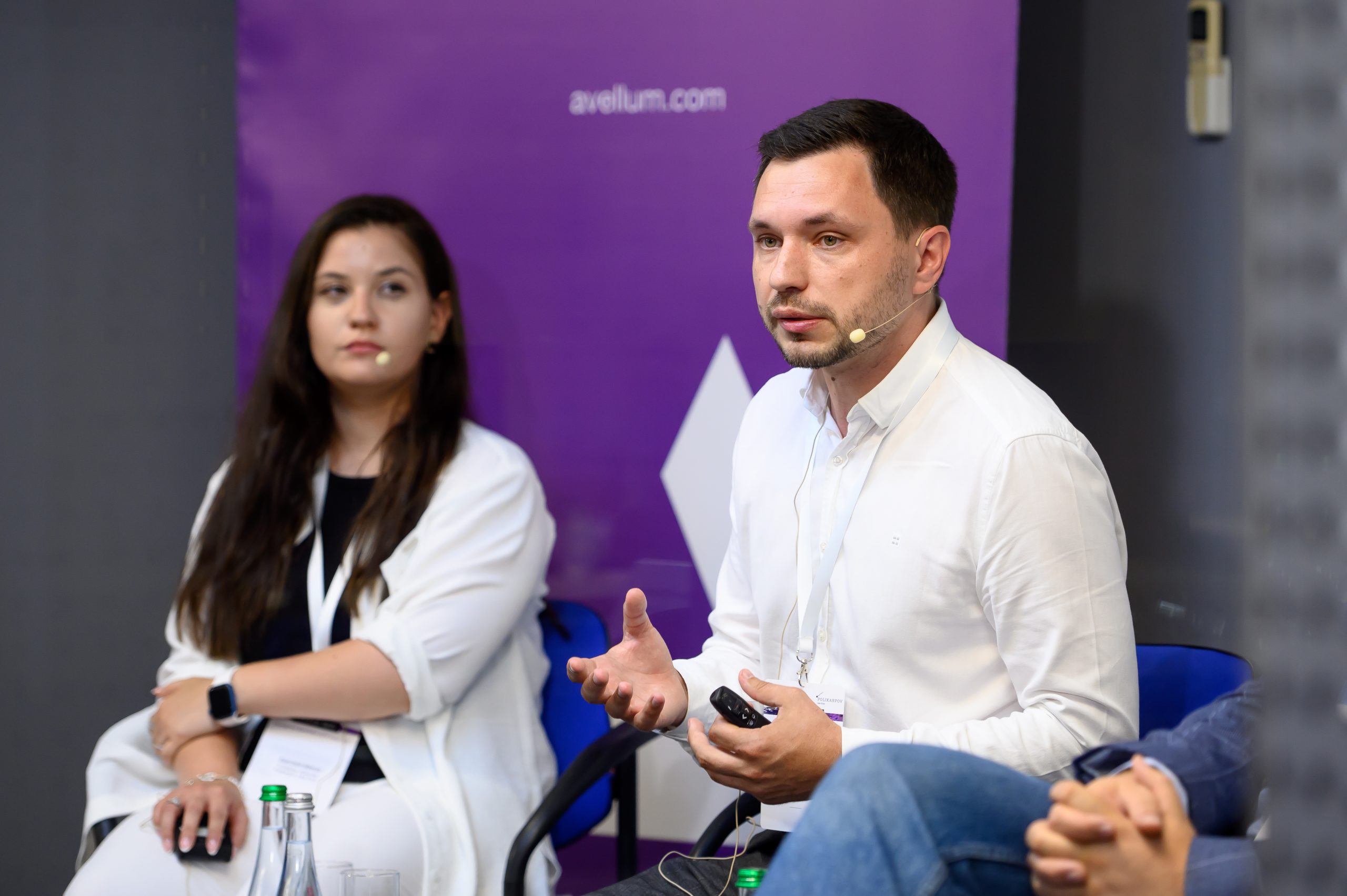
Expert Insight from Anton Polikarpov: Most business owners limit themselves to searching in free online databases, but this is an illusion of security. Such resources are often updated with a delay and, most importantly, do not reflect applications that have already been filed but not yet published (the so-called “black period”). The experienced eye of a lawyer sees the situation more broadly: we assess not only the presence of similar marks but also the risk of receiving a refusal based on absolute criteria — for example, due to the descriptive nature of the name for your specific type of activity.
Mechanics of a Professional Designation Audit
To ensure that a trademark check is as reliable as possible, we analyze the NIPA (UKRNOIVI) database according to several key parameters:
- Phonetic similarity: how the name is perceived by ear (for example, the similarity between “Crest” and “Krest”).
- Graphic similarity: assessment of the visual series, color combinations, and compositional solutions of the logo.
- Semantic meaning: checking if your name is a translation of an already registered foreign brand in the same category of goods or services.
Such a comprehensive approach significantly minimizes the likelihood that in 18-20 months you will receive a preliminary refusal of registration. A high-quality check at the start is the only way to protect your investments in marketing and design before they become a target of claims from third parties. However, even a unique name can be lost due to incorrect paperwork, which brings us to the risks of independent filing.
Risks of Self-Filing and the Price of an Error
Even if a preliminary search has not revealed direct clones of your brand, the path to obtaining a certificate remains a minefield for a non-professional. Many entrepreneurs perceive filing an application as a purely technical procedure, but the legal reality is much harsher: any inaccuracy in the documents or the protection strategy leads to the fact that turnkey trademark registration becomes impossible, and the business loses not only time but also paid state fees.
Typical Pitfalls of Self-Filing
From my experience, most fatal errors occur due to a lack of understanding of the methodology used by experts of the National Intellectual Property Authority. Here are the main risk zones where a trademark registration lawyer becomes critically necessary:
- Incorrect selection of Nice Classification classes: owners often choose too many redundant classes, which makes the procedure more expensive, or, conversely, fail to indicate the categories of goods or services where the brand will actually be used. This makes the registration formal but legally defenseless against competitors in related niches.
- Use of descriptive designations: if the name directly indicates the properties of the product (for example, “Crunchy” for chips), the examination will consider it to lack distinctive character. A professional knows how to shift the emphasis or add graphic elements to overcome this barrier.
- Errors in applicant data: discrepancies between the data in the application and official registers lead to a suspension of the review and the need to make corrections, which always costs extra money and prolongs the timeframe.
The price of an error is not just the amount of the state fee. It is the risk that after a year and a half, you will receive a refusal and be forced to undergo a full rebranding when advertising budgets have already been spent and domain names and signage have been purchased. Understanding these legal nuances allows us to act proactively, turning brand protection into a predictable business process.
Expert Checklist: Is Your TM Ready for Registration?
Based on the analysis of the risks of self-filing, I always recommend that clients take a step back and look at their designation again through the lens of legislative restrictions. Before initiating official procedures, it is worth making sure that your brand even has a chance of protection in Ukraine.
Expert Brand Readiness Checklist
- Uniqueness and absence of similarity: Has the name been checked not only for identity but also for confusing similarity to the brands of competitors in your classes?
- Absence of state symbols: Does the logo contain flags, coats of arms, or official names of states, which is directly prohibited by law?
- Distinctive character: Is your name fanciful, or does it merely describe your product? Remember: “Soap” for soap will not be registered, but “Soap” for an IT service is quite possible.
- Compliance with morality and public order: Is the designation such that it might offend the feelings of a certain group of people or contradict ethical norms?
- Accuracy of Nice Classification classes: Does your list cover not only current activities but also development plans for the next 3-5 years?
- Legal status of the owner: Has it been clearly determined to whom the asset is being registered — an individual, an individual entrepreneur (PE), or a company (LLC)?
If you hesitate about even one point, a professional brand registration consultation will help clear up doubts before the documents are filed. Such assistance in TM registration for startups is particularly relevant, where intellectual property is often the main capital for attracting future investments. When a designation meets all the criteria, it is ready to be handed over to the regulator, where the most difficult stage begins — interaction with the experts.
Trademark Application Prosecution: How to Avoid Refusals
Filing an application with the UANIPIO is not the end, but the beginning of a long-term dialogue with the state. Many mistakenly believe that after receiving an application number, they can relax; however, it is specifically at the examination stage that the fate of your asset is decided. Competent trademark application prosecution requires readiness to professionally respond to inquiries from experts that may arise at any moment during the 18–24 month waiting period.
Why Correspondence with UANIPIO Requires Attention
It is important to understand that currently, there is no accelerated registration procedure in Ukraine, so the standard review period becomes a test of endurance. During the substantive examination, the authority’s specialists may send a notification of a possible refusal of registration (provisional refusal). This is a critical point: you will have only limited time to provide a reasoned response, provide evidence of your brand’s distinctive character, or negotiate letters of consent with the owners of similar marks.
Effective trademark application prosecution allows us to:
- Monitor the application status and receive all official notifications on time.
- Promptly respond to any clarifying requests regarding the list of goods and services.
- Protect the application priority in case of attempts by third parties to register a similar designation later than you.
By ordering professional trademark registration services, you effectively delegate all the routine and legal risks to lawyers. In the format where trademark registration is handled by an experienced team, we take on the entire burden of communication with the state body. Understanding the complexity of this correspondence helps to realize that you are paying not just for “filing papers,” but for the guarantee that any expert claim will receive a professional legal response, which will ultimately lead to obtaining the protection document. The next important aspect is understanding how exactly the costs are formed on this long journey.
Economics and Process Stages: What You Pay a Lawyer For
Have you ever wondered why, for a seemingly identical result—obtaining a certificate—different law firms offer drastically different quotes? Turnkey trademark registration is not just filling out an application form; it is the development of a comprehensive financial and legal strategy where each step has a justified cost.
For a business, it is critical to understand how the budget is formed and what timelines to expect. This is especially important considering that today in Ukraine, an expedited procedure does not exist, and the standard examination cycle at UANIPIO takes from 18 to 24 months. Transparent economics of trademark registration services allow you to clearly forecast expenses two years ahead and avoid unpleasant surprises in the form of hidden payments. Next, we will break down the structure of state fees, delineate areas of responsibility in a convenient table, and find out how to save on Nice classes without creating gaps in your brand’s protection.
Before moving to calculations, it is worth realizing the difference between what you pay the state and what is an investment in the professional security of your asset, which we will discuss in the context of state fees and professional fees.
State Fees vs. Professional Fees: Where to Expect Costs
When you decide to order brand registration, your budget will always be divided into two main blocks: mandatory state fees and the fee for legal support. State fees are a fixed payment for UANIPIO services, which is mandatory for all applicants without exception, regardless of whether you file documents yourself or through a professional agency.
The amount of the state fee directly depends on your requirements for the future certificate:
- Number of Nice classes: the more categories of goods or services you cover, the higher the application filing fee will be.
- Color solution: the state charges an additional fee for registering a trademark in color.
- Number of applicants: if there are several brand owners, the fee amount is also adjusted.
The legal fee, in turn, covers intellectual work: from conducting a deep search to complex correspondence with the patent office examiners. It is professional turnkey trademark registration that minimizes the risk of losing state funds, as in the event of a final refusal of registration, the fees are not refunded to the applicant. To fully understand the financial picture, it is worth studying in advance what the registration cost consists of, so that every hryvnia paid works toward your business capitalization rather than toward fixing document errors.
Understanding what you pay the state for helps realize the value of a lawyer’s work, who ensures the completion of all bureaucratic stages with a guaranteed result, as clearly shown by the distribution of duties in the process.
Responsibility Allocation Table: Client vs. Lawyer
Effective turnkey trademark registration is based on clear synergy between the business owner and the legal advisor. You know your product and market expansion plans better than anyone, and we know how to turn these plans into an untouchable legal asset. To ensure the procedure moves without delays or unnecessary questions from the regulator, we clearly delineate roles in the process.
| Process Stage | Client (Business Owner) | Lawyer (Expert Team) |
|---|---|---|
| Preparation & Audit | Providing the logo, description of activities, and development plans. | Preliminary search for identity and similarity, distinctiveness assessment. |
| Classification | Selecting priority niches for protection (goods/services). | Selecting optimal Nice classes, grouping to save on fees. |
| Document Filing | Timely payment of state fees based on issued invoices. | Preparing the document package, filing the application, securing the priority date. |
| Prosecution | Informing about significant company changes (address, name). | Monitoring examination deadlines, responding to UANIPIO inquiries. |
| Completion | Receiving the original certificate. | Monitoring publication in the official bulletin, obtaining the protection document. |
This format allows you to stay focused on operational business management while we monitor every status change of your application in the state register. If you value your time and want a personalized budget calculation for your case, you can order a brand registration consultation from our specialists right now. The next important step to optimizing costs without losing protection quality will be the correct handling of classes of goods and services.
Nice Classes: How to Save Money Without Compromising Protection
The Nice Classification (NCL) consists of 45 classes, and each additional category in your application increases the state fee. However, excessive frugality often leads to competitors registering a similar name in an adjacent niche where you actually operate but are not legally protected. Proper turnkey trademark registration involves more than just a “shot in the dark”; it requires a deep audit of your business model for the next 3–5 years.
Grouping Strategy: How to Protect More for Less Money
We help clients find the balance between coverage breadth and budget. For example, if you are developing software, you definitely need Class 9, but you should also consider Class 42 (software maintenance). Often, goods can be grouped so that they overlap into adjacent areas without requiring payment for a dozen unnecessary categories.
- Analysis of core products and services currently generating revenue.
- Forecasting product range expansion (e.g., from selling coffee to opening a franchise).
- Exclusion of “filler” classes that only increase the state fee without providing a protective function.
- Checking terminology: sometimes one correctly chosen phrasing within a class replaces three highly specialized terms.
This approach allows for cost optimization right at the start. If you want to understand which classes are critical for your niche, we recommend ordering trademark registration with a preliminary professional audit. This prevents a situation where, in two years, you have to file a new application because the old list of classes became too narrow for the business. Once the classes are defined and the application is filed, the longest stage begins — interaction with the state examination.
What to Do After Filing: Trademark Examination Stages
Does your brand become untouchable immediately after we click the “Submit” button? Not exactly — the filing date only secures your priority over other applicants, but a long marathon of checks at the National Intellectual Property Authority (UANIPIO) lies ahead. Professional turnkey trademark registration at this stage turns into continuous monitoring and readiness for legal discussions with state examiners.
To give you a clear understanding of what happens behind the regulator’s closed doors, we have detailed the trademark examination stages in our material. Two key filters await us: formal document control and substantive verification of uniqueness, where each step has its own time limits and pitfalls. The first test for your brand will be the check for “paperwork” purity during the formal examination stage.
From Formal to Substantive Examination
The examination stage is a kind of sieve that every application passes through. First, the state body conducts a formal examination: it checks whether the data is filled out correctly, whether the image meets the requirements, and whether all fees have been paid. This is a technical stage, but an error in a single letter or NCL code can stop the process. The most critical part is the substantive examination, where UANIPIO specialists check if your name is too simple (descriptive) and if it violates the rights of owners of already registered marks.
Case Study: How Legal Arguments Saved a Startup’s Brand
Our client filed a name for an IT product that contained a word the examiner deemed too similar to an existing brand in the logistics sector. We received a notification of a possible refusal (provisional refusal). Instead of giving up, we prepared a reasoned response: we proved the lack of confusion in the eyes of the consumer due to different target audiences and the specific nature of software use. As a result, the examiner agreed with the arguments, and the client received the certificate without changing the brand name.
That is why turnkey trademark registration includes not only filling out forms but also professional prosecution of the application, which allows for a prompt response to any objections. Without an experienced lawyer, overcoming the substantive stage can be difficult, especially if the examiner sees even the slightest similarity with competitors. It is important to understand that this process requires significant patience, as state procedures have their own specifics and legally established timeframes.
Understanding the logic of examiners allows us to prepare the application to minimize the number of questions right from the start. However, besides legal nuances, there are objective time constraints that every business owner should be aware of.
Realistic Timelines: Why Speed Isn’t Always Possible
Many entrepreneurs are surprised by why state procedures take so long in the era of digital technology. It is important to clarify the situation immediately: as of today, there is no accelerated registration procedure in Ukraine, which previously allowed for a certificate to be obtained in 4–6 months. Currently, every applicant enters a general queue where the waiting period ranges from 18 to 24 months.
Process Timeline: Where the Time Goes
This long period is due not only to bureaucracy but also to the need for a thorough search of your brand among millions of other records. The entire journey can be divided into several key milestones:
- Establishing the Priority Date (1–3 days): Immediately after filing the application, you receive a priority date. This means that no one else can register a similar mark if they file their documents even one day later than you.
- Formal Examination (6–9 months): Checking the correctness of the documents and the compliance of the declared goods and services with the Nice Classification list of classes.
- Substantive Examination (9–14 months): The most in-depth stage, where UANIPIO experts look for conflicts with existing marks and assess the distinctiveness of your name.
- Publication and Issuance (2–3 months): After a positive decision, the data is published in the official bulletin, and only after paying the state fees do you receive the long-awaited document.
Professional turnkey trademark registration minimizes the risk of these stages being delayed due to errors in the documents. Every “minor detail” missed by a non-specialist can result in an inquiry from an expert, a response to which can add another 2–3 months to the total timeline. Understanding the nuances of handling application correspondence, we prepare the document package so that experts have as few reasons as possible for additional clarifications.
It is important to remember that despite the long wait, your business is protected by the application filing date. This allows you to invest in marketing with confidence, knowing that the legal foundation has already been laid. Once all stages of examination are successfully completed, the moment of obtaining official brand owner status arrives.
Final Documents: What the Owner Receives
The logical conclusion of this long process is receiving the Certificate of Ukraine for a Trademark. This is not just a piece of paper with a seal, but a full-fledged intangible asset of your company that has market value and can be contributed to the authorized capital or used as collateral for a bank loan. The protection document is valid for 10 years from the application filing date, with the possibility of renewal for the same period an unlimited number of times.
What Rights the Received Certificate Grants the Owner
With this document in hand, you gain full control over the use of your brand within the chosen Nice Classification classes. Legally, this is framed as the following set of opportunities:
- Exclusive Ownership: Only you can use the mark in commercial activities, label goods with it, or provide services under it.
- Right to Prohibit: You can legally demand that competitors stop using similar names, block sales of counterfeits on marketplaces, and remove fake pages on social media.
- .UA Domain Zone: Holding a certificate is the sole basis for registering a prestigious first-level domain in the .ua zone, which is critical for scaling a business online.
- Monetization: You gain the right to issue licenses for brand use (franchises) and receive royalties, or to sell the trademark rights entirely under an assignment agreement.
- Customs Register: The ability to enter the TM into the Customs Register of Intellectual Property Objects to stop the import of counterfeits at the border.
By ordering turnkey trademark registration, you free yourself from the need to personally monitor the deadlines for paying issuance and publication fees, which must be submitted strictly within the legally established timeframes after receiving a positive decision. We handle all the paperwork so that, in the end, you simply receive the completed package of documents delivered by courier to your office.
Obtaining a certificate is not the end of the journey, but the beginning of a new stage in the secure development of your business, where every hryvnia invested in the brand works for your reputation, rather than for the pockets of copycats.
Your Brand—Your Property: Time to Act
Successful turnkey trademark registration is a strategic step that transforms your company name from a simple word into a protected market asset. In a world where competition grows by the minute, delaying the protection of intellectual property means consciously risking all investments in marketing and product development. We provide a full cycle of support: from deep preliminary searches to receiving the certificate, minimizing your involvement in bureaucratic processes.
The “turnkey” format is an investment in your peace of mind and the absence of legal risks in the future. By entrusting the matter to professionals, you avoid traps with incorrectly chosen Nice classes, clerical errors, and frustrating refusals due to a lack of attention to detail. Remember that ownership rights are granted not to the one who first created the brand, but to the one who first filed an application for its registration.
Don’t wait for others to capitalize on your success. You can request a registration cost calculation for your specific case right now to get a clear plan for protecting your business and confidence in the future.
Frequently Asked Questions
How to register a trademark abroad if a business is expanding into the international market?
There are two main ways for international registration: under the Madrid System or by filing a direct application to the patent office of a specific country. The Madrid System allows you to file a single international application through the National Intellectual Property Authority, specifying the list of countries that interest you. This is significantly cheaper and easier in terms of administration, as you pay a single set of fees in Swiss francs.
However, international registration is possible only on the basis of an already filed national application in Ukraine. A lawyer will help determine which path will be more economically beneficial for your geographic presence and whether your trademark meets the legal requirements of the target countries.
What is better to register: a name (word), a logo, or a combined image?
The choice depends on the brand protection strategy:
- Word mark: provides the broadest protection, as it protects the name itself regardless of font, color, or graphic design.
- Figurative mark: protects only the logo without being tied to words. This is relevant for unique graphic symbols.
- Combined mark: protects both the word and the graphics as they are presented together.
The most reliable option is considered to be the separate registration of the name and the logo. This allows for future rebranding of the graphics without losing protection for the name itself.
How long is a trademark certificate valid and how to avoid losing it?
A trademark certificate in Ukraine is valid for 10 years from the date of filing the application. After this period, the validity of the certificate can be renewed every 10 years for an unlimited number of times. To do this, it is necessary to pay the relevant state fee during the last six months of the document’s validity.
It is important to remember the risk of cancellation: if a trademark is not used in Ukraine continuously for 5 years, any interested person may apply to the court with a claim for early termination of the certificate’s validity.
Does trademark registration grant an automatic right to a domain in the .UA zone?
Trademark registration is a prerequisite for obtaining a second-level domain name in the .UA zone (for example, brand.ua). The zone administrator requires the domain name to exactly match the name specified in the certificate.
However, having a certificate does not guarantee the domain is available — if someone else has already registered this domain based on their TM, you will not be able to get it. Therefore, lawyers recommend checking domain availability during the preliminary search phase for a TM name.
Can trademark rights be sold or transferred to another person?
Yes, a trademark is a valuable intangible asset that can be disposed of. There are two main types of agreements:
- Rights transfer agreement: full sale of the TM, after which another person becomes the owner (similar to a purchase and sale agreement).
- License agreement: granting permission to use the TM to other persons for a fee (royalty) or free of charge, while the ownership remains with you.
Any changes regarding the owner or the issuance of a license must be officially registered in the state register to have legal force against third parties.
What should I do if I decided to change the logo or expand the list of goods after filing the application?
Unfortunately, after filing an application with the National Intellectual Property Authority, it is impossible to make significant changes to the TM image itself or expand the list of Nice classes. Only technical error corrections or narrowing the list of goods (removing extra items) are allowed.
If you have rebranded or opened a new business line not covered by the filed application, you will have to file a new application and go through the entire examination process again. That is why professional audit and business development forecasting at the preparation stage are critical.