Branding in the beauty industry: More than just a name on a label
Competitors copying your naming isn’t just a nuisance; it’s a direct threat to your brand’s capitalization, which is why trademark registration for cosmetics is the foundation of your security. This process is part of a comprehensive asset protection strategy, which we have discussed in detail in the context of legal protection for service providers.
Why ingredient names are a trap for your brand
Using ingredient names often turns a promising brand into a legal void, stripping it of any chance for exclusive rights. Below, we break down the risks of descriptive naming and methods for finding a balance between marketing appeal and legal requirements.
Descriptive names: Why they aren’t protected
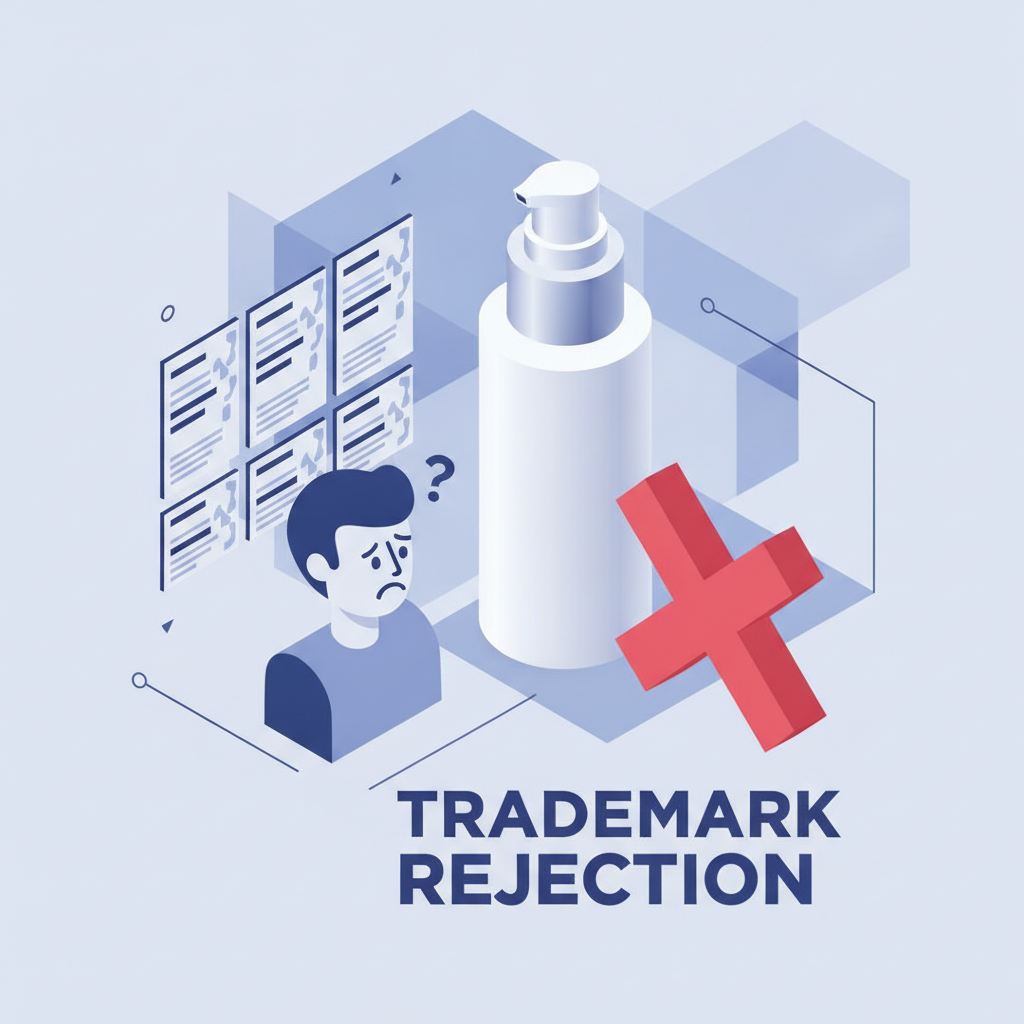
In the beauty industry, there is a temptation to choose a name that directly describes the product; however, designations such as “Collagen Cream” or “Organic Serum” have zero distinctiveness. From a legal standpoint, such names merely indicate composition or properties, and therefore, they must remain free for use by all market players. Effective brand protection is only possible when the name distinguishes the product from its analogs, rather than just stating what is inside the bottle.
Using descriptive terms often leads to registration refusal, as the examination process deems them incapable of individualization. This applies not only to ingredient names but also to quality characteristics or purposes—for example, “Natural Care” or “Anti-Wrinkle.” Such words can be part of a combined trademark, but they will not provide legal protection on their own. If you are planning brand development, particularly within e-commerce, it is crucial to move away from generic terms in favor of unique names.
Protection features in the Beauty sector
For cosmetic brands, it is essential to cover Class 3 of the Nice Classification (cosmetics, perfumery, and care products). In addition to the name, it is worth considering the possibility of registering a unique packaging shape as a separate trademark if it has a non-standard look that is associated specifically with your product.
To minimize risks at the naming stage and ensure a solid legal position, we recommend contacting specialists for a preliminary search and professional support throughout the registration procedure.
Related article: Why sole proprietors need trademark registration.
Finding the balance between attractiveness and the law
Creating a strong brand name is always a struggle between marketing appeal and legal protection. Descriptive names that point directly to ingredients or product properties often fail to register because they lack sufficient distinctiveness. To minimize risks, brands opt for a combination of common terms and invented elements or neologisms, which the IP Office experts consider unique.
To plan a protection strategy, it is essential to understand the distribution by Nice Classification classes, which defines the boundaries of the brand’s monopoly:
| Nice Class | Scope of application |
|---|---|
| Class 03 | Cosmetics, perfumery, grooming products |
| Class 05 | Medicinal cosmetics, dietary supplements |
| Class 44 | Salon treatments, cosmetic services |
Advice from Anton Polikarpov: Do not try to monopolize words like “Aqua” or “Silk” on their own — they are commonly used. Successful protection in the beauty industry is built on combining a fanciful word with a graphic style, which together create a recognizable visual code that cannot be legally copied.
To receive a professional opinion on the protectability of your brand name, use our expert support, which will help you avoid refusals at the examination stage.
Nice Classification for cosmetics: what you need to consider
Effective brand protection is impossible without selecting the correct Nice Classification categories. Let’s look at the key classes for cosmetic lines and services to avoid legal gaps in the future.
Table of Nice Classification classes for the beauty business

Correct classification according to the Nice system is the foundation of your legal monopoly. For beauty businesses, selecting only one class is a common mistake: if you register a cosmetics brand but plan to sell online or open salons, the lack of protection in related categories will allow competitors to legally use your name. To avoid risks, it is important to consider the specifics of each class:
| Nice Class | Purpose and scope of protection |
|---|---|
| 03 | Basic: skincare cosmetics, perfumery, hair care products. |
| 05 | Specialized: medicinal cosmetics, dermatological agents, dietary supplements. |
| 44 | Service-based: beauty salon services, cosmetic procedures. |
Risks and nuances:
- Commonly used names: Using descriptive terms in a TM name (e.g., “Organic,” “Aloe,” “Hydration”) makes registration difficult, as they are perceived as the name of an ingredient rather than a unique brand.
- Packaging as a TM: In addition to the name, we recommend registering the unique shape of the bottle or the original packaging design as a 3D trademark. This is an effective way to combat “look-alike” products that imitate the appearance of your goods.
- Brand ecosystem: If you are developing your own e-commerce project, remember that the trademark registration should cover not only physical goods but also digital services related to sales and delivery.
Protecting a brand in a highly competitive environment requires a strategic approach to the list of goods and services. It is not enough to simply file an application; it is important to avoid a situation where the list is so vague that it becomes grounds for refusal due to a lack of “genuine use” in the future.
Risks of an Incomplete List of Goods
Drafting a list of goods and services is not just a bureaucratic formality but a strategic move to secure your asset. A mistake at this stage creates legal “loopholes” that competitors will gladly exploit to launch a similar product under an identical name, albeit formally in a different category. When registering trademarks for cosmetics, it is crucial to view the business model more broadly than just selling cream or shampoo in an online store.
Brand owners often overlook sector-specific protection, limiting themselves only to Class 03 of the Nice Classification. However, if you plan to scale, you should consider related areas where your brand name could become vulnerable:
- Cosmetology services: If the name of your product line matches the name of your salon or beauty studio, failing to register in Class 44 will allow other market players to open an establishment with the same name.
- Pharmacy chains and dietary supplements: Many modern beauty products have therapeutic effects. Without covering Class 05, you risk having a “double” in the dermatocosmetics or beauty vitamins segment.
- Souvenirs and merch: For large brands, it is important to seek protection in classes corresponding to accessories or branded clothing to prevent others from parasitizing on the main brand’s reputation.
The risk of using common ingredient names in a trademark also remains critical. If you include only a descriptive term in the name, such as “Argan Oil Professional,” you will not be able to prevent others from using the phrase “Argan Oil.” Your legal strength will lie solely in the unique combination of elements or the original graphic design. Such an approach makes the protection “weak,” especially when entering e-commerce platforms, where algorithms often react to text matches. Beyond the name and the list of goods, in the world of beauty, how a consumer identifies a product visually is of decisive importance.
Protecting the Visual Image: Packaging and Bottle Shapes
In the cosmetics industry, brand recognition often depends not only on the name but also on the unique geometry of the bottles and the aesthetics of the packaging. Let’s look at how to turn design into a legal shield through intellectual property mechanisms.
When Design Becomes a Trademark Object
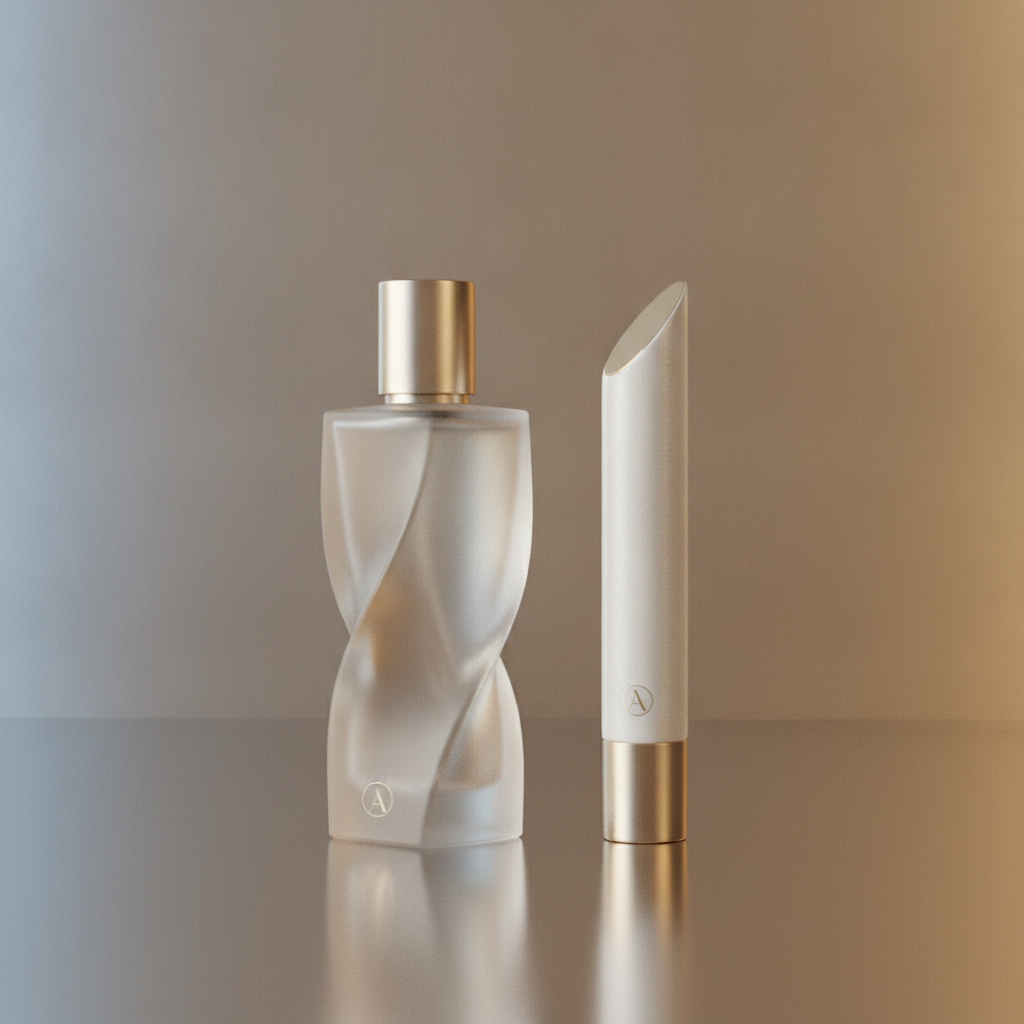
Regarding the protection of your visual image, it is important to understand that the law allows for the protection of not only words or logos but also the shape of the product itself. When the appearance of the packaging becomes so distinctive that a consumer recognizes the brand even without reading the label, the design turns into a full-fledged asset. However, a strategic question arises: should you choose to register it as a 3D trademark or as an industrial design?
The difference between these instruments is significant for a product’s lifecycle. An industrial design protects the aesthetic novelty and originality of the appearance, but it has a limited term of validity. Conversely, a 3D trademark can be protected indefinitely (provided it is renewed every 10 years) and serves as a powerful tool for fighting counterfeits. For example, the specific curve of a perfume glass bottle or an innovative ergonomic tube for cream can be registered as a trademark, giving the owner a monopoly on the use of that shape in the market.
Such a multi-layered protection strategy ensures security against “brand style” copying by competitors who try to replicate the general impression of your product without copying the name verbatim. This is especially relevant for premium care lines, where the shape and tactility of the packaging are part of the marketing value. To determine if your design is ready for such a serious step, it is worth undergoing a check against key criteria of uniqueness.
Checklist: Is Your Product Ready for Protection?
Evaluating a product’s readiness for registration begins with moving away from generic terms. If your name is based solely on a description of ingredients (e.g., “Argan Oil” or “Organic Serum”), it is considered “weak” and is unlikely to receive protection, as such words must remain available for other manufacturers to use. Instead, focus on unique names for product lines or fragrance compositions that create an original associative connection.
An essential step is the strategic planning of Nice Classification (NCL) classes. Beyond the mandatory Class 03, registration in this field should account for related areas: Class 05 (for dermatological products or dietary supplements) and Class 44 (if the brand plans to develop its own care procedures or a network of salons). This approach creates a barrier for competitors attempting to imitate your activities in adjacent niches.
| Object of Protection | Nice Classes | Specifics |
|---|---|---|
| Cosmetics and perfumes | 03 | Skincare products, makeup, fragrances. |
| Pharmaceutical line | 05 | Medicinal products, antiseptics, dietary supplements. |
| Beauty services | 44 | Salons, clinics, procedures, consultations. |
Another tool is protecting the visual identity through a 3D trademark. If you have developed a unique bottle, it becomes part of your brand identity. Securing the curves and proportions of the packaging in an application provides protection that remains valid indefinitely, provided it is renewed on time. This is especially relevant when entering global e-commerce, where visual identification of the product minimizes the risks of counterfeiting. To navigate from the idea to legal protection without errors, it is advisable to engage professional support, which will help structure the application correctly in accordance with the patent office’s requirements.
Case Study: How to Protect Your Care Line in Time
In my practice, I often encounter situations where legal negligence becomes a barrier to the growth of a successful product. We will examine two contrasting scenarios for the development of a cosmetic brand to clearly demonstrate the impact of a protection strategy on business scaling.
The ‘Before’ Scenario: Lost Opportunities and Clones
In my many years of practice, I have repeatedly seen talented cosmetic manufacturers fall victim to their own success due to the lack of a legal shield. A typical situation: a brand launches a skincare line, invests significant resources in marketing and influencer work, but puts off formalities “for later.” Once the name becomes recognizable and sales rise, dozens of similar bottles suddenly appear on the market with identical designs and nearly identical naming.
Without a trademark certificate, the manufacturer is trapped: they cannot prevent competitors from using a similar name and even risk receiving a claim from a “patent troll” who managed to file an application first. This leads to serious consequences:
- Brand dilution: Customers confuse the original with cheap copies, which ruins your reputation.
- Blocking on marketplaces: Without legal documents, it is impossible to file a complaint against infringers within the scope of brand protection programs.
- Inability to scale: No serious distributor or retailer will sign a contract for goods whose rights are not documented.
This is felt most acutely by entrepreneurs entering global markets. Protecting a brand as a sole proprietor becomes a matter of survival, as, without registration, it is impossible to obtain Brand Registry on platforms like Amazon. This leaves the business defenseless against clones that can simply “borrow” your idea and customer base while you wait for better times to register your documents. The next example will show how the situation changes dramatically when the owner acts proactively.
The ‘After’ Scenario: How Protection Facilitates Scaling
A successful legal engagement is more than just obtaining a certificate; it is the moment your brand gains real mechanisms to enforce order in the market. When moving from theoretical risks to the active enforcement of rights, it becomes clear that registering a name for cosmetic products is the foundation for entering retail chains and international platforms. Having legal protection fundamentally changes the business owner’s position: it is no longer you who has to justify yourself to copycats, but rather they who must contend with your intellectual property.
The Result of Strategic Protection: Removal of Counterfeit Goods
One of our clients encountered an identical line of creams in a regional retail chain. Because we had registered not only the name but also the graphic elements of the packaging in a timely manner, we were able to:
- Issue a substantiated claim under Article 20 of the Law of Ukraine “On the Protection of Rights to Trademarks for Goods and Services” and secure the voluntary removal of the products from shelves within 14 days.
- Block the violators’ accounts on marketplaces using internal brand protection tools.
- Preserve the brand’s reputation by preventing the dilution of consumer loyalty caused by poor-quality copies.
For effective scaling in the beauty industry, it is important to understand sector-specific nuances. Competition here is so intense that protection must be multi-layered. Special attention should be paid to visual identity. If your bottle has a unique shape that sets it apart from hundreds of others, you should consider obtaining legal protection for a 3D mark. This blocks competitors from creating “look-alike” products that parasitize your design’s recognition. It is important to remember that generic ingredient names, such as “Hyaluronic” or “Retinol,” cannot belong to you alone; therefore, the focus of protection should be on unique combinations and visual imagery. This paves the way for secure e-commerce trade, where visual content is a decisive factor in consumer choice.
Such a comprehensive approach transforms legal expenses into business capitalization, making it attractive to investors and distributors.
Related topic material: Trademark Registration for Service Provision.
If you need assistance with this task, please use our Trademark Registration service.
Protect Your Product Before Someone Else Does
In the dynamic beauty industry, intellectual property is not merely a legal formality, but the foundation for capitalizing your business and a real tool for protection against copying. Competent trademark registration for cosmetics allows you to turn a cream name or a unique bottle shape into an asset that enhances your reputation and enables seamless scaling to international marketplaces. Secure a reliable legal backbone for your brand so you can focus on creating new formulas while we take care of your safety. Learn more about strategic asset planning in our article on trademark registration for service provision.
Frequently Asked Questions
Is it possible to change the list of goods and services after the registration application has already been submitted?
According to patent legislation, after submitting an application to the IP Office (UkrNOIVI), you may narrow the list of goods or services (for example, exclude certain items from Nice Class 03), but you do not have the right to expand it. This means that adding new items to an already submitted application is technically impossible—you will have to file a new, separate application.
That is why we always recommend during the preparation stage to:
- Assess your current assortment (creams, serums, masks).
- Forecast brand development for the next 2-3 years (whether you plan to add perfumery, household chemicals, or medical products in Class 05).
- Take e-commerce activities into account to ensure brand protection covers all sales platforms.
What should I do if my competitor has already registered a name similar to mine, but in a different Nice Class?
A situation where a competitor operates in a different segment (for example, you sell cosmetics in Class 03, while the competitor holds a trademark for household goods) is not always a catastrophe. However, there are two important nuances:
- Relatedness of classes: If a consumer might perceive the goods as coming from a common manufacturer, there is a risk of confusion. Courts and examiners consider the risk of misleading the consumer.
- High recognition: If a competitor’s trademark is “well-known” (pursuant to Article 25 of the Law of Ukraine “On the Protection of Rights to Trademarks for Goods and Services”), the owner can prohibit the use of even a similar designation in other classes if it harms the brand’s reputation.
Before making any decisions, it is worth conducting a professional search for identity and similarity to determine the real level of legal conflict.
How to protect the names of individual collections or limited editions within a single brand?
Entrepreneurs often want to protect not only the main brand name (e.g., “SunSkin”) but also specific line names (e.g., “SunSkin Gold Glow”). It is important to understand that registering the main TM provides protection for the designation, but does not guarantee a monopoly on every word you add to it.
The best strategy is:
- Use the main brand as an “umbrella” protection.
- For limited collections, create fanciful names that do not describe the product’s properties. This increases the chances of their registration as separate trademarks.
- If you plan long-term cooperation with a line name, it is better to register it as a separate trademark to avoid a situation where a competitor “borrows” your successful line name.
How does the registration of a color scheme differ from registering a brand name?
Registering a name is the protection of a verbal designation, whereas registering a color scheme (color as such) or a combination of colors falls into the category of non-traditional trademarks.
In the cosmetics industry, this works as follows:
- Color: Registering a single color as a TM is extremely difficult. You need to prove during examination that this color has acquired distinctiveness, meaning the consumer instantly recognizes your product by this color without the name.
- Combination: Registering a color scheme as part of a logo is much easier.
If your design is a specific combination of colors (for example, the signature shade of a bottle and packaging), we recommend registering them as part of a figurative trademark or as part of a 3D (three-dimensional) trademark.
Is it necessary to register a TM for selling cosmetics via Instagram, TikTok, or marketplaces?
Yes, trademark registration for e-commerce is critically important, and here is why:
- Arbitration and complaints: If you sell on Amazon (Brand Registry) or want to protect your profile from being blocked due to competitor complaints, a TM certificate is your only “legal shield.”
- Trust in platforms: Many online marketplaces provide priority in search rankings and protection to sellers who have verified their brand rights.
- Scaling: Without registration, your successful Instagram store can become a victim of cybersquatting—where someone else registers your name and forces you to rename your project.
Registration in Class 03 (for goods) and Class 35 (for retail services for cosmetics) is the foundation for a secure online business.