
Freedom to Operate (FTO) expertise for a drug importer is a preventive legal, scientific, and technical analysis of active patents within the jurisdiction of importation, aimed at establishing the absence of intellectual property rights infringement by third parties and eliminating the risks of customs clearance blocking or judicial batch seizure upon the originator’s claim.
For a pharmaceutical importer or distributor, the border is the point of highest business vulnerability. Stopping a cargo at customs upon the patent holder’s request instantly triggers a loss counter: specialized warehouses with strict cold chain maintenance incur significant costs, delivery schedules for tenders are disrupted, and a subsequent judicial seizure can block the turnover of goods for years. Conducting a timely audit—as detailed in the article on how to check the patent clearance of a medicinal product before launching it to the market—allows neutralizing these threats in advance, even before the goods are loaded at the manufacturer’s warehouse.
- Customs Risk: The originator can suspend the clearance of a generic for 10+10 business days based on the inclusion of the patent in the Customs Register of Intellectual Property Rights Objects.
- Secondary Patents: The bulk of conflicts concern not the active pharmaceutical ingredient (API), but derivative salts, polymorphic forms, combinations, or treatment regimens (evergreening).
- Procedural Shield: An advance out-of-court opinion by a forensic intellectual property expert serves as the primary evidence for refusing to secure a claim and impose a judicial seizure.
- Financial Counter-strike: The institute of counter-security obliges the plaintiff to deposit an amount commensurate with the value of the blocked batch into the court account, demotivating the abuse of judicial bans.
Customs Risks of the Importer and Patent Traps
The import of generics into Ukraine frequently encounters aggressive patent practices by multinational pharmaceutical corporations. Protecting investments in the development of original drugs often escalates into the abuse of intellectual property mechanisms, where customs acts as the primary barrier to eliminating cheaper analogues from the market.
Legal uncertainty at the border is often accompanied by competitor activity in the commercial and digital space; therefore, alongside patent verification, importers must proactively ensure trademark clearance and eliminate the risks of distribution channel hijacking by third parties.
Mechanism of Suspension of Pharmaceutical Customs Clearance
According to Articles 399–400 of the Customs Code of Ukraine (CCU), if goods contain signs of intellectual property rights infringement and are included in the Customs Register of Intellectual Property Rights Objects (IPRO), the customs authority is obliged to suspend their customs clearance. The period of such suspension is 10 business days, with the right of extension by the head of customs for another 10 business days upon a reasoned request from the right holder.
During this time, the patent holder’s representatives receive notifications, packaging photographs, and have the right to take samples and specimens of the goods for expert research. Their main procedural goal is to manage to file a statement of claim with the commercial court regarding patent holder rights infringement and simultaneously obtain a ruling on interim relief measures in the form of seizing the goods or prohibiting customs authorities from releasing them into free circulation.
Financial Consequences of Medicinal Product Batch Seizure
For thermolabile drugs (vaccines, biosimilars, insulins, oncological drugs), cargo downtime entails critical losses. If the storage temperature goes beyond the strict protocol (+2…+8 °C or -20 °C), the goods are deemed substandard and subject to mandatory disposal in accordance with Good Distribution Practice (GDP) standards.
In addition to direct costs for paying for the services of a licensed customs warehouse, the importer faces penalties for violating medicine delivery deadlines under contracts with the Ministry of Health of Ukraine, State Enterprise “Medical Procurements of Ukraine,” or private pharmacy chains. Judicial seizure can last the entire period of court proceedings in the courts of first instance, appellate, and cassation instances (from 12 to 24 months), turning any commercially promising generic into a direct financial loss.
Algorithm for Conducting an FTO Study for Generic Imports
Freedom to Operate for an importer differs significantly from research conducted by a pharma developer: while the developer studies the entire global pool of patent families at the molecule synthesis stage, the importer focuses on a specific national jurisdiction (Ukraine) and the validity status of protective documents at the time of border crossing. High-qualification legal support provided by registration and litigation backing, focusing on patent disputes and inventions (Pharma & Life Sciences), guarantees safe passage through customs procedures.
Defining Jurisdictional Boundaries and Patent Landscape
Patent rights are strictly territorial. The fact that the validity term of a basic patent in the US (FDA Orange Book) or EU countries has already expired does not mean that a similar status applies in Ukraine. International pharmaceutical companies often use the tool of extending the patent term for drugs (Supplementary Protection Certificates – SPCs) for up to 5 years if the marketing authorization procedure in Ukraine took a prolonged time.
It is also critical to study the status of applications filed under the Patent Cooperation Treaty (PCT), which could have entered the national phase in Ukraine and be at the stage of substantive examination. The emergence of a valid patent during the maritime or land transportation of a cargo can instantly paralyze the customs terminal.
Analysis of Patent Claims and the Doctrine of Equivalents
According to Art. 28 of the Law of Ukraine “On Protection of Rights to Inventions and Utility Models,” an invention is recognized as used if every element (feature) included in the independent claim of the formula, or an equivalent feature, has been applied. When drafting a generic’s freedom-to-operate opinion, the “all-elements rule” is analyzed.
If the imported drug does not contain at least one feature embedded in the independent claim of a valid patent, there is no infringement. However, in Ukrainian court disputes, patent holders increasingly rely on the doctrine of equivalents—proving that replacing a certain component, salt, or excipient performs the same function in the same way to achieve a similar result. Preventive FTO must provide reasoned scientific refutation of the applicability of this doctrine for a specific generic.
Secondary Patents as a Hidden Threat to Suppliers
When the 20-year protection term of the base molecule (API) expires, originators apply the tactic of creating so-called “evergreen” patent portfolios. This allows blocking the market with artificial barriers by protecting minor modifications of the original product.
| Analysis Criterion | Primary Patents (Base Molecule) | Secondary Patents (Evergreening) |
|---|---|---|
| Object of Legal Protection | New chemical compound, active ingredient (API), pharmacophore. | Polymorphs, salts, isomers, compositions, dosage methods, new indications. |
| Customs Stop Risk | Absolute (if the patent validity term is active). | High (originators frequently register them in the Customs Register). |
| Technological Workaround Complexity | Impossible to bypass without changing the drug’s active substance. | Medium/Low (possibility of using a different salt or amorphous state). |
| Invalidation Prospect | Low (if the molecule was fundamentally new on the priority date). | High (real inventive step is often absent). |
Traps of Patent Thickets in the Pharmaceutical Market
“Patent thickets” form around commercially successful medicinal products and can number dozens of patents per single drug. The originator patents thermodynamically stable crystalline modifications, combinations of the molecule with known adjuvants, or even the specific size of micronized particles to optimize bioavailability.
An importer, having checked exclusively the active substance by its international name, imports a drug whose technological process contains a lyophilization or solution stabilization method patented in Ukraine. This gives the right holder all formal grounds to apply to the State Customs Service agencies.
challenging Bad-Faith Patent Entries in the Register
Entering patents of dubious legal validity into the Customs Register is a typical tactic of out-of-court pressure. If the generic clearly does not infringe the invention formula or the secondary patent was obtained in violation of the inventive step criterion, the importer has an arsenal of tools:
- Submitting an application to customs authorities on the absence of rights infringement with the provision of an expert opinion;
- Parallel filing of a counterclaim or a separate lawsuit with the Solomianskyi District Court of Kyiv or the Commercial Court of Kyiv (depending on jurisdiction) to invalidate the patent in full or in part;
- Applying to the Antimonopoly Committee of Ukraine (AMCU) regarding actions containing signs of unfair competition (Art. 10-bis of the Paris Convention, Art. 1 of the Law of Ukraine “On Protection against Unfair Competition”).
Preventive Tools Against Judicial Seizures
Stopping a batch at customs does not mean its automatic seizure. Seizure is imposed exclusively by a court ruling within the framework of interim relief. To minimize the likelihood of such a ruling being issued without the importer’s participation (ex parte), the enterprise must act according to a clear protocol.
- 1. Immediate Information Request: Obtaining a copy of the suspension notice from customs indicating the specific patent number and grounds.
- 2. Assessment of Claim Boundaries: Comparing the Certificate of Analysis (CoA) of the imported batch with the patent holder’s formula.
- 3. Preventive Filing of Objections to Court: Submitting preventive procedural motions to specialized courts regarding unwillingness to secure a claim without summoning the parties.
- 4. Legalization of the FTO Report: Submitting an official forensic expert opinion under Art. 101 of the Commercial Procedure Code of Ukraine to customs authorities and attaching it to the case materials.
- 5. Motion for Counter-Security: Demanding that the plaintiff deposit the full value of the batch into the court’s deposit account to cover potential losses from downtime.
- 6. Deadline Control: Tracking the expiration of the 10-day (or 20-day) period: if a lawsuit is not filed, demanding the immediate completion of customs clearance.
Expert FTO Opinion as the Importer’s Procedural Shield
An internal memo from the company’s in-house counsel holds no significant evidentiary value for a court. According to Article 101 of the Commercial Procedure Code of Ukraine (CPC of Ukraine), a party to a case has the right to submit an expert opinion compiled upon its order to the court.
Such an opinion, prepared by a forensic expert certified by the Ministry of Justice of Ukraine in the specialty “Research related to the protection of rights to inventions and utility models,” where the expert is warned of criminal liability for a knowingly false opinion under Art. 384 of the Criminal Code of Ukraine, becomes a key argument. The presence of the expert’s categorical assertion that every feature of the plaintiff’s invention was not used in the imported medicinal product effectively deprives the court of grounds to apply interim relief measures in the form of seizure due to the unproven nature of obvious rights infringement.
Strategy for Canceling Judicial Claim Security Measures
If the court of first instance nevertheless seized the batch ex parte (without summoning the importer’s representatives), the procedural struggle shifts to the plane of counter-security (Article 145 of the CPC of Ukraine). The importer is obliged to prove the proportionality of losses:
- Calculate daily expenses for storing the batch in a specialized warehouse;
- Submit copies of contracts with penalties for delayed delivery of medicines to patients or hospitals to the court;
- File a motion for the mandatory deposit of counter-security in monetary form by the plaintiff into the court’s deposit account equivalent to 100% of potential losses.
Supreme Court practice confirms that the plaintiff’s inability to provide counter-security is an unconditional ground for canceling the applied interim relief measures. Multinational companies are reluctant to block tens of millions of hryvnias in the bank accounts of a Ukrainian court when there is a risk of them being written off in favor of the importer if the case is lost.
Comprehensive Intellectual Security of a New Pharmaceutical Product
The resilience of the import business in the pharmaceutical market cannot be limited solely to verifying the validity of patents. Launching a generic or biosimilar requires a parallel audit of trademark rights and the protection of digital distribution assets.
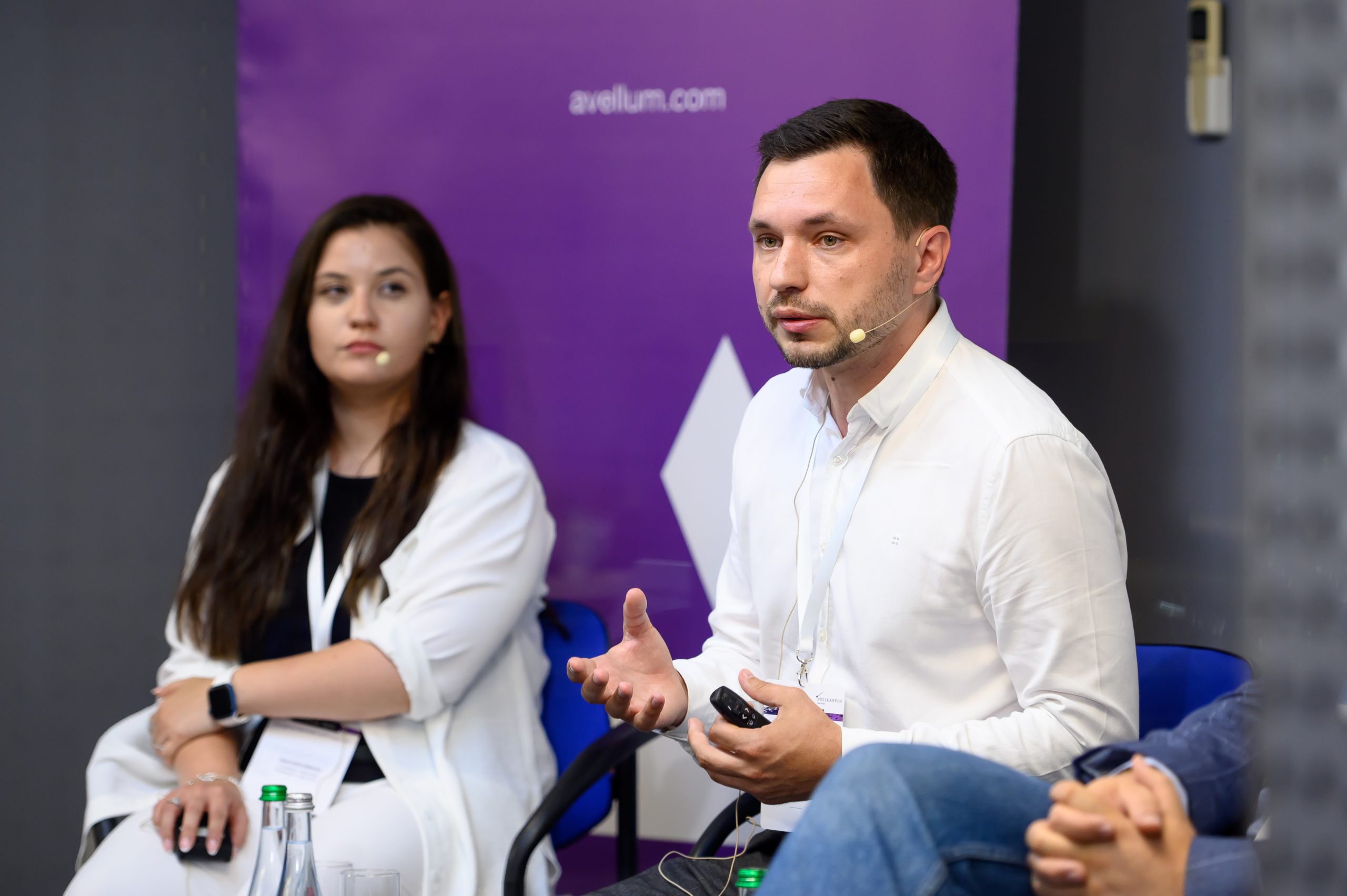
Practical Insight from Anton Polikarpov:
«In pharmaceutical practice, a typical mistake is when an importer focuses exclusively on the API patent, wins the customs dispute, but faces a judicial ban due to the phonetic similarity of the generic’s trademark with the originator’s brand. Protection must be end-to-end: formula – brand – domain name. Only triple compliance makes sudden business halts impossible».
Synchronizing Patent Clearance with Trademark Protection
While the state registration procedure of the medicinal product at the State Expert Center (SEC) of the Ministry of Health of Ukraine is ongoing, the drug’s name undergoes examination for the absence of identity and similarity with already registered brand names. However, registering a name with the Ministry of Health does not replace a trademark (TM) certificate for Nice Classification Class 5 goods.
The originator, losing the patent monopoly, can register a trademark in the IPRO Customs Register and block customs clearance using TM customs codes. Prior to the start of supplies, the importer must have either their own registered trademark or a clear opinion regarding the absence of confusion risks with competitors’ brands.
Protecting Drug Brands in the Digital Environment
The speed of launching a generic to the market requires the immediate deployment of information resources for doctors and patients, online catalogs, and distribution systems. A common practice among unfair competitors and cybersquatters is registering domain names that replicate the name of the new drug in order to obstruct promotion or redirect traffic to counterfeit sites.
To prevent and eliminate such actions, the importer must control domain zones. If a cybersquatter has seized a domain name, the most effective tool for restoring rights is using the Uniform Domain-Name Dispute-Resolution Policy (UDRP) procedure at the Arbitration and Mediation Center of the World Intellectual Property Organization (WIPO) or filing lawsuits for the national .UA zone. Comprehensive legal protection of rights in such cases ensures the elimination of marketing activity blocking risks at the start of sales.
Patent Compliance as a Guarantee of Uninterrupted Import
The customs border of Ukraine is not a place for clarifying the legal status of medicinal products post-facto. An attempt to import a generic without an advance evidentiary base inevitably leads to batch seizure, million-dollar losses from violating storage conditions in warehouses, and the loss of key contracts.
Freedom to Operate (FTO) expertise acts as the basic tool for insuring import investments. An official forensic expert opinion combined with registered trademark rights creates a procedural shield that stops attempts at unfair blocking by patent holders already at the stage of primary customs control.