Trademark Registration in Kyiv: Why It’s Important Right Now
Kyiv remains the heart of Ukrainian business, where competition forces owners to care about asset security, making professional trademark registration the foundation of protection. Let’s explore how to properly formalize rights in the capital by leveraging the benefits of the digital transformation of public services.
Electronic Filing via EIS: A Modern Registration Format
A modern approach to intellectual property allows you to forget about bureaucratic queues. We will look at how to conveniently register a trademark in Kyiv remotely, examine the benefits of electronic interaction, and the technical requirements for the applicant.
Advantages of Remote Document Submission


The electronic filing format via the Electronic Interaction System (EIS) is not just a convenience, but a strategic legal safeguard. According to Art. 10 of the Law of Ukraine “On the Protection of Rights to Marks for Goods and Services”, the right to a TM belongs to the first person to file an application. In a digital environment, the date and time are fixed automatically to the second 24/7, allowing you to outpace opponents even if they contacted a post office on the same day.
Administrative advantages of process digitalization:
- Remote control: The ability to track the status of the examination in a personal account and promptly receive requests from the IP Office (UANIPIO) without waiting for paper letters.
- Reduced financial burden: Current legislation provides a 20% discount on state fees for filing and the use of color when using the electronic form.
- Automatic validation: The system blocks the submission of the form if mandatory details are missing or a Qualified Electronic Signature (QES) is not uploaded, which reduces the likelihood of formal rejections.
Remote TM registration via digital channels eliminates logistical risks and guarantees the quick receipt of an application number without paperwork. The main thing is to comply with technical quality standards and image formats to avoid incorrect logo display in the registry and unnecessary correspondence with experts.
Practical example: Our client filed an application via the EIS at 10:00 PM the day before a large-scale marketplace launch. A competitor sent documents for a similar designation by mail at noon on the same day. Since the mail was only delivered and processed by the office two business days later, priority remained with our client thanks to instant electronic registration. This allowed for the avoidance of a legal dispute over the “seniority” of brand rights.
Disclaimer: This material is for informational purposes and does not constitute personal legal advice. Procedural requirements and fee amounts are regulated by CMU resolutions and Ministry of Economy orders and are subject to change.
Technical Minimum for the Entrepreneur
For successful digital submission of documents through the Electronic Interaction System (EIS), it is not enough to simply decide on legal support—it is important to prepare a “technical foundation” in advance. The primary tool is the Qualified Electronic Signature (QES), without which authorization on the portal of the State Office of Intellectual Property and Innovations (UANIPIO) is impossible.
In practice, technical errors during the file upload stage lead to formal requests from experts, which drags the procedure out for weeks. To avoid this, focus on the current technical requirements for materials:
| Technical Parameter | EIS Requirement |
|---|---|
| File Format | .jpg or .png |
| Resolution | 300 dpi |
| Color Model | RGB |
| Padding | Minimal (90-95% of the frame area) |
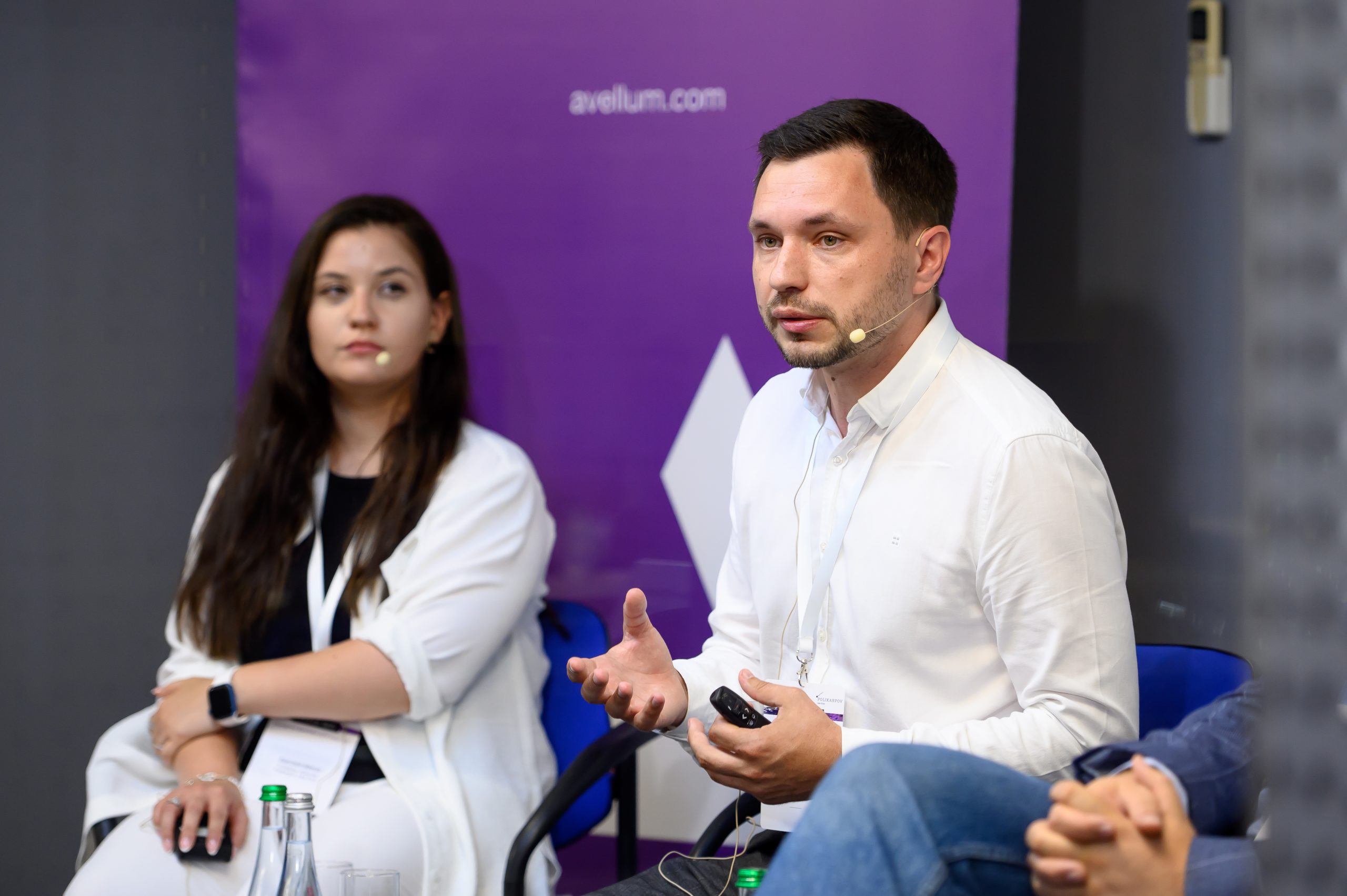
Company founder Anton Polikarpov emphasizes the importance of precision when preparing files: “Technical details often cause rejections. For example, the EIS system is set up to work with specific .jpg and .png formats, so using heavy .tiff (even though they are raster) or vector .pdf files can lead to errors when uploading the TM image. Using the CMYK model instead of RGB significantly distorts the brand colors on the portal, and low quality makes details unreadable in the register. It is also critical to monitor the subject of the signature: if the QES belongs not to the applicant or patent attorney but to a third party, you are guaranteed to receive a request from UANIPIO experts, which will slow down registration.”
Resolving these technical nuances removes the first barriers to obtaining a certificate. If you strive for flawless submission and correct classification of goods, professional trademark registration will help bypass pitfalls and ensure reliable brand protection in the digital field.
State Fees and Expenses: How to Plan Your Budget
Understanding the financial component allows you to turn expenses into an investment. We will analyze the current structure of official payments and consider strategies that will help optimize your budget without risking brand protection.
Structure of Official Payments
The financial model for trademark registration in Ukraine is based on a system of targeted fees, the amount of which depends on the number of selected classes of the International Classification of Goods and Services (ICGS). Official payments are regulated by Resolution of the Cabinet of Ministers of Ukraine No. 1716 and are uniform for all applicants within the country. Please note: the data provided is for informational purposes, does not constitute a public offer, and does not replace individual legal advice, as legislative norms and fee amounts may change.
The cost structure for obtaining a certificate consists of the following key stages:
- Application filing fee: A basic payment calculated for each individual class of the ICGS.
- Surcharge for specific designation: Additional funds are paid for using color or including the name of the state “Ukraine” in the TM (which requires special permission from a competent commission).
- Final payments: State duty for the issuance of the certificate and a fee for publishing information about the issuance in the official bulletin.
Comparative table of main fees (in accordance with CMU Resolution No. 1716):
| Type of Fee | Paper Filing (UAH) | Electronic Filing (UAH) |
|---|---|---|
| Application filing (per 1 class) | 4000 | 3200* |
| Surcharge for color execution | 1000 | 800* |
| Publication of issuance (per 1 class) | 600 | 600 |
*A pleasant bonus: when submitting documents in electronic form through the IP Office EIS, a 20% discount applies (a coefficient of 0.8 of the base fee amount).
The number of ICGS classes is the main factor influencing the cost of registration. To optimize the budget, it is worth focusing on the categories that the business actually uses, as paid fees are not refunded even in case of refusal due to similarity with other brands. Additionally, filing an application in electronic form allows you to save 20% on payments.
It is also worth considering the provision of the Law of Ukraine “On the Protection of Rights to Marks for Goods and Services”: the validity of a certificate may be terminated upon the lawsuit of any person if the trademark has not been used in Ukraine in full or in part for the last five years. For more details on how to protect your investment and avoid unnecessary costs, read the material on state fees and expenses.
To accurately calculate the budget and conduct a preliminary search, it is recommended to contact specialists, as technical errors in selecting classes or payment details can lead to the suspension of the application review.
Related material on the topic: State fees and expenses.
Related material on the topic: State fees and expenses.
Cost-Saving Strategy Without Compromising Quality


Optimizing the trademark registration budget involves precisely selecting Nice Classification classes based on actual business needs, which helps avoid unnecessary fees. An important saving tool is electronic filing with UANIPIO: this format provides a 20% discount on the state filing fee while maintaining a full level of legal protection for your brand.
To turn registration into a balanced financial step, we recommend applying the three-strategic-filters method:
- Expert Nice Classification Audit: Instead of a “register just in case” approach, we focus on segments that generate profit now or are planned for expansion within the next 5 years. This is strategically justified, as the law provides exactly this timeframe to start using the trademark without the risk of cancellation for non-use. Optimizing the number of classes and the 20% discount for digital filing provides direct savings without losing real protection.
- Preliminary Search as an Insurance Policy: Conducting a professional search before paying the main fees allows for the identification of critical obstacles. Since state filing fees are non-refundable in the event of a refusal by UANIPIO, a search serves as a tool to protect the budget from hopeless expenditures.
- Minimization of Procedural Risks: Using standard wording from the current Nice Classification eliminates the risk of receiving clarification requests from the examiner. This avoids additional costs for legal support during correspondence with the office.
Practical experience confirms the effectiveness of this approach. For example, our client (a Kyiv-based IT company) planned registration in classes 9 (software), 42 (SaaS), and 35. After legal analysis, we determined that the specifics of their fintech platform were fully covered by the first two classes. Dropping class 35 allowed them to reduce the filing budget by a quarter while maintaining full legal protection for the product.
It is important to understand that saving on professional services at the start often leads to “provisional refusals.” Correcting errors in an already filed application or preparing a response to an examiner’s objection usually costs more than the initial strategic consultation. To independently verify current requirements, one should refer to the methodologies on the official portal of the IP Office of Ukraine.
Related material on the topic: The Role of the IP Office (UANIPIO).
Related material on the topic: The Role of the IP Office (UANIPIO).
The Role of the IP Office (UANIPIO) in Official Registration
Once the state fees are paid, your application enters a single decision-making window. The role of the national intellectual property authority is to perform a detailed analysis of your brand for legal compliance.
Stages of the Examination Process
State examination is a mandatory stage during which UANIPIO checks the application for legal compliance and uniqueness. The process is only partially automated, so the final decision regarding registration is made by an examiner based on methodological guidelines and legislation. Understanding procedural specifics helps businesses minimize risks and avoid delays in obtaining a certificate.
The procedure consists of two key stages:
- Formal Examination: Specialists verify the presence of all necessary documents, the accuracy of applicant data, and confirmation of fee payments. At this stage, an error in payment details or an incorrect description of Nice Classification classes can significantly slow down the process.
- Substantive (Qualification) Examination: The longest stage, during which the mark is examined for the absence of absolute grounds for refusal (for example, if the name is purely descriptive) and the presence of identical or similar marks registered earlier.
If an examiner sends a request to clarify the list of services or a provisional refusal, it is crucial to provide a reasoned response within the established deadlines. Successful registration is, above all, the professional management of communication with the state regulator at every stage of your application’s review.
Communication with the State Registrar
Effective interaction with UIPSI experts starts from the moment the application is filed and continues until the registration decision is received. The main tool here is the electronic cabinet, which allows for the instant receipt of status change notifications and official requests, significantly reducing the time spent on mailing documents. Understanding how to officially register a trademark in Kyiv involves not only knowing the office address but also being prepared for a professional dialogue with the state registrar.
During the examination process, situations may arise that require your active participation. The most critical moment is receiving a notification of a possible refusal of registration (provisional refusal). This does not mean the process has stopped; it only indicates the examiner’s doubts regarding the uniqueness of your mark or its compliance with legal standards. To successfully navigate this stage, proven legal tactics should be employed:
- Response Promptness: The law provides two months to submit arguments in favor of registration. Filing a response within the first few weeks allows the examiner to return to your case sooner.
- Quality Argumentation: Instead of emotional denials, use references to judicial practice and methodological guidelines regarding the similarity of designations.
- Letters of Consent: If the reason for refusal is a similar mark owned by someone else, negotiating a “Letter of Consent” is often the fastest path to success.
Anton Polikarpov: “The examiner is not an opponent but a specialist performing their job. When we prepare responses to requests, we focus on evidence of the brand’s distinctiveness. For example, providing copies of advertising materials or media mentions can prove that the consumer already recognizes your brand, neutralizing the examiner’s formal objections regarding the descriptiveness of the name.”
Constructive dialogue with the registrar is not just a formality but a way to keep the process under control. Clear and timely responses to requests remove most barriers to obtaining a certificate, making your brand’s path to official recognition significantly shorter and more predictable.
Related material: Electronic filing via the EAS.
Related material: Electronic filing via the EAS.
Step-by-Step Algorithm for Capital-Based Businesses
Implementing a brand protection strategy requires following a clear sequence of steps. We will analyze the methodology for deep trademark searching for identity and the final stages of application support, right through to obtaining the certificate and its subsequent maintenance.
Search and Identity Verification


The key to successful registration is a professional check of the brand for identity and similarity even before the payment of state fees. A typical business mistake is limiting the search to Google or social media. In reality, a legal check involves analyzing the official UIPSI databases and international registries. The Ukrainian Intellectual Property and Innovations Institute (UIPSI) is located in Kyiv at 1 Glazunova St., where the key stages of formal and substantive examination of your application take place.
The risk of refusal increases critically if your designation is similar to existing marks “to the point of confusion.” Examiners assess potential conflict across three vectors:
- Phonetic similarity: when words sound almost the same (e.g., replacing “i” with “y” or similar sound combinations).
- Visual similarity: overlap in graphic design, fonts, or logo composition that may mislead consumers.
- Semantic similarity: similarity in meaning or idea (e.g., a translation into a foreign language of an already registered name in the same market segment).
The main business mistake is believing that “clean” Google search results guarantee successful registration. Search engines do not see the UIPSI’s database of filed applications, which already have priority but have not yet become public brands. A legally significant search for identity and similarity must be conducted exclusively through official trademark registries.
A professional search allows for timely adjustments to the brand book and avoids wasted marketing costs. It is important to distinguish: the application filing date only secures your priority (right of first filing), whereas full ownership rights arise only after the completion of the substantive examination and registration. And remember: the brand must actually “live” in the market; otherwise, after five years, the registration can be challenged in court due to non-use.
Obtaining the Certificate and Its Maintenance
The final stage of the procedure is obtaining the certificate. After successfully passing the substantive examination, the IP Office (UANIPIO) sends a decision on registration. To finalize the process, it is necessary to pay the state duty for the issuance of the document and the fee for publication in the official bulletin “Industrial Property”.
Certificate maintenance and financial nuances: The certificate is valid for 10 years with the right of renewal, and the electronic filing format provides a 20% discount on the payment of state fees. However, consider the risks of “partial use”: if the mark has not been used in certain Nice Classification classes for 5 years, competitors may initiate its cancellation for those categories. To protect your asset, it is important to have proof of actual activity (receipts, contracts, advertising) for all declared business activities.
The certificate is valid for 10 years, but intellectual property can work for a business indefinitely: the law allows extending the period of validity every 10 years. If you missed the deadline, there is a grace period of 6 months after the expiration date, but in this case, the renewal fee increases by 50%.
Professional trademark registration helps not only at the filing stage but also in the subsequent maintenance of the asset, including deadline monitoring and protection against non-use claims. A timely audit of the TM portfolio allows for early risk detection and adaptation of the protection strategy to current market needs.
Disclaimer: This material is for informational purposes only. The scope of rights and risks depends on specific circumstances, legislation, and current judicial practice. For legally significant decisions, an individual assessment by a specialist is recommended.
If you need help with this task, use the Trademark registration service.
Your Intellectual Asset — Your Security
Brand registration is not a formality but a strategic asset creation that directly affects business capitalization and legal security. Since the procedure at the IP Office (UANIPIO) requires exceptional precision, and an acceleration option currently does not exist, quality preparation of documents at the start becomes the only guarantee for successfully obtaining a certificate. When deciding, where to register a trademark in Kyiv, choose the path of digital filing and professional audit to avoid leaving your intellectual capital defenseless against competitors. Contact the specialists at Polikarpov Law Firm for a comprehensive analysis of your brand and the development of a reliable legal protection strategy.
Frequently Asked Questions
What advantages does a trademark provide when working with marketplaces (Amazon, Rozetka)?
A registered trademark is your primary tool in the fight against counterfeit goods on trading platforms. For example, Amazon Brand Registry provides trademark owners with advanced intellectual property protection tools, priority support, and the ability to remove pages of sellers who copy your product.
In Ukraine, marketplaces such as Rozetka or Prom.ua also react faster to infringement complaints if you provide a copy of the certificate. Without official registration, proving your right to the brand and blocking an infringer within the platform’s rules is almost impossible.
Is it possible to make changes to the logo or name after filing an application?
The law strictly limits the possibility of making changes to the sign itself after the application is submitted. You can only correct obvious errors or change the applicant’s name/address. It is impossible to change the logo graphics, font, or add a new word to the name — to do this, you will have to file a new application and pay state fees again.
This is why it is extremely important to finalize the visual concept of the brand before submitting documents in Kyiv. If you have undergone rebranding, the old certificate will continue to be valid for the old version, but the new logo will remain unprotected until you register it separately.
Does trademark registration in Ukraine provide protection in foreign markets?
No, the legal protection of a trademark is territorial. Registration with UANIPIO protects your brand exclusively on the territory of Ukraine. If you plan to scale your business, for example, in the EU or the USA, you need to file separate applications in each country or use the Madrid System for the international registration of marks.
The Madrid System allows you to file one international application through the Ukrainian IP office, specifying the list of countries of interest. This is significantly cheaper and simpler than working with patent attorneys in each jurisdiction separately. However, it is important to remember that an international application is based on your national registration or application in Ukraine.
How does a trademark help to obtain a prestigious .UA domain?
In the Ukrainian segment of the Internet, .UA top-level domains (e.g., brand.ua) are delegated exclusively to owners of registered trademarks. This rule was established by the .UA zone administrator to prevent cybersquatting.
To obtain such a domain, it is not enough to simply file a TM application — you must have an already obtained certificate. The certificate number is a mandatory requirement when registering the domain. This is why for IT startups and online retailers, trademark registration is the first critical step in building a digital presence.
What is the “opposition” period and why is it important for business?
After your application passes the formal examination, information about it is published in the official bulletin. From this moment, a three-month period begins during which any third party can file a reasoned objection (opposition) against the registration of your TM.
This poses a risk for business, as competitors can claim that your sign is too similar to their already registered right. On the other hand, this mechanism allows you to monitor new applications and block attempts by competitors to register similar names. Professional legal support helps not only to neutralize others’ oppositions but also to identify threats to your brand in time.
Can a TM be registered to an individual instead of a company?
Yes, Ukrainian legislation allows registering a trademark to either a legal entity (LLC, PE) or an individual (in particular, a Sole Proprietor or simply a citizen). The choice depends on your business goals:
- To a company: The TM becomes an intangible asset of the enterprise, which increases its capitalization and allows for the official payment of royalties.
- To the founder: This provides additional asset protection in case of corporate conflicts or company liquidation. An individual owner can grant a license to use the TM to their own company.
It is important to consider that in the event of a change of owner or business transformation, the right to the TM can be transferred through a deed of assignment.